Showing posts sorted by relevance for query Paul Bingham. Sort by date Show all posts

Wednesday, October 03, 2018

Throwing Stones to Kill from a Distance: The Evolutionary Origin of Lockean Liberalism?


We humans are unique among all animals in our ability to throw projectiles at high speeds and with amazing accuracy.  We must wonder how this is possible and why this has evolved as a trait of our human nature.


This image shows the differences in the position of the shoulder between chimpanzees (left) and humans (right).  These differences can be seen in both the muscular anatomy and in the bony anatomy of the scapula (shoulder blade).

This allows humans to store elastic energy (like a slingshot) in the tendons, ligaments, and muscles crossing the shoulder.  This energy is then used to catapult the arm forward in a fast motion, which allows very rapid throws.  This was made possible by changes in the upper body that appeared first almost 2 million years ago in the species Homo erectus.  This allows humans to throw projectile missiles (such as rocks and spears) with deadly speed and accuracy (Roach et al. 2013).  Today, we see that most clearly in professional baseball pitchers who can throw baseballs at 90 to 100 miles an hour, again and again.  By contrast, chimpanzees trained to throw can throw a ball only about 20 miles per hour, even though adult chimpanzees are physically stronger in some ways that adult humans. 

This helped our hominin ancestors to kill from a distance in hunting dangerous animals.  The archeological evidence for intensified hunting behavior among our hominin ancestors supports this conclusion.

This capacity for killing at a distance also helped our human ancestors to punish other humans in exercising what John Locke called "the executive power of the law of nature."  Locke recognized that punishment could be costly for the punisher, because "such resistance many times makes the punishment dangerous, and frequently destructive, to those who attempt it" (ST, sec. 126).  The costs of punishment come mostly from provoking violent attacks from those who are being punished.  So the power to punish could never be effectively executed until the risky costs of punishment could somehow be reduced, so that the immediate costs of coercive punishment could be less than its immediate benefits in enforcing social cooperation.

Locke never explains how this could have happened. One likely explanation is that human beings became the first animals capable of killing at a distance by throwing rocks at their victims.  Once this developed as a technique for hunting large animals, it could then be used to kill or threaten other humans who deserved punishment.  Many people could throw stones at a misbehaving individual, and the punishers could do this with little risk to themselves. Thus the evolved human power to punish violators of the law of nature through killing at a distance could be a crucial evolutionary adaptation for Lockean liberalism.  The expansion of social cooperation enforced by cheap punishment of cheaters has evolved from the expanding range of the weapons for remote killing--from rocks to bow-and-arrow to guns to nuclear bombs.

Anthropologists studying nomadic hunter-gatherers have recognized their remarkable egalitarianism--that all adult individuals are equally free in their autonomy and freedom from domination by others.  This looks like Locke's state of nature.  Anthropologists have seen that this egalitarianism requires "leveling mechanisms"--means by which individuals can prevent bullies from dominating them.

One of the critical leveling mechanisms is the equal access to weapons for remote killing.  Anthropologist James Woodburn (1982) noted that in hunter-gatherer bands, all males have equal access to weapons.  "Hunting weapons are lethal not just for game animals but also for people.  There are serious dangers in antagonizing someone: he might choose simply to move away, but if he feels a strong sense of grievance that his rights have been encroached upon he could respond with violence" (436).  Some men will try to dominate others by giving orders or by stealing wives and property, but this is punished by violent retaliation.  Woodburn observes:  "In normal circumstances, the possession by all men, however physically weak, cowardly, unskilled or social inept, of the means to kill secretly anyone perceived as a threat to their own well-being not only limits predation and exploitation; it also acts directly as a powerful levelling mechanism."  For Thomas Hobbes, this was the ground for equality in the state of nature: despite all the inequality in human traits, no one was so superior as to be free from the threat of being killed by those he might try to dominate.

Biologist Paul Bingham has developed this idea into a general theory of human social evolution (Bingham 1999, 2000; Bingham and Souza 2009; Okada and Bingham 2008).  Humans are unique because they are the first animals to be able to kill adult members of their species remotely.  Every other unique feature of humans--such as language, abstract reasoning, morality, and so on--is simply an effect of that one cause.

Bingham argues that the uniquely human capacity for killing at a distance explains the uniquely human capacity for kinship-independent social cooperation.  The evolution of all organisms creates the problem of conflicts of interest that impede social cooperation, because all organisms must compete for the resources necessary for survival and reproduction.  A common way to manage those conflicts of interest is to cooperate with close kin, because kinship creates overlapping interests.  So animals cooperate with close kin, and cooperation with non-kin is typically very limited.  So, for example, among mammals, mothers commonly care for their offspring.  Some animals--such as social insects--cooperate in huge colonies, but this depends on kinship: in ant and bee colonies, most of the (female) members of the colony work to rear their sisters (and a few brothers).

Like other animals, humans cooperate with their kin, but they also cooperate with non-kin much more expansively than is the case for other animals.  To do this, they must manage the problem of conflicts of interest.  And they do that by employing the cheap punishment made possible by remote killing to enforce cooperation: cheaters and free-riders are deterred from their misbehavior by the costs of punishment.

There is a lot of archaeological, anatomical, and ethnographic evidence to support this theory that the uniquely human capacity for throwing stones to kill from a distance initiated the uniquely human evolution of kin-independent social cooperation in a manner that sustains Lockean liberalism (Bingham and Souza 2009, 147-204; Isaac 1987; Marzke et al. 1988; Aiello and Dean 1990; Roach et al. 2013).

Beginning around 2.3 to 2.5 million years ago, there are archaeological deposits in East Africa of stone flakes and fossil prey bones indicating the evolution of hominid scavenging and hunting.  There is also evidence of the evolution of elite human throwing associated with this early scavenging/hunting.  There are piles of stones that archaeologists call "manuports" because the archaeological context suggests that they were moved across the landscape.  Some of these manuports are of the size and shape that would make them good ammunition for throwing at prey animals or at other humans.

There is also skeletal evidence that the first fully human ancestors emerging about 2 million years ago had evolved the anatomical traits--in the hands, arms, torso, pelvis, and feet--that make humans uniquely good throwers.  The hands and arms of our primate ancestors are adapted more for climbing than for throwing, because they were adapted for an arboreal life.

Darwin noticed how skillful hunter-gatherers in Tierra del Fuego were in throwing stones forcefully and accurately.  By contrast, he saw that monkeys and apes were clumsy throwers.  He thought this was one uniquely human trait arising from bipedality and the design of the human hand and arm, which might help to explain human dominance over the Earth (Darwin 2004, 68-72).

Other European explorers of the New World and the South Pacific discovered how deadly this rock throwing could be, because aboriginal people could attack European intruders with a bombardment of stones (Isaac 1987).

If Bingham is right, that evolved uniquely human capacity for elite throwing was the cause for the evolution of the big human brain that arises from a uniquely human life history that depends upon human kin-independent social breeding (Bingham and Souza 2009, 120-146).  "It takes a village to raise a human child," and unlike the social breeding of other animals, the human village that helps in the rearing of offspring includes many adults of both sexes who are not close kin.  It also includes many adult members who are armed for the projection of coercive threat that enforces the village's non-kin cooperation.

A newborn chimp has a very big and heavy brain.  But a newborn human has an even bigger and heavier brain.  Moreover, the human infant's brain will grow much faster and longer.  This growth will extend even into young adulthood.  And while a chimp mother can provide enough food and care for her offspring by herself, a human mother must provide so much more food and better food and so much more care for her offspring that she cannot do this without help from others.  A human mother needs to be a member of a large society--at least as large as a foraging band--that will help in the rearing and protection of her child.  And this society will extend beyond her kin to include unrelated adults.  That's why "it takes a village to raise a human child."

But then we might wonder why the help of her husband would not be enough for her.  Maybe, "it takes a couple to raise a child!"  That's Locke's solution to the mother's problem.  He argues that like many birds, human beings are pair-bonding animals because mothers need the help of fathers in providing food, rearing, and protection for the children, when mothers alone cannot do this.  Human beings are naturally cooperative breeders in families of mothers, fathers, and children (FT, secs. 86-89; ST, secs. 77-84).  Some evolutionary anthropologists today support this idea--that pair-bonding is the crucial evolutionary adaptation in human evolution.

But this doesn't explain why other pair-bonding animals like birds didn't follow the human evolutionary path towards large communities of non-kin members.  And it doesn't explain why human pair-bonded families depend on the support of that large community of both kin and non-kin members.

The proper explanation, Bingham suggests, is that humans are unique in their capacity for non-kin social cooperation, which supports the uniquely human life history for sustaining the growth and rearing of that big human brain.  Non-kin cooperation is impossible without some way to manage the conflicts of interest that necessarily arise among individuals who are unrelated to one another.  Humans are unique because they stumbled into a clever trick for managing such conflicts of interest by the low-cost punishment of cheaters and free-riders through killing or threatening to kill them from a distance.

In foraging bands, most or even all adult individuals have access to such coercive threat, which has a levelling effect in securing each individual's autonomy and freedom from domination.  Consequently, power is democratized in foraging societies, and social norms are formulated and enforced through a broad consensus.

But then, Bingham argues, with the emergence of archaic states, coercive power was concentrated in ruling elites that could enforce their will on the great multitude.  To restore or at least approximate the equal liberty of the hunter-gatherer society--what Locke called the state of nature--access to the weapons of coercive threat would have to be once again equalized.

Here Bingham has rediscovered an insight of some political philosophers--that the structure of political order depends on whether the access to weapons of coercive power is confined to a few or open to many.  In the Politics, Aristotle writes:
"Since there are four parts of the multitude, the farming, the working, the merchant, and the laboring elements, and four parts of the city are useful with a view to war, the horse-rearing, the heavy-armed, the light-armed, and the seafaring elements, wherever it happens that the country is suitable for horses, conditions are naturally apt for instituting a strong oligarchy (for the preservation of the inhabitants derives from a force of this sort, and horse-rearing is done by those possessing larger properties); where it is suitable for heavy arms, the next sort of oligarchy (for the heavy-armed element is made up of the well off more than the poor).  Light-armed and naval forces, on the other hand, are wholly popular.  At present, therefore, wherever this sort of multitude is numerous, and there is a factional split, the oligarchs often get the worst of the contest. . . . This is the way the people prevail over the well off in factional splits: being light-armed, they can easily contend against a force of cavalry and heavy-armed troops" (1321a5-21).

REFERENCES

Aiello, L., and C. Dean. 1990. An Introduction to Human Evolutionary Anatomy. San Diego: Academic Press.

Bingham, Paul. 1999. "Human Uniqueness: A General Theory." Quarterly Review of Biology 74: 133-69.

Bingham, Paul. 2000. "Human Evolution and Human History: A Complete Theory." Evolutionary Anthropology 9: 248-57.

Bingham, Paul, and Joanne Souza. 2009. Death from a Distance and the Birth of a Humane Universe. Charleston, SC: BookSurge Publishing.

Darwin, Charles. 2004. The Descent of Man. 2nd edition. London: Penguin Books.

Isaac, Barbara. 1987. :"Throwing and Human Evolution." The African Archaeological Review 5: 3-17.

Marzke, M. W., et al. 1988. "Gluteus Maximus Muscle Function and the Origin of Hominid Bipedality." American Journal of Physical Anthropology 77: 519.

Okada, D., and Paul Bingham. 2008. "Human Uniqueness--Self-Interest and Social Cooperation." Journal of Theoretical Biology 253: 261.

Roach, Neil T., et al. 2013. "Elastic Energy Storage in the Shoulder and the Evolution of High-Speed Throwing in Homo." Nature 498: 483-86.

Woodburn, James. 1982. "Egalitarian Societies." Man 17: 431-51.

Saturday, October 20, 2018

How the Bow and Arrow Caused the Neolithic and Agricultural Revolutions

        A Reconstruction of Cahokia Mounds
Cahokia Mounds Today in Illinois near St. Louis

The Chaco Canyon Great Houses of the Anasazi People in New Mexico

A Prehistoric Cave Picture of Hunters with Bow and Arrow


If the scale of human non-kin social cooperation depends on the range and effectiveness of the weapons for law enforcement, then we can predict that the invention of the bow and arrow expanded social cooperation beyond what was possible with the atlatl.  This can be seen in the archaeological record of prehistoric North America, where the introduction of the bow (AD 300-700) was followed by a great increase in the size and complexity of Native American societies, which is called the North American Neolithic transition.  The introduction of the bow also preceded the much earlier Neolithic transition to sedentary villages in Eurasia around 11,000 BCE in the Natufian culture in the Levant of the southeastern Mediterranean basin (Bingham and Souza 2009; Bar-Yosef 1998).

Bows are more accurate than atlatls, and it is easier to learn to shoot arrows consistently than to throw atlatls consistently (Bettinger 2013; Cattelain 1997; Whittaker 2013).  You can see this by watching some of the videos of people demonstrating the throwing of atlatls, and they show that it's much harder to control the trajectory of an atlatl than to control the flight of an arrow shot from a bow. It is also easier to repeatedly shoot a volley of arrows at a target than to repeatedly throw atlatls.

When our prehistoric ancestors shifted from using atlatls to using bows, they probably doubled or even tripled their success in using their weapons to hunt animals or kill other humans.  Locke's "executive power of the law of nature"--the natural right to punish those who violate the customary norms of social cooperation--became more effective with the bow as a weapon of enforcement.  According to the "social coercion theory" of Paul Bingham and Joanne Souza (2009, 2013), we should see archaeological evidence for increasing scale and complexity of social cooperation after the introduction of the bow, because this weapon improves the credible treat of violent coercion to punish cheaters, free-riders, or social parasites, thus suppressing conflicts of interest to sustain cooperation.

The bow appears for the first time in Southwest Eurasia about 14 thousand years ago (kya), in Europe and in far northern North America about 12 kya.  In North America, the bow spread slowly from north to south.  It did not appear in the southern regions of North America (what is now the United States) until about 200 to 700 AD (Blitz 1988; Maschner and Mason 2013).  This global pattern in the spread of the bow constitutes a natural laboratory experiment.  In principle, we should be able to test the prediction of social coercion theory that the introduction of the bow will be followed by increased social complexity and scale as people settle into villages, engage in complex market exchange, begin domesticating plants and animals, and then later practice extensive field agriculture.

An alternative to the social coercion theory is the warfare theory, which says that the introduction of the bow led to increased warfare between groups, and then there was increased social complexity and economic intensification as a response to the demands of increased warfare.  According to social coercion theory, increased warfare is an effect rather than a cause of the increased social and economic complexity that is caused by the increased effectiveness of the bow as weaponry for enforcing intense social cooperation within a group.  We should be able to see whether the introduction of the bow leads first to increased social and economic complexity followed by increased warfare, which is the prediction of social coercion theory.


The problem, however, is that the archaeological record for dating the appearance of the bow and arrow is often unclear.  Wooden bows and arrows are likely to decay over thousands of years.  Often the stone points are the only surviving evidence.  But then it can be hard to distinguish arrowheads from atlatl dart tips.

The solution to this problem is to measure the length, width, thickness, and weight of the stone points, and then develop standards for distinguishing atlatl dart tips from arrowheads based on these quantitative measurements.  Arrowheads tend to be smaller, thinner, and lighter than atlatl dart points. 


Projectile Points from Prehistoric Mississippi and Alabama: a. Late Arrow Points (Hamilton/Madison Type); b. Early Arrow Points (Baker's Creek Type); c. Dart Points (Copena Type) (Blitz and Porth 2013)

The best way to see the evolution of these artifacts over thousands of years of prehistoric North America is to look at Noel Justice's three books on stone age spear and arrow points in the United States, which describe, date, and categorize the prehistoric stone points, along with beautiful photographs (Justice 1988, 2002a, 2002b).

In 2012, there was a widely publicized report in Nature about the discovery of stone tools dating to 71,000 years ago at the Pinnacle Point prehistoric site in South Africa.  Some of these microliths appeared to be projectile points.  One commentator said that this showed that the bow and arrow was used by people in Africa as early as 71,000 years ago (McBrearty 2012).  But the authors of the report said that these stone points could have been used to tip atlatl darts rather than arrows (Brown et al. 2012, p. 592).  So, as far as I know, there is no clear evidence for arrowheads older than about 14,000 years ago.  (I would be happy to hear from anyone who knows about evidence for an older date.)

I have written (here) about the earliest Neolithic Transitions in ancient Mesopotamia, in which sedentary hamlets become larger villages that domesticated plants and animals for farming, which was followed by fixed field agriculture and then archaic states centered in the first cities (such as Uruk).  I said nothing there about the possible importance of the bow in those transitions.

The archaeological records of the Neolithic revolutions in Eurasia are difficult to study, because they are eight to eleven thousand years old, and over time the records decay or even totally disappear.  By contrast, the archaeological records of the Native Americans of North America provide an almost perfect natural laboratory.  The bow was introduced into this region relatively recently--between 100 and 700 AD in the continental United States.  The archaeological studies of this region are well-developed.  And it is such a large and ecologically diverse region that one can study adaptations for variable environmental settings.  

Bingham and Souza argue that this prehistoric North American record supports their social coercion theory in showing how the introduction of the bow caused an increase in social complexity that sparked the Neolithic revolutions in North America (Bingham and Souza 2009, 360-399; Bingham, Souza, and Blitz 2013; Bingham and Souza 2013).

Consider the consequences of the introduction of the bow into the ancient American Southwest (Bingham and Souza 2009, 376-78; Bingham and Souza 2013; Reed and Geib 2013; VanPool and O'Brien 2013). Four thousands of years, Native Americans in the Southwest lived as nomadic foragers hunting with atlatls and horticulturists who cultivated maize.  Then, the earliest evidence for the use of bows appeared from 100 AD to 400 AD.  From 400 AD to 525 AD, they began to show the Anasazi culture: they lived a more sedentary life in villages, they expanded their use of pottery, and they brought large areas of land under agricultural cultivation.  By 600 AD, they were accumulating enough stored grain to feed themselves for two to four years, and they thus generated a surplus to support extensive trade. By 900 AD, they were living in large blocks of apartment-like structures, showing a new scale of social complexity and economic intensification.  The famous Pueblo Bonito massive buildings in Chaco Canyon (in Northwest New Mexico) were built.  Eventually, thousands of people were living here, with hundreds of acres of land for the cultivation of maize watered by a complex system of irrigation.  This is what happens, Bingham and Souza argue, when a new weapon like the bow extends the range of law enforcement and thus expands social cooperation.

A similar historical pattern appeared in the mid-continental United States where the introduction of the bow around 600 AD preceded the emergence of the Mississippian cultures beginning around 800 AD (Bingham and Souza 2009, 378-79; 2013; Blitz and Porth 2013)  The Mississippian culture was a mound-building civilization that began in the Mississippi River Valley and then spread across the Midwest and the Upland South.  It prevailed across a series of urban settlements and villages linked together by trading networks extending as far west as the Rockies.  The largest city was Cahokia, located east of what is now East St. Louis, Illinois.  Cahokia was probably the largest urban settlement in North America north of Mexico.  The second largest urban settlement was in Moundsville, near what is today Tuscaloosa, Alabama.  The most prominent archaeological record of the Mississippian culture is in the huge earthern pyramid mounds that seem to have been sites for temples and religious ceremonies as well as houses and burial buildings.  The Mississippians practiced large-scale and intensive maize agriculture that sustained their large populations and complex economies of exchange and specialization.

The one driving cause for this increase in social and economic complexity in the Mississippian culture, Bingham argues, was the development of the bow as a weapon that could enforce expanded social cooperation.  Even if we see some evidence that the bow was one cause for this, however, we might object that surely there were other causes as well, and so Bingham's theory suffers from being too simplistic.

For example, the prominence of the Mississippian mounds as structures built for religious rituals points to the importance of religious belief as a primary factor in supporting the evolution of social cooperation among tens of thousands of people who were not kin and who were largely anonymous to one another.  Shared religious beliefs and rituals seemed to have been crucial for binding these people together in moral communities.  Some anthropologists have claimed that the Neolithic transition to agricultural civilization required changes in religious beliefs that would hold people together in large religious communities (Cauvin and Watkins 2000).

Some evolutionary anthropologists have argued that the cultural evolution of prosocial religions was one of the major causes for the cultural evolution of large agrarian states.  The beliefs and practices of these religions promoted social cooperation in large communities based on the shared belief in a morality enforced by an all-powerful and moralistic God.  Like Darwin, they see this cultural evolution as driven by group selection in war:  groups with prosocial religions were stronger than groups without such religions.  I have written about this in a previous post (here).

But to say that religious belief was a primary cause for the Neolithic transitions, Bingham complains, is to confuse effect for cause or proximate for ultimate causation.  From the point of view of Darwinian evolutionary science, beliefs are merely the proximate tools for carrying out evolved behavioral strategies for individual self-interest.  The social cooperation of non-kin requires social coercion through the credible threat of violence against cheaters and free-riders.  A new weapon like the bow and arrow allows this social coercion to expand to the scale of large Neolithic communities.  Religious belief can then become a mere means in human proximate psychology for motivating the cooperative behavior demanded by social coercion.

Through out most of our evolutionary history, our ancestors lived in small foraging bands where everyone knew everyone else.  They shared information about the world, including their social world, which held them together as a mutually informed social group. They monitored one another's conduct.  They were vigilant in punishing misbehavior and thus enforcing a shared belief system that included the social contract--the customary norms for conduct.

But then as social groups grew in size during the Neolithic transition, people were connected to too many people to know them all well; and so they could not monitor what everyone was doing and thinking.  They could not sustain their social identity as a mutually informed social group through the face-to-face interactions of people personally known to one another.

The solution to this problem was to bring together large collections of people to engage in ritual celebrations--perhaps at a temple complex on top of a sacred mound--where people would be required to profess their loyalty to a communal belief system.  Anyone suggesting any doubt in this belief system would be ostracized.  Affirming this belief system simultaneously bound the members of the community into a social unit and cut them off from members of any competing communities.

Such a belief system, Bingham observes, would include three kinds of beliefs.  There would be pragmatic beliefs about the material world pertinent to adaptive activities--such as foraging, hunting, farming, and so on.  There would be social contract beliefs about the customary norms of social conduct for the community--such as not stealing property or not murdering other members of the community.  And there would be identifier beliefs that distinguish the members of one community from those of other communities.

The first two kinds of belief--pragmatic and social contract beliefs--can be empirically verifiable by reference to our experience of the material and social worlds.  But the identifier beliefs may be so obscure and esoteric that they have no verifiable reference to the ordinary world of human experience.  This includes beliefs about the gods and spirits--about a world of invisible powers beyond the visible world.  These beliefs are purely self-referential, with no reference to the real world, because their purpose is not to help us navigate our way in the material and social world but to identify us as set apart from and against them.  (Today, we see such xenophobic identifier beliefs expressed in fascist and populist political movements.)

Bingham identifies his own identifier beliefs as those of the scientific atheists, who believe that the belief system predominant in a modern liberal democratic society should be secular scientific materialism, which allows people to doubt or deny religious beliefs without fear of punishment, and which requires that the political order of a modern society should promote and respect the scientific pursuit of truth based on reason rather than revelation.

We might wonder, however, whether a predominantly secular civilization is possible?  Or does the social prevalence of scientific atheism subvert the moral order of human life by denying its grounding in religious belief?  Is a society of atheists impossible?  Is atheism contrary to our evolved human nature?

We can think about such questions by considering the implications of the scientific atheism proclaimed by celebrated scientists like Stephen Hawking.  My next post will be on Hawking's posthumously published book--Brief Answers to the Big Questions. 


REFERENCES

Bar-Yosef, Ofer. 1998. "The Natufian Culture in the Levant, Threshold to the Origins of Agriculture." Evolutionary Anthropology 6: 159-177.

Bettinger, Robert L. 2013. "Effects of the Bow on Social Organization in Western North America." Evolutionary Anthropology 22: 118-123.

Bingham, Paul, and Joanne Souza. 2009. Death from a Distance and the Birth of a Humane Universe. Charleston, SC: BookSurge.

Bingham, Paul, and Joanne Souza. 2013. "Theory Testing in Prehistoric North America: Fruits of One of the World's Great Archeological Natural Laboratories." Evolutionary Anthropology 22: 145-153.

Bingham, Paul, Joanne Souza, and John H. Blitz. 2013. "Social Complexity and the Bow in the Prehistoric North American Record." Evolutionary Anthropology 22: 81-88.

Blitz, John H. 1988. "Adoption of the Bow in Prehistoric North America." North American Archaeologist 9: 123-145.

Blitz, John H., and Erik S. Porth. 2013. "Social Complexity and the Bow in the Eastern Woodlands." Evolutionary Anthropology 22: 89-96.

Brown, Kyle S., et al. 2012. "An Early and Enduring Advanced Technology Originating 71,000 Years Ago in South Africa." Nature 491: 590-593.

Cattelain, Pierre. 1997. "Hunting During the Upper Paleolithic: Bow, Spearthrower, or Both?" In Heidi Knecht, ed., Projectile Technology, 213-240. New York: Plenum Press.

Cauvin, J., and T. Watkins. 2000. The Birth of the Gods and the Origins of Agriculture.  Cambridge: Cambridge University Press.

Justice, Noel. 1988. Stone Age Spear and Arrow Points of the Midcontinental and Eastern United States. Bloomington: Indiana University Press.

Justice, Noel. 2002a. Stone Age Spear and Arrow Points of California and the Great Basin. Bloomington: Indiana University Press.

Justice, Noel. 2002b. Stone Age Spear and Arrow Points of the Southwestern United States. Bloomington: Indiana University Press.

McBrearty, Sally. 2012. "Sharpening the Mind." Nature 491: 531-532.

Maschner, Herbert, and Owen K. Mason. 2013. "The Bow and Arrow in Northern North America." Evolutionary Anthropology 22: 133-138.

Reed, Paul F., and Phil R. Geib. 2012. "Sedentism, Social Change, Warfare, and the Bow in the Ancient Pueblo Southwest." Evolutionary Anthropology 22: 103-110.

VanPool, Todd L., and Michael J. O'Brien. 2013. "Sociopolitical Complexity and the Bow and Arrow in the American Southwest." Evolutionary Anthropology 22: 111-117.

Whittaker, John C. 2013. "Comparing Atlatls and Bows: Accuracy and Learning Curve." Ethnoarchaeology 5: 100-111.

Tuesday, October 09, 2018

The Atlatl (Spear Thrower) in the Cultural Evolution of Lockean Liberalism


                                                 Weapon Masters Videos on the Atlatl

A Fragment of an Atlatl Dated between 15.2-15.9 Thousand Years Ago Made of Engraved Antler with the Hook Still Intact, from El Miron Cave, Cantabria, Spain (Morales and Straus 2008)


Beginning about 1.8 million years ago, our human ancestors could enforce social cooperation by threatening cheaters and free riders with killing from a distance through throwing rocks or javelins.  The effective lethal range of these weapons is about fifteen meters.  Paul Bingham estimates that with such weapons up to about ninety people could encircle a small group of free riders or cheaters while remaining in range.  In this way, Locke's executive power of the law of nature could coercively enforce social cooperation among no more than ninety individuals.  And so, for about 1.7 million years, that was the limit for human non-kin social cooperation, because the scale of their cooperation was limited by the range of their weapons for remote killing.

Then about 50,000 to 30,000 years ago, something happened to produce what paleoanthropologists call "behaviorally modern humans" (Bar-Yosef 2002; Hill et al. 2009; Klein 2009).  Their anatomy was the same as earlier humans, but their behavior showed a stunning increase in their mental complexity and abstraction.  They were able to migrate out of Africa, and by about 20,000 years ago, they had migrated throughout Eurasia, Australia, North America, and South America.  This began the human dominance of the whole planet. Their tools become more complex and sophisticated.  Their ornaments became more abstract and esthetically evocative.  Their art showed a distinctly human sense of beauty, as in this cave art:


There was also an expansion in the scale of social cooperation, as indicated by large "public works" such as huge earthen mounds and by evidence for long-distance trade networks.  If the scale of social cooperation depends on the range of weaponry for remote killing, then there must have been some new weapon with a range greater than that for thrown rocks or javelins.  And, indeed, there is evidence for the first appearance of atlatls (the Aztec word for spear throwers).

An atlatl amplifies the human throwing motion so that the bolt (or dart) is launched to greater distances, higher velocities, and more penetrating power than thrown stones or hand thrown spears.  Originally, the atlatl was invented by humans to be a weapon for hunting wild game, but then it could be used as a weapon against other humans in war or to punish cheaters and free riders, and thus to coercively enforce a larger scale of cooperation.  Bingham estimates that while thrown stones and javelins could enforce cooperation among up to 90 individuals, atlatls could expand this tenfold up to 900 individuals.

Bingham argues that this expanded the range of cooperation because this new weapon allowed law enforcement to encompass a larger group of people, which then increased the scale of information sharing.  This increase in cultural information sharing could then cause all of the other increases in inventiveness and complexity that characterize the behaviorally human revolution--including more complex tools, abstract art, and more intricate human artifacts.

Bingham's theory makes falsifiable predictions that can be tested against the archaeological evidence.  For example, it predicts that the appearance of atlatls in the archaeological record precedes the appearance of the many traits of behavioral modernity.

The throwing stick and the bolt shaft of the atlatl are normally made mostly of wood and therefore likely to perish over thousands of years.  But some apparently atlatl fragments made of bone, antler, or ivory have been dated to around 16-17 thousand years ago--such as the fragment from El Miron Cave pictured above (O'Driscoll and Thompson 2018; Morales and Straus 2008).

The oldest indirect evidence of atlatls come from the sharp stone points that have the shape and size that identify them as atlatl bolt points rather than thrusting spear points or arrow points.  Thrusting spear points are larger and heavier than bolt points, which are larger than arrow points.  Some of the oldest bolt points have been dated at 50 to 40 thousand years ago (O'Driscoll and Thompson 2018; Shea 2006; Shea and Sisk 2010).

John Shea--Bingham's colleague at Stony Brook University--sees some evidence of bolt points in sub-Saharan Africa as early as 100,000 years ago, although they become more common after 50,000 years ago.  Shea admits, however, that he is baffled by the fact that historic hunter-gatherers in Africa have not used the atlatl.  It's perplexing if atlatls were used in prehistoric Africa but not later.

Shea thinks Bingham has part of the puzzle for human evolution, but not all.  Shea thinks the technology of the atlatl is not enough to explain human complexity, and that spoken language is a crucial factor.  By contrast, Bingham thinks the evolution of human non-kin cooperation supported by coercive weaponry to manage the problem of conflicts of interest created the conditions for the evolution of language: non-kin cooperation was the cause, language was the effect (Bingham and Souza 2009, 240-76).  I am inclined to agree with Shea that while the technology of projectile weapons is one critical factor in shaping human evolution--for the reasons indicated by Bingham--it cannot be the only prime cause.

Here's a video of John Shea showing how ancient atlatls were made and used:


One of the most conspicuous signs of behaviorally modern humans is the construction of huge earthen mounds that apparently were used for local gatherings, perhaps seasonally.  Here is one of the Hopewell mounds in Ohio:


As many as one thousand people could have gathered on this mound.  Although archaeologists continue to debate the functions of these mounds, they seem to be designed for local gatherings.  And since Hopewell societies were connected by extensive trading networks, people were probably meeting at these spots for trade--looking for mates, goods, services, and information.  Such centers of commercial activity would have needed law enforcement to sustain peaceful exchange by punishing thieves and cheaters.  The Hopewell culture flourished from 100 BCE to 500 CE, prior to the arrival of the bow and arrow, so their best weapon for law enforcement would have been the atlatl, and the range of the atlatl was great enough to sustain a scale of cooperation up to one thousand people.

Hopewell burial mounds often have symbolic artifacts.

Hopewell Art

These symbolic artifacts were clearly traded over vast distances, and so they probably functioned as currency for exchange.  Symbolic objects can serve as a form of money because they are precious and difficult to counterfeit.  They can also be worn as ornaments or be signs of status, just as gold, silver, and diamonds can be both currency and valuable ornaments in our culture.

The economic trade in such valuable objects would have been impossible without some coercive law enforcement with weapons like the atlatl to punish thieves and cheaters and thus securing the rights of property and contract.

The evidence for such trade over 100,000 years or more refutes Friedrich Hayek's claim that market exchange is a recent invention in human history.  On the contrary, we might conclude that Adam Smith was right in seeing that human beings are economic animals who naturally strive to "truck, barter, and exchange."

Some of my posts responding to Hayek and defending the idea that the extended order of liberal capitalism appeals to our evolved human nature can be found herehere, and here.


REFERENCES

Bar-Yosef, Ofer. 2002. "The Upper Paleolithic Revolution." Annual Review of Anthropology 31: 363-93.

Bingham, Paul, and Joanne Souza. 2009. Death from a Distance and the Birth of a Humane Universe. Charleston, SC: BookSurge.

Hill, Kim, Michael Barton, and A. Magdalena Hurtado. 2009. "The Emergence of Human Uniqueness: Characters Underlying Behavioral Modernity." Evolutionary Anthropology 18: 187-200.

Klein, Richard G. 2009. The Human Career: Human Biological and Cultural Origins. 3rd ed. Chicago: University of Chicago Press.

Morales, Manuel R. Gonzalez, and Lawrence Guy Strauss. 2009. "Extraordinary Early Magdalenian Finds from El Miron Cave, Cantabria (Spain)." Antiquity 83: 267-81.

O'Driscoll, Corey A., and Jessica C. Thompson. 2018. "The Origins and Early Elaboration of Projectile Technology." Evolutionary Anthropology 27: 30-45.

Shea, John J. 2006. "The Origins of Lithic Projectile Point Technology: Evidence from Africa, the Levant, and Europe." Journal of Archaeological Science 33: 823-46.

Shea, John J., and Matthew L. Sisk. 2010. "Complex Projectile Technology and Homo sapiens Dispersal into Western Eurasia." PaleoAnthropology 2010: 100-22.

Friday, November 16, 2018

Elite Control of Gunpowder Weaponry Supports the Early Modern State

I have been writing a series of posts on Paul Bingham's social coercion theory as explaining the evolutionary history of what Locke called the executive power of the law of nature. I am doing this despite the fact that Bingham has no knowledge of Locke.

If the coercive threat of violence is the only solution to the problem of conflicts of interest, and thus the only way to secure non-kin social cooperation, then every human social order should depend upon armed coercive enforcement of law, and the scale of cooperation should expand in proportion to the scale of the weaponry for coercion.  This coercive power serves the special interests of an elite ruling class whenever the access to that power is restricted to the elite rulers.  That coercive power will serve the general interests of all or most members of society only when all or most individuals have some access to the weapons of coercion.

The evolutionary state of nature--the original human condition in stateless societies--was largely egalitarian and democratic because most or all adult individuals had access to the weapons of coercion for enforcing the norms of cooperation.  That original condition of liberty and equality was largely lost with the establishment of centralized bureaucratic power in states where ruling elites controlled the weapons of coercion.  A modern liberal democratic state can restore some of that original liberty and equality, in which government is directed to securing the natural rights of equal liberty, only if all or most individuals have some access to the weapons of coercion.  In this way, we see how every human society rests on Locke's executive power of the law of nature.

Another way of putting this is to say that humans have always had only those rights they could coercively defend, and in that sense might does make right.  Or, as Spinoza said, "The right of nature extends as far as its power" (Theological Political Treatise, 16.3).  That is, I think, the fundamental insight in Bingham's social coercion theory or Locke's theory of the natural executive power to  punish.

Here is a TED talk by Bingham and Joanne Souza explaining their social coercion theory:


A crucial turn in the history of weaponry that led to the emergence of the modern world arose from the invention of gunpowder (see Jack Kelly, Gunpowder: Alchemy, Bombards, & Pyrotechnics--The History of the Explosive that Changed the World [Basic Books, 2004].)

Gunpowder comes from grinding together the right combination of saltpeter (75%), charcoal (15%), and sulfur (10%).  It was first invented by the Chinese around 1100 CE.  Ignition turns the gunpowder's stored chemical energy into the thermal energy of flame and the mechanical energy of compressed gases.  Containers of some sort are needed to direct that energy and put it to work.

Chinese fireworks craftsmen designed the four basic forms of containment that constitute all the uses of gunpowder--bombs, incendiary weapons, rockets, and guns.  A bomb is created by putting gunpowder in a container sealed up and with a fuse, so that ignition generates enough pressure to blow up the container.  An incendiary weapon is created by putting gunpowder into a tube with one open end, so that the combustion produces a fiery spray.  A rocket is created when the burning powder drives the tube forward.  A gun is created when the powder is put in a tube with one end open and some object is put in the tube on top of the powder, so that when the powder burns, the expanding gases push the projectile out at a high rate of speed.

Gunpowder technology entered Europe sometime between 1200 and 1250 CE.  Advanced artillery and guns were developed between 1350 and 1500 CE.  This new weapons technology brought the collapse of the European feudal order of archaic states based on a small elite of armored warriors and kingly chiefs in their castles.  Gunpowder weaponry could defeat armored warriors, and gunpowder artillery could blow up castle walls.

The first guns invented in Europe were bombards--a three-ton barrel fired a marble ball weighing over 500 pounds that could smash the walls of a castle.


These new weapons were so expensive to build and operate that only powerful centralized states could use them to defeat the many small feudal states.  This improved coercive power supported the rise of early modern states in Europe and elsewhere.

This was the end of feudal knighthood.  Don Miguel de Cervantes was a European noble who had fought in some of the wars establishing early modern European states.  He expressed his scorn for the new gunpowder weapons through the words of his fictional knight, Don Quixote:
"Blessed were the times which lacked the dreadful fury of those diabolical engines. . . whose inventor I firmly believe is now receiving the reward for his devilish invention in Hell; an invention which allows a base and cowardly hand to take the life of a brave knight, in such a way that, without knowing how or why, when his valiant heart is full of courage, there comes some random shot--discharged perhaps by a man who fled in terror from the flash the accursed machine made in firing--and puts an end in a moment to the consciousness of one who deserved to enjoy life for many an age."
Once handguns became cheaper and easy to use--beginning in the seventeenth and eighteenth centuries--they became weapons for common individuals to attack elite power, which brought a democratization of power.  I will turn to this in a future post on the American Revolution and Civil War.


Thursday, June 02, 2022

The Darwinian Evolution of the Natural Right to Keep and Bear Arms: District of Columbia v. Heller (2008)

 "A well regulated Militia, being necessary to the security of a free State, the right of the people to keep and bear Arms, shall not be infringed."

That's the Second Amendment to the U. S. Constitution.  Remarkably, for over two hundred years since the ratification of that amendment in 1791, the U.S. Supreme Court said very little about the interpretation of that amendment.  Then, in 2008, the Court issued its landmark decision in District of Columbia v. Heller (2008) interpreting that amendment as protecting the individual's right to keep and bear arms, unconnected to service in a militia.

The District of Columbia had a law banning handgun possession and requiring that lawfully owned rifles and shotguns in homes be kept unloaded and disassembled or bound by a trigger lock.  Dick Heller was a D.C. special policeman with a license to carry a handgun during his work, but he was refused a license to keep a handgun at home for self-defense.  By a 5 to 4 decision, the Court ruled that this violated Heller's constitutional right to keep and bear arms for self-defense.  Justice Antonin Scalia wrote the opinion for the majority, which included Chief Justice John Roberts and Associate Justices Anthony Kennedy, Clarence Thomas, and Samuel Alito.  Associate Justices John Paul Stevens and Stephen Breyer wrote dissenting opinions joined by Associate Justices David Souter and Ruth Bader Ginsburg.

The first ten amendments to the Constitution ("The Bill of Rights") have been understood as originally applying only to the national government and not to the states.  Since the District of Columbia is a federal enclave under the authority of the U.S. Congress, the Court could apply the Second Amendment to the District.  Two years later, however, the Court in McDonald v. City of Chicago (2010) found that the Second Amendment was incorporated by the Due Process Clause of the Fourteenth Amendment against the states.

Interpreting the Heller decision has been a fundamental issue in the current debate over gun laws and gun violence in America.  Progressives who want stricter gun control laws criticize the Heller decision for mistakenly asserting an absolute individual right to gun ownership that has promoted horrific gun violence.  Conservatives who oppose stricter gun control praise the Heller decision for upholding the constitutional right to own guns.

In my reading of Heller, I will make three points.  First, I will argue that Scalia's opinion is a persuasive interpretation of the Second Amendment as protecting gun ownership as part of an individual right of self-defense rooted in Anglo-American legal traditions.

My second point is that the right to keep and bear arms can be understood as a natural right that has emerged from the Darwinian evolution of what John Locke called "the executive power of the law of nature"--the individual's natural right to defend himself against those who use or threaten to use force to deny his life or liberty.

My third point is that the progressives and the conservatives are both mistaken in their reading of Scalia's opinion as declaring that stricter gun control laws would be unconstitutional.  This is mistaken because Scalia clearly indicates that the right protected by the Second Amendment is limited in ways that allow legislators to formulate gun control policies to manage the problem of gun violence.


AN INDIVIDUAL RIGHT

According to Justice Stevens, in his dissenting opinion, the meaning of "the right of the people to keep and bear Arms" in the Second Amendment must be interpreted in the light of the opening language of the Amendment--"A well regulated Militia, being necessary to the security of a free State."  This must mean that the Amendment "protects the right to keep and bear arms for certain military purposes, but that it does not curtail the Legislature's power to regulate the nonmilitary use and ownership of weapons." Therefore, "there is no indication that the Framers of the Amendment intended to enshrine the common-law right of self-defense in the Constitution" (Stevens, slip opinion, 2).

Against this reading, Scalia argues that while the "prefatory clause" announces a purpose ("a well regulated Militia"), this does not limit the scope of the "operative clause" ("the right of the people to keep and bear Arms").  The terminology of the "right of the people" appears elsewhere in the Bill of Rights (the First, Fourth, and Ninth Amendments), and each time this means individual rights, not rights exercised only in some collective body.  The membership of state militias was limited to males of a certain age physically able to fight for the common defense.  But "the people" refers to all individuals who are citizens of the community.

Moreover, Scalia notes that nine state constitutional provisions written in the early years of the nation protected a right of citizens to "bear arms in defense of themselves and the state" or to "bear arms in defense of himself and the state" (Scalia, slip opinion, 11, 29-30).  Clearly, the right to "bear arms" was independent of military service.

During the constitutional ratification debates, the Antifederalists warned that the Congress's power over the state militias could be used to abolish the militias or to create a "select militia" and a standing army, so that the people could then be disarmed, which had been attempted by the Stuart monarchs in England.  The Federalists denied that the Congress had such power, but in the Bill of Rights, they codified the Second Amendment as a way of reassuring the Antifederalists.  That explains why they specified a "well regulated Militia" as a purpose for arming the people.  But the "right of the people to keep and bear Arms" is not limited to this purpose.  It is also necessary for individual self-defense.


AN ANGLO-AMERICAN RIGHT

In the English Bill of Rights of 1689, it is declared "That the subjects which are Protestants may have arms for their defense suitable to their conditions and as allowed by law."  Scalia identifies this as the predecessor to the Second Amendment (19-20).  The Catholic King James II had ordered the disarming of his Protestant opponents.  When he was overthrown in the Glorious Revolution of 1688, Englishmen obtained an assurance from William and Mary, in the Declaration of Right in February of 1689, which was codified as statute in December of 1689, that Protestants would never be disarmed.  (When John Locke published his Two Treatises of Government for the first time in the fall of 1689, one motivation was probably to support the codification of the Bill of Rights.)

Even though this right to be armed is limited to Protestants, it is clearly an individual right that does not depend on serving in a militia.  And it was understood to be one of the fundamental rights of Englishmen.

As Scalia indicates, George III had attempted to disarm the most rebellious colonists in the 1760's and 1770's.  Scalia quotes from a newspaper article in New York in April of 1769 asserting that "it is a natural right which the people have reserved to themselves, confirmed by the Bill of Rights, to keep arms for their own defense" (21).


A NATURAL RIGHT

As in this newspaper article, it was common for the American colonists to assume that the English Bill of Rights was a legal codification of "natural rights" that included the natural right to be armed for self-defense.  Such rights existed prior to and independent of any governmental legislation.

Scalia quotes many cases of people identifying the individual right to be armed as a natural right.  This is notable because Scalia is a legal positivist who rejects the idea that judges should recognize natural rights or natural law (Scalia, slip opinion, 12, 20, 33, 39, 47).

A typical example of this is William Blackstone's affirmation of "the natural right of resistance and self-preservation," which includes "the right of having and using arms for self-preservation and defence."  Similarly, St. George Tucker, in his edition of Blackstone's Commentaries, speaks of the "right of self-preservation" as allowing a citizen to "repel force by force" when "the intervention of society in his behalf, may be too late to prevent an injury."

To explain how this natural right to self-defense and self-preservation might be part of our evolved human nature, we might consider Paul Bingham's theory of human social evolution as driven by the uniquely human capacity for using weapons to kill members of their species from a distance and thus enforce cooperation among non-kin.  Every other unique feature of humans--such as language, abstract reasoning, and morality--is simply an effect of this cause, Bingham argues.  Moreover, this theory can explain the emergence of modern liberal democracy as arising from the democratization of access to coercive violence that comes from the widespread availability of cheap gunpowder handguns.  Previously, I have written a series of posts on this here, here, and here.

Although Bingham says nothing about Locke or Lockean liberalism, I have argued that Bingham's theory of human evolution shows the evolutionary origin of Lockean liberalism:  the capacity for killing at a distance allowed our human ancestors to punish other humans who refused to be cooperative by exercising what Locke called "the executive power of the law of nature"--the natural propensity to punish those who attack us with coercive violence or the threat of violence.


A LIMITED RIGHT

This Lockean right to punish is limited, however, in that everyone has an equal right not to be harmed by violence or the threat of violence, unless someone has committed some offense that justifies punishment.  For that reason, while people have a natural right to be armed for self-defense or for resistance to tyranny, they do not have a natural right to keep and bear the most dangerous weapons in circumstances that are likely to risk harming innocent people.

Scalia explicitly recognizes these limits:

"Like most rights, the right secured by the Second Amendment is not unlimited.  From Blackstone through the 19th-century cases, commentators and courts routinely explained that the right was not a right to keep and carry any weapon whatsoever in any manner whatsoever and for whatever purpose. . . . nothing in our opinion should be taken to cast doubt on longstanding prohibitions on the possession of firearms by felons and the mentally ill, or laws forbidding the carrying of firearms in sensitive places such as schools and government buildings, or laws imposing conditions and qualifications on the commercial sale of arms" (54-55).

Scalia also recognizes "the problem of handgun violence in this country," and he insists that the Constitution leaves governments "a variety of tools for combatting that problem, including some measures regulating handguns," although the Second Amendment "takes certain policy choices off the table," including "the absolute prohibition of handguns held and used for self-defense in the home" (64).

Shortly before he died, John Paul Stevens, in his autobiography, said that he persuaded Anthony Kennedy to insist on inserting this language into Scalia's opinion to clarify the limits of the constitutional right to keep and bear arms.

Scalia's opinion in Heller thus leaves open the possibility that lawmakers could require expanded background checks for the sale of all guns and perhaps prohibit the sale of assault-style weapons.  It is not clear how effective such laws would be.  There was a federal assault weapons ban for ten years--from 1994 to 2004.  Some scholars have said that the rate of mass shootings increased dramatically after the end of this ban.  President Biden recently pointed to this as evidence for renewing an assault weapons ban.  But some scholars say the evidence is not conclusive.

Sometime before the end of this month, the Supreme Court will issue a new decision in a case about the gun-control laws in New York State, which could either reaffirm or modify the decision in Heller 


Saturday, July 27, 2024

The Darwinian Lockean Liberalism of "the Right of the People to Keep and Bear Arms"

"A well regulated Militia, being necessary to the security of a free State, the right of the people to keep and bear Arms, shall not be infringed."  That's the Second Amendment to the U. S. Constitution, and that's the constitutional statement of the Lockean natural right that has been exercised in black armed self-defense.

As I have said in a previous post on the decision in District of Columbia v. Heller (2008), the Supreme Court has correctly interpreted the Second Amendment as recognizing the right to keep and bear arms as an individual right, a natural right, and a limited right.  The "right of the people to keep and bear Arms" is not only for service in a state militia, because it is also necessary for individual self-defense, and therefore it is an individual right.

It is also a natural right or what William Blackstone called "the natural right of resistance and self-preservation" through armed self-defense.  Similarly, St. George Tucker, in his edition of Blackstone's Commentaries, spoke of the "right of self-preservation" as allowing a citizen to "repel force by force" when "the intervention of society in his behalf may be too late to prevent an injury."  This was what Locke called "the executive power of the law of nature" in the state of nature--the natural power and propensity of individuals to use force to repel and punish violence or the threat of violence against themselves.

Locke explained this right to punish threats to one's self-preservation as rooted in the biological psychology of self-ownership--that every human being senses or feels that he owns his own body and thus has the right to protect that body's existence and well-being.  We now know that this sense of each person’s self-ownership arises in the evolved neuroanatomy of the brain to serve the survival and well-being of the human animal.  We can understand this as expressing interoception—the neural perception of the state of the body--and the evolved propensity to guard that body from threats.

We can also explain now how this propensity to punish violent threats to our existence and well-being was made more effective by the Darwinian evolution of the human power for killing at a distance--first by throwing rocks, then by shooting arrows, and later by firing guns that shoot projectiles.  Paul Bingham has shown how much of human evolution can be explained by the evolution of killing at a distance.

Locke recognized that punishment could be costly for the punisher, because "such resistance many times makes the punishment dangerous, and frequently destructive, to those who attempt it" (ST, sec. 126).  The costs of punishment come mostly from provoking violent attacks from those who are being punished.  So, the power to punish could never be effectively executed until the risky costs of punishment could somehow be reduced, so that the immediate costs of coercive punishment could be less than its immediate benefits in enforcing social cooperation.

Locke never explains how this could have happened. One likely explanation is that human beings became the first animals capable of killing at a distance by throwing rocks at their victims.  Once this developed as a technique for hunting large animals, it could then be used to kill or threaten other humans who deserved punishment.  Many people could throw stones at a misbehaving individual, and the punishers could do this with little risk to themselves. Thus, the evolved human power to punish violators of the law of nature through killing at a distance could be a crucial evolutionary adaptation for Lockean liberalism.  The expansion of social cooperation enforced by cheap punishment of cheaters has evolved from the expanding range of the weapons for remote killing--from rocks to bow-and-arrow to guns and other weapons.

Moreover, Bingham has provided a Darwinian evolutionary explanation confirming the insight of those political philosophers (like Aristotle and Machiavelli) who claimed that the structure of political order depends on whether the access to weapons of coercive power is confined to a few or open to many.  Oligarchic regimes must ensure that the people are disarmed.  Democratic regimes need the people to be well-armed.  That explains why overturning the American Southern regime of white freedom to dominate blacks required black armed self-defense.

And yet this Lockean individual and natural "right of the people to keep and bear Arms" is still a limited right because everyone has an equal right not to be harmed by gun violence, unless someone has committed some offense that justifies violent punishment.  For that reason, while people have a right to be armed for self-defense or for resistance to tyranny, they do not have a right to keep and bear the most dangerous weapons in circumstances that are likely to risk harming innocent people.  This allows for reasonable gun control laws.

In my next post, I will consider how this right of the people to keep and bear arms has been manifested in the history of black armed self-defense in America.

Thursday, October 25, 2018

Elite Body Armor in the Evolution of Archaic States


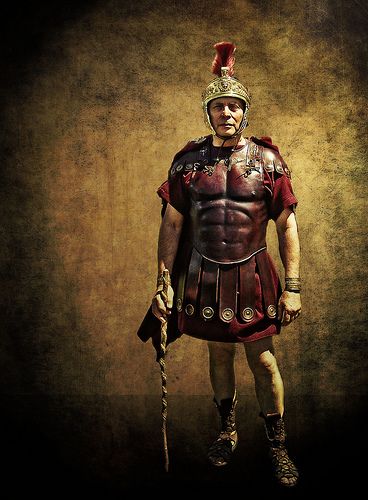
Ancient Greek, Roman, Samurai, and Aztec Body Armor


The Earliest Pictorial of Armored, Helmeted Warriors in Phalanx Formation on the Sumerian Stele of Vultures (2525 BC)


The Stele of Vultures is a stone slab erected by King Eannatum of Lagash to commemorate his defeat of the king of Umma in one of the many wars fought by states in ancient Mesopotamia--what is now southern Iraq.  It is called the Stele of Vultures because it depicted vultures tearing at the corpses of the defeated soldiers.  In the picture sketched above, it depicts armored and helmeted soldiers in a phalanx formation, armed with spears, trampling their opponents.  Since fighting in a phalanx requires special training and discipline, these are probably professional soldiers; and so this could be the first evidence in history of a standing professional army.  Prior to this, Neolithic armies were composed of men brought together to fight in some temporary crisis, and then they disbanded once the fighting was over.  We also know from other cuneiform tablets that some of the kings of the Mesopotamian city-states paid to maintain 600-700 full-time soldiers.  This state-supported military maintenance included expensive helmets, armor, weapons, and chariots.  The helmets were made of copper with a leather liner underneath.  The chariot was a Sumerian invention that became a major part of the military technology of Eurasian archaic states.  (See Richard A. Gabriel and Karen S. Metz, A Short History of War: The Evolution of Warfare and Weapons [Carlisle Barracks, PA: Strategic Studies Institute, Army War College, 1992], which is available online.)

Prior to this, for hundreds of thousands of years of human evolution, human beings lived in stateless societies that were roughly egalitarian and democratic, in that most of the adult males had equal access to coercive power, because throwing stones, spear-throwers, and bows and arrows were easily available; and so the great majority of individuals could use their coercive threat to prevent exploitative rule by an elite few.  In the Neolithic Chiefdoms, there was some status ranking, and prominent men might lead a society in war, but leaders who sought tyrannical dominance could be checked by the coercive power of the multitude of individuals resisting exploitation.

Beginning around 5,200 BC, there is evidence in Mesopotamia for villages and small towns of sedentary foragers, farmers, and pastoralists who managed their collective affairs and trade with the outside world.  So even after the development of agriculture, with the farming of domesticated plants and the herding of domesticated animals, human beings still lived in societies without bureaucratic states.

The first state in Mesopotamia--showing a state apparatus with walls, tax collectors, bureaucratic officials, and a priestly establishments--was probably Uruk.  A city wall was first built at Uruk around 3,200 BC.  By then Uruk was probably the largest city in the world, with a population between 25,000 and 50,000.

Following the model of Uruk, roughly twenty other city-states arose in the Mesopotamian alluvium.  Now it seemed that the liberty and equality of the state of nature had been lost as many people found themselves in organized state societies oppressed by slavery, forced labor, military conscription, and exploitative taxes.

According to Paul Bingham, the one primary cause for this move from egalitarian and democratic stateless societies to elite ruled archaic states is the new military technology of elite body armor.  Unlike stones, spear-throwers, and bows, specialized body armor is expensive and thus controlled by small groups of elite individuals.  Bingham's evidence for this is that in every archaic state--ancient Mesopotamian states, ancient Rome, ancient Inca state, ancient Mayans, ancient Aztecs, Imperial Japan, the Hawaiian states--coercive power is concentrated in elite armored warriors who are less than 10% of the male population.  Some evidence does not seem to conform to this pattern, however. Ancient Egypt was one of the earliest archaic states, and yet there is little evidence that Egyptian soldiers were heavily armored.  (See John Coleman Darnell and Colleen Manassa, Tutankhamun's Armies: Battle and Conquest During Ancient Egypt's Late Eighteenth Dynasty [Hoboken, NJ: John Wiley, 2007], pp. 81-83.)

Archaic states have hierarchical societies in which a small elite at the top rule for their self-interest in exploiting the majority of the people through enslavement, forced labor, conscription, and oppressive taxation.  Nevertheless, when these archaic states became too tyrannical, the state subjects could flee or rebel and thus bring the disintegration of the state, which confirms Locke's account of how people through resistance and rebellion against governmental tyranny reclaim their natural freedom.

I have written about the evidence for this in ancient Mesopotamia here and here.  This explains why Pierre Goodrich chose the Sumerian word amagi--the first word in the oldest written language for "liberty"--as the logo for the Liberty Fund.  The greatest threat to human liberty--the emergence of the archaic state in Mesopotamia--elicits the natural human resistance to tyranny that manifests the natural human longing for liberty that was shaped in the evolutionary state of nature.

Tuesday, April 07, 2026

"Makers" and "Takers" in the Paleolithic

Libertarians and classical liberals have long argued for defending the makers who produce wealth from the takers who expropriate it (Contoski 1997; D'Amato 2018).  The makers need protection because for most of recorded human history over the past 5,000 years, most societies have been ruled by a few takers (kings, princes, nobles, and high priests) who coercively exploited the great multitude of people who were the makers of wealth that was stolen from them by the takers.  In these societies, there was little incentive for the makers to produce more than they could consume since most of what they produced would be taken from them, and consequently the general standard of living was low.  

But then, beginning about 300 years ago in northwestern Europe and North America, there was a shift in social conditions that made the life strategy of making--producing wealth for use and exchange--more successful than the life strategy of taking--extracting wealth from others.  That shift in favor of making over taking came with the establishment of modern liberal constitutionalism and free-market capitalism.  Over the past 100 years those institutions of liberal democratic capitalism have spread around the world.  As a consequence of that, most of the 8.3 billion people alive today live longer, healthier, safer, richer, and freer lives than human beings have ever lived previously.  Previously, I have written about this as the "evolution of human progress through the liberal enlightenment.

So how do we explain this pattern in human history--5,000 years of oppression by the ruling elites of takers and then the sudden emancipation of makers that has promoted unprecedented material and moral progress recently for most of humanity?  And if we can explain the causes of that modern progress, how might that help us to prevent any weakening or even reversal of that progress that would allow the takers to regain their dominance over the makers?  Does the recent rise of the "illiberal state"--like that of Viktor Orban in Hungary, for example--show the return of the illiberal "taker state"?

One of the best attempts to answer those questions is in the work of Stephen Balch (a scholar at Texas Tech University).  In an article (Balch 2014) and in a book that is soon to be published, he puts the history of the struggle between takers and makers within a Darwinian "big history" that integrates the history of life and the history of humanity into a universal evolutionary history of all life.  It is an exhilarating display of expansive multidisciplinary scholarship that weaves insights from the life sciences, the social sciences, and the humanities into a dazzling intellectual tapestry that will forever change the way you think about life.

I have not yet fully thought through everything he has written about what he calls his "naturalist interpretation of history."   But I understand enough of it to say that I find almost all of his arguments persuasive.  I do disagree with him, however, about four points. 

First, Balch fails to see that most of what he says about the universal history of politics--from Paleolithic stateless societies to Neolithic agrarian states to modern liberal constitutional states--confirms John Locke's account of the universal "history of mankind." 

Second, Balch also fails to see that the struggle between takers and makers arose first among Paleolithic hunter-gatherers, although he is certainly right in saying that that struggle was dramatically intensified by the invention of agriculture, which created an economic surplus that allowed takers to accumulate great wealth in the form of expropriated crops.  

Third, in his account of the first agrarian states, such as those in Mesopotamia, Balch tends to exaggerate the invincible dominance of the ruling takers, while minimizing the power of the makers to resist or evade exploitative dominance.

Fourth, I don't agree with Balch's claim that classical liberals like Locke have been mistaken in understanding property rights as an outgrowth of the personal rights of self-owning individuals.  Balch wants to separate economic freedom from personal freedom because he worries that personal freedom can include maladaptive behavior such as pursuing sexual pleasure in ways that do not lead to reproduction, which lowers reproductive fitness.  But here he fails to see that a low birth rate can be an adaptive reproductive strategy for people in wealthy societies who want to make a large parental investment in a few children, so that those children will be more likely to succeed in a modern bourgeois society.

Here I will elaborate my second point of disagreement.  In my next post, I will take up the fourth point.


PALEOLITHIC MAKERS AND TAKERS

Among hunter-gatherers, the takers are people who take without giving.  They take what they want from the social resources of their group without contributing anything to those resources: they are free riders or social parasites.  The takers are either cheaters who take what they want by deception, or bullies who take what they want by force.  

The makers respond to this by consenting to moral rules against taking and enforcing those rules with reputational and forcible punishments of those who violate the rules.  Reputational punishment includes ridicule, ostracism, and shunning.  Forcible punishment--including execution--is directed against the worst bullies, particularly murderers (Boehm 2012, 64-74).

Balch does not see this conflict between makers and takers among hunter-gatherers because he thinks that conflict arose only after the invention of agriculture.

"Taking" only came fully into its own when there was some real "take" to be had, when there was a redistributable surplus over and above what was required for individual survival.  The invention of agriculture set the stage.  Paleolithic hunter-gatherers lived egalitarian lives.  There was marginal advantage to be had through superior hunting/gathering/fighting/nurturing/negotiating and seduction skills, but--with only so much to go around--rarely big genetic jackpots.  Once, however, there was a possibility of massive wealth accumulations in the form of expropriated crops, all this changed (2014, 12).

"Genetic jackpots" are important for Balch because he believes that the evolution of human nature by kin selection favors what biological theorists call "inclusive fitness": we are naturally inclined to behaviors that advance the reproductive fitness of ourselves, our offspring, and our collateral relatives.  Although we experience some genetic conflicts of interest with our relatives because they are not genetically identical to us, our conflicts of interest with non-kin are much deeper.  We fight with non-kin over scarce resources as we try to take as much as we can for ourselves and our relatives.  But prior to the invention of agriculture, there wasn't much to fight over, and so it was impossible for the takers to accumulate great wealth that they had taken from the makers.  Consequently, Balch argues, Paleolithic hunter-gatherer bands were egalitarian in that there was no dominant elite of a few takers ruling over a multitude of exploited makers.

But this ignores the fact that while hunter-gatherers have always been egalitarian, their societies have achieved not an absolute equality but rather--to use Christopher Boehm's term--an "egalitarian hierarchy."  As that term suggests, hunter-gatherers see that human beings are not naturally equal in all respects, because no two human beings are the same in all respects.  By virtue of being separate individuals, human beings are naturally unequal, in any number of respects.  But they are naturally equal in their natural desire for equal liberty--their natural freedom from being ruled by others without their consent.  

A few human beings have a natural desire for dominance--to be the alpha male who rules over others--and these are those whom Balch identifies as the takers.  And while human beings in subordinate positions are naturally inclined to defer to the dominant few, the subordinates are also naturally inclined to resist being exploited by those dominant few.  Thus, Boehm observes, the political nature of human beings is ambivalent in showing the tension between dominance, deference, and counter-dominance.  The natural desire for dominance can be checked by the natural desire of subordinates not to be dominated.

In an egalitarian hierarchy, the subordinates use sanctions--such as ridicule, disobedience, ostracism, or even execution--to restrain politically ambitious individuals, those with special innate or learned propensities to dominate.  In every society, there will be leaders in some form.  But an egalitarian hierarchical society will allow only a moderate degree of leadership.  Here the power of the takers is checked by the resistance of the makers.

In a few passages of his book, Balch seems to recognize this.  In speaking about how Boehm and Richard Wrangham describe the hunter-gatherer "environment of evolutionary adaptation" (EEA), Balch sees “a strain of oligarchy” and “targeted conspiratorial killing," which points to egalitarian hierarchy and the conditions for some taker/maker conflict.  He suggests that when he says that the worst bullies had to be eliminated (59, 126-27), and “the tension between hierarchical power and leveling morality has been a constant of human history” (129).

Moreover, what Balch calls “primal morality” in the EEA corresponds to what Locke calls the “law of nature” in the hunter-gatherer state of nature (60, 126-29, 218-19).  Locke’s law of nature is enforced by the “executive power of the law of nature”—the right of everyone to punish transgressors through reputational and forcible punishment, which would be supported by Boehm and Wrangham.  What Boehm and Wrangham say about killing bullies in the EEA confirms Paul Bingham’s argument about the importance of “killing from a distance” in enforcing cooperation.


REFERENCES

Balch, Stephen H. 2014. "On the Fragility of the Western Achievement." Society 51:8-21.

Balch, Stephen H.  Naturalizing History: A Biocultural Theory of Progress.  Book manuscript.

Boehm, Christopher. 1999. Hierarchy in the Forest: The Evolution of Egalitarian Behavior. Cambridge: Harvard University Press.

Boehm, Christopher. 2012. Moral Origins: The Evolution of Virtue, Altruism, and Shame. New York: Basic Books.

Contoski, Edmund. 1997. Makers and Takers: How Wealth and Progress Are Made and How They Are Taken or Prevented. Minneapolis, MN: American Liberty Publishers.

D'Amato, David. 2018. "'Makers' and 'Takers' in Libertarian Thought."  https://www.libertarianism.org.