Showing posts sorted by relevance for query Semenya. Sort by date Show all posts

Thursday, December 07, 2023

Caster Semenya and the Biological Justification for Sex-Segregated Sports

Over the years, I have written about the case of Caster Semenya--the Olympian and World Champion runner who has been excluded from running as a woman because she is a chromosomal (XY) male with a disorder (or difference) of sexual development.  The International Association of Athletics Federation (IAAF)--now named World Athletics--has banned her from running as a woman because she has the elevated testosterone levels of a man that give her an unfair advantage over women in athletic competition.

In her new book--The Race to Be Myself (Norton, 2023)--she says that her case is "about the struggle for universal human rights" (304); and for this reason, she has appealed her case to the European Court of Human Rights.  I have argued that the natural desire for sexual identity is one of the twenty natural desires of evolved human nature.  Semenya identifies herself as a "masculine woman" with the "natural body" of a chromosomal male with some of the bodily traits of a woman--such as a vagina but no penis (1-2, 173, 184, 279, 283, 303). She says that her body is not a man's body.  Nor is it the body of a transgender woman.  Does she have a natural human right to express her sexual identity as a "masculine woman" by competing athletically with other elite women runners?

I have argued that the natural desire for sexual identity is (mostly) binary.  For most of us, our biological sex is clearly male or female.  And for most of us, our gender identity corresponds to our sexual identity as male or female.  But in rare cases, an individual's sex is a biological mosaic of male and female traits.  Semenya is one of those rare exceptional cases, as she herself says.  Is it therefore fair to exclude her--as a chromosomal male with a female gender identity--from competing in women's races?  Should she either compete with other men, or artificially reduce her testosterone levels to the female range, and then compete with women?  Or should she compete in a third category--"intersex"?  There is a tragic conflict of desires here between Semenya's desire to run as a "masculine woman" in women's races and the desire of biologically typical women to compete with other biologically typical women.

Although I lean to the side of the IAAF in this debate, I see good arguments on both sides; and so, I remain undecided.


MORAL DISAGREEMENT AND VARIABLE DESIRES

The fundamental problem here is the moral disagreement that arises from naturally variable desires, and the need for prudence or practical judgment to resolve such cases.  I identified this problem in Darwinian Natural Right (44-49).

If the good is the desirable, and if there is a natural pattern of desires for human beings that includes the twenty natural desires, why do human beings fall into moral conflict?  The pervasiveness of moral disagreement is the one fact most often cited by proponents of moral relativism, who believe there are no natural, universal standards for resolving moral debate.  It does not follow, however, from the fact of moral controversy that there are no natural standards for moral judgment.

There are four sources of moral disagreement: fallible beliefs about circumstances, fallible beliefs about desires, variable circumstances, and variable desires.  In considering variable desires, we see both normal (typical) and abnormal (atypical) variation.  The normal variation arises from age, sexual identity, and individual temperament.  Natural human diversity is such that the young do not have exactly the same desires as the old, men do not have exactly the same desires as women, and individuals with one temperament do not have exactly the same desires as those with another temperament.  

The abnormal variation in desires arises from abnormality in innate dispositions or in social circumstances.  So, for example, while human beings are normally social animals with social desires that incline them to feel the pleasures and pains of those close to them, a few human beings are psychopaths who lack the social desires that normally characterize human beings, and these people are moral strangers who are not open to moral persuasion.

Intersex individuals like Semenya show an atypical variation in their desire for sexual identity.  Semenya's "natural body" (as a biological male with some female traits) inclines her to identify herself as a "masculine woman," who does not fit into the sexually binary categories of men's and women's athletics.


SEMENYA'S AMBIGUOUS SEXUAL IDENTITY

Here's how Semenya describes her sexual identity:

"I have what is called a difference in sex development (DSD), an umbrella term that refers to the varying genetic conditions where an embryo responds in a different way to the hormones that spark the development of internal and external sexual organs.  To put it simply, on the outside I am female, I have a vagina, but I do not have a uterus.  I do not menstruate, and my body produces an elevated amount of testosterone, which gives me more typically masculine characteristics than other women, such as a deeper voice and fewer curves.  I cannot carry a child because I don't have a womb; but, contrary to what many people think, I do not produce sperm.  I can't biologically contribute to make new life" (1-2).

Semenya says that at puberty, she developed typically masculine features, and she began fantasizing about girls.  She announced to her friends and family that she was "into girls" (54-55).  Later, she developed romantic feelings for a girl that she married.  At the marriage ceremony, Semenya dressed as a man, while her bride dressed as a woman.  She thought this was right because she had always been very masculine.  She and her wife now have two children by IVF.  She denies that she is a lesbian (193, 212, 248, 269).

Semenya's "difference in sex development" is 5a-Reductase 2 Deficiency, which is caused by a mutation in the gene encoding the enzyme 5a-reductase type 2 (5aR2).  5aR2 catalyzes the transformation of testosterone (T) to 5a-dihydrotestosterone (DHT), which drives the process of the sexual differentiation in the external genitalia during the development of the male fetus in the womb.  5aR2D in chromosomal males arises from deficient 5aR2 activity, resulting in decreased DHT levels.  Consequently, at birth, males will show ambiguous genitals--a micropenis or no penis and what looks like a vagina.  Sometimes, as in Semenya's case, these biological boys will be raised as girls.  But then at puberty, these biological males develop typically masculine features, because pubertal virilization is driven by elevated testosterone rather than DHT.

The circulating testosterone concentrations in Semenya's bloodstream is within the range for typical adult males (from 8 nanomoles per liter [nmol/L] to 25 nmol/L), which is much higher than the range for typical adult females (0.4 nmol/L to 2 nmol/L).  The International Association of Athletic Federations (IAAF) has said that this has given Semenya an unfair advantage in competing with women.  One can see this just by looking at the World Records for Running.  In every event, from the 100-meter race to the marathon, the world record times for men is lower than for the women.  For example, in Semenya's best event--the 800-meter race--the world record for men is 1:40.91, while the world record for women is 1:53.28.  The IAAF has pointed to scientific studies concluding that the primary reason for this large sex difference in athletic performance is exposure to high levels of endogenous testosterone in males beginning at puberty.  These male advantages associated with higher testosterone are considered the justification for sex-segregated sports (Hunter et al. 2023).  

In 2009, the IAAF told Semenya that she could compete in women's events only if she took estrogen pills that would reduce her testosterone levels to no more than 10 nmol/L for six months.  Notice that this is still far above the range for typical females.  In later years, the IAAF changed its regulations to drop the maximum level of testosterone first to 5 nmol/L and then to 2.5 nmol/L (Semenya, 195, 267, 299).  For over five years--from January of 2010 to August of 2015--Semenya took the estrogen pills.  By June of 2010, her testosterone had dropped below the 10 nmol/L maximum; and she was then free to run in IAAF races.  Once again, she was winning 800m races with good times like 1:59.90 and 1:58.16.  Any time under 2 is a good time for an elite female runner.  But still these times were well above her gold-medal-winning time of 1:55.45 at the Berlin World Championships.

After IAAF lost a court case in 2015 about their testosterone regulations for women, the regulations were dropped, and Semenya stopped taking the estrogen pills.  One year later, Semenya won the gold medal for the 800m at the 2016 Rio Summer Olympics with a time of 1:55.28.  8 women ran in the 800 meters women's final.  Of those 8, 3 of them were chromosomal (XY) males with disorders of sex development (DSD) who identify themselves as women.  Those 3 intersex women have levels of testosterone far higher than normal for women.  These 3 were the winners of the race: Caster Semenya (Gold), Francine Niyonsaba (Silver), and Margaret Nyaira Wambui (Bronze).  One of the women who lost that race--Great Britain's Lynsey Sharp--expressed her frustration in televised interviews with having to compete against intersex individuals with the unfair advantages that come from male testosterone levels.  She and other female runners called for the IAAF to impose new regulations that would ban biologically male DSD athletes from women's events.

In 2018, the IAAF announced new rules:  athletes with DSD competing with women in the 400m, 800m, and 1500m distances would have to lower their testosterone levels down to 5 nmol/L for a period of six months before they were eligible to compete.  Then, in the spring of this year, the IAAF announced new regulations requiring women with DSD to lower their testosterone to 2.5 nmol/L or below for a continuous twenty-four months.  Semenya is contesting those new rules in her appeal to the European Court of Human Rights.


THE IAAF'S BEST ARGUMENT

In her book, Semenya gives her version of her dispute with the IAAF as presented in 2019 at the Court of Arbitration for Sport in Lausanne, Switzerland (Semenya 274-88).  Reading this along with a recent article by scientists supporting the IAAF's position (Hunter et al. 2023) makes clear the best arguments on both sides of this debate.

The best argument for the IAAF is that the biological basis of sex differences in athletic performance show that biological males--including those with DSD--have an unfair advantage in athletic competition with women, and therefore fairness requires that these men be excluded from women's athletic events.

This argument makes three claims.  First, in elite athletic competition, the performance of men tends to be superior to that of women.  Second, a primary reason for this is the sex differences in anatomy and physiology as determined by sex chromosomes and sex hormones, so that adult men on average are typically stronger, more powerful, and faster than women of similar age and training. Third, biological males with DSD (such as 5a-reductase 2 deficiency) will on average have this male advantage over women in athletic competition.  Semenya seems to accept the first two claims, but she rejects the third one.

The claim of male athletic superiority is easily supported by glancing at the world records for athletics.  Consider just the racing events, for instance, in which all of the world record times for men are faster than those for women.  In the 800m race, the world record for men is 1:40.91, set by David Rudisha running for Kenya at the 2012 Olympic Games.  The record for women is 1:53.28, set by Jarmila Kratochvilova running for Czechoslovakia at the Munich World Championships in 1983.  In the Marathon, the world records were set just two months ago.  The men's record is 2:00:35, set by Kelvin Kiptum running for Kenya at the Chicago Marathon.  The women's record is 2:11:53, set by Tigst Assefa running for Ethiopia at the Berlin Marathon.

One good criticism of this kind of evidence is that what looks like a male superiority in biological ability is really only a consequence of the differences in the cultural circumstances of men and women.  For a long time, women have been discouraged from participating in athletic activity.  In 1896, at the first Olympic Games in the modern era (in Athens, Greece), no women were allowed to compete.  In 1967, Kathrine Switzer was the first woman to run the Boston Marathon as an officially registered competitor.  In 1984, the first women's Olympic marathon was held in Los Angeles.  It was not until 2021, that there were similar numbers of women and men at the summer Olympics in Tokyo.  So, historically, women have had much less time and opportunity to develop their athletic skills than the men have.

In 1992, the journal Nature published an article by two biologists with the title "Will Women Soon Outrun Men?" (Whipp and Ward 1992).  They pointed out that over the previous century, both men and women were improving their world record times in racing, but the rate of improvement for women was double that for men.  The predicted that if these trends continued into the future, the world record times for women in the marathon would be the same or better than those for the men by 1998.  They also predicted that the records in all other racing events would be no different for men and women by the middle of the 21st century.

This has not happened, however, because beginning sometime after about 1985, the rate of improvement in women's running times began to slow and level out, so that there has been no intersection with the times for men.  In all of the running events, the gap between men's and women's world records is narrower than it has even been, but it's still there.

The best explanation for this continuing performance gap, according to the second claim of the IAAF, is that this shows biological sex differences:

"Sex differences in athletic performance that involve strength, power, and/or endurance are sizable and determined by biological differences between males and females.  Adult men ov average are stronger, more powerful, and faster over short and long distances than women of similar age and training status.  The sex differences emerge with the onset of puberty, coinciding with the increase in endogenous sex hormones, in particular testosterone in males . . . . The sex differences in the world records and best performances of many athletic events that rely on endurance and muscular power ranges from 10% to 30%. . . . The largest sex differences are apparent for sports and events relying more on muscular power such as in weightlifting, jumping events, and short distance swimming. . . ." (Hunter et al. 2023: 2332-33).

On the other hand, sports that rely less on muscular power such as archery and shooting show minimal sex differences in performance.

But even if we agree with all this--that typically biological males tend on average to have an advantage in athletic competition over typically biological females--it's not clear that this must hold true for atypically biological males with DSD like Semenya.


SEMENYA'S BEST ARGUMENT

Consider what Semenya says here:

". . . The IAAF's position was that women with high testosterone levels had an unfair advantage equal to the advantage that male athletes had over female athletes.  On its face, this is ridiculous.  We are not men.  I am a great runner, and I train with men, some of whom I can maybe give a hard time to on my best day, just like any other elite female athlete could, but I have never been able to even approach an elite male runner's times.  Likewise, there are plenty of men who normal 'male' testosterone levels whose only hope of beating a female athlete with 'female' levels is in their dreams" (238).

In fact, Semenya observes: "The IAAF knew that not one woman with a confirmed DSD diagnosis had ever even approached the running times of male elite runners" (269).  If biological males with DSD have the same advantage as normal males over women in athletic competition, then why don't runners like Semenya achieve the same running times as elite male runners?  Since Semenya's running times are within the range of other elite female runners, that suggests that she does not have an unfair male advantage over her competitors.

To counter this argument from Semenya, some IAAF officials have accused her of cheating by running slower than what she is capable of, thus hiding the fact that she has the same male advantage as other elite male runners (Semenya 281-83).  But this is implausible.  Throughout her running career, Semenya's great ambition has been to break the world record time for the 800m in the women's event, but she has never done that.  If she was easily capable of breaking this record, why would she slow herself down and fall short of the record?

There is one alternative explanation.  Most men with normal male testosterone levels cannot run faster than elite female runners; and even most good male runners who can run as fast as elite women cannot run as fast as elite male runners.  Is Semenya a good male runner who is good enough to compete with elite female runners, thus showing his male advantage, but not good enough to compete with elite male runners?  If so, could this be true for other "46 XY males with DSD"?

I don't have good answers to those questions.


AN "INTERSEX" OLYMPICS?

In any case, we should consider that one way out of this debate would be to create a third category for sexually segregated athletic competition--"intersex" events in which atypicaly males/females could compete against one another.  This would be similar to what is done now with the Paralympic Games--a highly successful event for athletes with disabilities.

Kenya's Margaret Wambui--the biological male with DSD who won the bronze medal in the 2016 Olympic 800m event when Semenya won the gold--has proposed this.  But Semenya rejects it.


REFERENCES

Hunter, Sandra K., et al. 2023. "The Biological Basis of Sex Differences in Athletic Performance: Consensus Statement for the American College of Sports Medicine." Medicine and Science in Sports and Exercise 55: 2328-2360.

Semenya, Caster. 2023. The Race To Be Myself: A Memoir.  New York:  W. W. Norton & Company.

Whipp, Brian J., and Susan A. Ward. 1992. "Will Women Soon Outrun Men?" Nature 355 (January 2): 25.

Friday, July 02, 2021

Caster Semenya--a Chromosomal Male--Will Not Run as a Woman in the Tokyo Olympics

I have written about the debate over Caster Semenya, the chromosomal male who claims that she has a right to run in the Olympics as a female, because that is her gender identity.  She has shown that she can run 800 meters faster than any woman in the world.  But the question is whether this is a fair competition, given that she is a 46-chromosome male (XY), which gives her the advantage that comes from the typically high male testosterone.

I have argued that Semenya is probably an XY male born with 5-alpha reductase deficiency, so that she is a chromosomal male who was born with sexually ambiguous sex organs who was raised as a girl.  She identifies her gender identity as female, but she is biologically male, with testes producing testosterone, which gives her an unfair athletic advantage in the 800-meter women's race.

In response to complaints from female athletes who said that she should not be permitted to compete as a woman, the International Association of Athletic Federations in 2018 issued new regulations saying that genetic males with some disorder of sex development would be permitted to compete as women in middle-distance races (400 meters to one mile) only if they lower the level of testosterone in their blood down to the highest possible level for a healthy woman with ovaries.  Otherwise, they can run in the men's events.

Semenya refused to do this.  She has attempted to qualify for the Tokyo Olympics by competing in the 5,000 meters race for women, which favors female stamina rather than male strength.  As indicated in a recent article in the Wall Street Journal, Semenya has failed to qualify for this event, and so she will not be in the Tokyo Olympics.

What is most interesting here is that Semenya has said in court documents that she is a 46 XY male with female features, probably indicating 5-alpha reductase deficiency at birth, which confirms my suspicions.

Semenya believes it is unfair to force her to compete with men in Olympic running events.  Why isn't it unfair for her as a chromosomal male to compete with chromosomal females?

Saturday, February 27, 2021

The Debate over Transgender Equality: Does Darwinian Natural Right Provide Any Standard?

 I have argued that the desire for sexual identity is one of the 20 natural desires of our evolved human nature.  If so, does that provide any natural standard for adjudicating the debate over transgender equality?  Most human beings easily identify their biological sexual identity as male or female.  But in a few cases, men desire to identify themselves as women, or women desire to identify themselves as men.  Does this show that gender identity is a social construction or mental experience that has nothing to do with the biological sex of the body?  Must we respect this gender identity by treating transgender women as women and transgender men as men?

So, for example, must we allow Caster Semenya to compete in the Olympics as a woman, even though she is a chromosomal male (XY) with the high testosterone levels typical for men, which gives her an advantage over other women in running events?  If we allow this, this would probably mean that chromosomal women (XX) will almost never win in Olympic running events competing with transgender or intersex women like Semenya.

Under present rules, Semenya will be prohibited from defending her 800m gold medal (won at the 2016 Summer Olympics in Rio de Janeiro), unless she takes drugs to reduce her testosterone to typically female levels.  Two days ago, her lawyers announced that they will be appealing to the European Court of Human Rights to ask that they overturn this rule as a violation of her human rights.

In a previous post, I have written about the controversy over Semenya, arguing that the science of sexuality confirms what we should know by common-sense experience that both the norm of sexual duality and the few exceptions to that norm are biologically real, and not just arbitrary social constructions.  We can respect Caster Semenya as an intersex individual with a partially male body and a female gender identity.  But we must also respect those many typically female athletes who want to compete with other biological females, so that they have a chance to display their athletic excellence.  To resolve this conflict of interests, the Olympic committees have properly ruled that intersex individuals like Semenya must either compete with men or reduce their testosterone levels to compete with women.

A similar dispute has arisen in the debate over the Equality Act, just passed by the House of Representatives, which would amend the Civil Rights Act of 1964 to prohibit discrimination on the basis of both sexual orientation and gender identity.  By passing this legislation, the Congress would endorse the interpretation of the Civil Rights Act adopted by the Supreme Court last summer in the Bostock case, where Neil Gorsuch (a Trump appointee) wrote the majority opinion that rejected the Trump Administration's claim that the sexual equality of men and women under the Civil Rights Act does not include the equal treatment of gays and transgender people.  I have written about this here and here.

President Biden has nominated Dr. Rachel Levine to be assistant secretary of health, who would be the first openly transgender federal official confirmed by the Senate.  In the first confirmation hearing, Senator Rand Paul questioned her about whether she supported genital mutilation, gender reassignment surgery, and hormone therapy for children.  Levine was evasive, replying that, "Transgender medicine is a very complex and nuanced field with robust research and standards of care."

Apparently, Paul's questioning was motivated by reports that Levine has endorsed a research study concluding that doctors should provide drug therapy for transgender adolescents to suppress puberty, because this would improve their mental health by bringing the sexual traits of their bodies into harmony with their transgender identity.  The study was published in the journal Pediatrics--"Pubertal Suppression for Transgender Youth and Risk of Suicidal Ideation," 145 (February 2020): e20191725.

Transgender people are known to suffer from high rates of suicidal thoughts--with about 40% having attempted suicide.  The claim of this new study is that pubertal suppression for transgender children would reduce this propensity to suicide, which would show better mental health for them.  This would be done by doctors prescribing gonadotropin-releasing hormone analogues that suppress puberty for adolescents 9 to 16 years old.

The method in this study was to conduct a survey of 20,619 transgender adults aged 18 to 36 years old, who were asked about their history.  Of this group, 3,494 individuals reported that they had at some time wanted to have puberty suppression therapy, but only 89 of these individuals reported that they had actually had the treatment.  These individuals were also asked about whether they had ever had suicidal thoughts or whether they had attempted suicide.  The researchers were able to show that those who reported receiving the puberty suppression treatment had a lower rate of suicidal thoughts and attempts than those who wanted the treatment but did not receive it.  The researchers concluded: "pubertal suppression for transgender adolescents who want this treatment is associated with favorable mental health outcomes."  And this is the conclusion that has been widely reported in the news media.

But if you read this study carefully, you will see some dubious features of their reasoning.  First of all, there's the fundamental methodological problem with all such survey research: they rely totally on the self-reporting of the people surveyed, although it is well known that people are often not accurate or honest in reporting what they have done or believed (see George Beam, The Problem with Survey Research, Transaction Publishers, 2014).

For instance, when some individuals report that they have had pubertal suppression treatment, and consequently they became less suicidal than they would been without the treatment, how do we know that this is true?  The research collected no medical records or observational data to confirm this self-reporting.  People who would report that they remained suicidal even after having the treatment would be confessing that their beliefs and behavior were mistaken.  Is it possible that they might be reluctant to admit that (even to themselves)?

Moreover, if you look at the actual raw numbers, they do not provide strong support for the conclusions of the article.  Only 16.9% of the people surveyed reported that they ever wanted pubertal suppression, so it seems that the great majority of transgender people do not believe this treatment would be good for them.  And those who actually received the treatment were only 0.43% of the total!

Of those who reported wanting to have the treatment, only 89 individuals (2.5%) reported that they had actually had the treatment.  And of those 89, 67 (75.3%) reported that they had thought about suicide, while 37 (41.6 %) reported attempting suicide.  41.6% attempting suicide is close to the 40% of transgender people generally who attempt suicide.  It's hard to see that the treatment has done them much good.

Now, it is true that those who reported wanting the treatment but not having it have a higher rate of suicidality than those who wanted it and had it.  But the differences are not very dramatic.  Of the first group, 90.2% report suicidal thoughts, and 51.2% reported attempts at suicide--as compared with 75.5% and 41.5%, respectively, for the second group.

The most striking finding in these numbers is that regardless of whether transgender people report having puberty suppression or not, transgender people as a whole suffer depressingly high rates of suicidal behavior, much higher than for the general population.

There's another problem here.  Those who had puberty suppression treatment between the ages of 9 and 16 were minors.  That means that their parents agreed to this.  Did the parents force or coax their children into doing this?  Weren't these children too young to make a mature decision of this sort on their own?

Why shouldn't the law prohibit children and parents from making this decision until the children are young adults with enough moral and intellectual maturity to make this decision for themselves?

A popular explanation of transgender people is that they feel "trapped in the wrong body."  These people are said to have a personal gender identity that conflicts with the biological sexual identity of their bodies, and so they might seek hormonal and surgical treatment to change the sexual identity of their bodies to conform to their gender identity.  It has now become a standard medical treatment for "gender dysphoria" to provide procedures for changing one's sex to coincide with one's preferred gender, so that men can become women, and women can become men.

I agree with Melissa Moschella (a philosopher at Catholic University of America) who has argued against this "wrong body" narrative as based on a false dualist view of human nature that should be rejected in favor of an "animalist" view. Dualism is false because the body is intrinsic to our personal identity. Animalism rightly sees that our personal sexual identity as male or female is rooted in the biological identity of our body.  We are our animal bodies.  And therefore men are those with male bodies, and women are those with female bodies.  It's impossible to change one's biological sex, because biological sex is impressed on our body and brain early in fetal and neonatal life.

Gender dysphoria, she has argued, is not a medical problem requiring physiological or surgical treatment but a psychological problem requiring psychiatric counseling.  Those with gender dysphoria are suffering from the mental delusion that their mental sexual identity differs from the sexual identity of their body.  So doctors who try to help them undergo a biological sex change are not curing them but rather supporting their delusional disorder.  This explains why although patients often feel better initially after sex-change procedures, later on they often become depressed, anxious, and suicidal.

Moschella makes a comparison with anorexia. The cure for anorexia is not liposuction, although the patient might initially feel better, because the problem is not obesity but the psychological delusion of being too obese.

Moschella has also pointed out the incoherence in the "wrong body" idea.  It is said that a person's gender identity is in the mind not in the body.  But then it is said that the sex of the body must be changed to be in harmony with the true gender identity of the person, which concedes that the sex of the body really is essential for sexual identity.

Moschella seems to be agreeing with Dr. Paul McHugh at Johns Hopkins University Hospital, who was responsible for shutting down the sex-change treatment program that had once been supervised by Dr. John Money.  Money was the one who invented the idea of "gender identity" as different from "sex identity," with the thought that "gender" is a mental or social construction that need not conform to biological nature.  This has supported the claim that while animals have "sex," only humans have "gender."  Moschella's animalism seems to deny the gender/sex dichotomy started by Money.

It should be said, however, that biological nature does sometimes throw up anomalous cases that cannot be clearly identified as male or female--the most obvious case being those who are born as true hermaphrodites, who combine male and female traits.  In response to a question about such cases of intersexuality, Moschella has conceded that these cases show a biological disorder creating confusion about biological sex identity, but gender dysphoria is not an intersexual anomaly of nature like this.

For Moschella to sustain this claim, she would have to refute the "developmental mismatch" theory of gender dysphoria.  According to this theory, in utero the sexual differentiation of the genitals occurs separately and earlier than the sexual differentiation of the brain, so that it is possible for the sexual identity of the body to differ from the sexual identity of the brain.  This is not a dualist theory that denies animalism, because both the body and the brain are biological realities of the human animal.

My argument here is that the central tendency of animal biology is to distinguish the sexual identity of males and females as determined by their complementarity for reproduction.  But while this holds for the most part, there are exceptional cases in nature where the bipolarity of male and female becomes confused.

Some of my other posts on intersexuality and gender dysphoria can be found herehere, and here.

Monday, November 11, 2019

Testosterone and Intersexuality in Female Athletics: Caster Semenya and the Desire for Sexual Identity

              Caster Semenya of South Africa Winning the 800 Meters Race for Women at the Rio Olympics 2016


Here is a full video of the race.

In 2016, at the Summer Olympics in Rio de Janeiro, 8 women ran in the 800 meters women's final.  Of those 8, 3 of them were chromosomal (XY) males with disorders of sex development (DSD) who identify themselves as women.  Those 3 intersex women have levels of testosterone far higher than normal for women.  These 3 were the winners of the race: Caster Semenya (Gold), Francine Niyonsaba (Silver), and Margaret Nyaira Wambui (Bronze).  One of the women who lost that race--Lynsey Sharp--expressed her frustration with having to compete against intersex individuals with the unfair advantages that come from male testosterone levels.

Cases like this have created a controversy over whether it is fair for intersex individuals to compete in women's athletic events because they identify themselves as women.  Should we replace biological sex differences with gender identity, so that anyone who identifies as a woman is a woman, even when she has a male body in some respects?  Or should we say that segregating biological males and biological females really does matter, particularly in certain arenas of life like athletic competition, where males have a performance advantage over females?

Both men and women produce testosterone (T).  But men have higher levels of T as produced by the testes, with lower levels produced in the adrenal glands.  Women also produce T in their adrenal glands, and in their ovaries.  In general, men have 10 to 30 times more T than women.  Most women have T levels in the range of 0.5 to 1.5 nanomoles per liter (nmol/L), while most men have T in the range of 10 to 35 nmol/L.  This gap appears first in puberty, when the testes produce more T in men than the adrenal glands and ovaries produce in women.

These higher levels of T during male pubertal growth create physical traits for men that give elite male athletes a performance advantage on average over elite female athletes (Handelsman et al. 2018).  Compared with women, men on average have greater lean body mass (more skeletal muscle and less fat), larger hearts, higher cardiac outputs, larger hemoglobin mass, a greater ability to take in oxygen, greater glycogen utilization, and higher anaerobic capacity.  This gives an advantage to male athletes over female athletes in competitive running, throwing, jumping, swimming, and lifting weights.

Female athletes with T levels at or near the male range are either doping, or they are trans (male to female) or intersex women--that is, 46 XY males with some disorder of sex development (DSD).  Among elite female athletes, the most common DSD is 5-alpha reductase deficiency (5-ARD) (Coleman 2017; Fenichel et al. 2013).  5-ARD is caused by a genetic mutation that creates a deficiency in the enzyme 5-alpha reductase, which is necessary for the conversion of testosterone to dihydrotestosterone (DHT).  A low level of DHT in a developing XY fetus disrupts the formation of the external sex organs before birth.  At birth, children with 5-ARD have sexually ambiguous sex organs, and they are often raised as girls, although they are biologically male, with testes producing testosterone.  At puberty, their male typical testosterone levels will produce the normal development of secondary male sex characteristics.

Caster Semenya is probably an XY male born with 5-ARD, who has always identified herself as a female, although she has also the athletic performance advantages that come with her biologically male body.  Once this became clear, it was possible for some sports observers to predict that she would have a virtually 100% chance of winning the Gold Medal in the 800 meters race in Rio in 2016, because not even the best elite female athletes with female bodies could come close to overcoming her performance advantage with her male body.

In response to the complaints about the unfair advantage enjoyed by Semenya and other intersex athletes competing in women's athletic events, the International Association of Athletic Federations (IAAF) in 2018 issued new "Eligibility Regulations for the Female Classification."  The regulations applied to those individuals who were legally female and had some DSD causing them to have male chromosomes (XY), testes and not ovaries, circulating T in the male range, and bodies that can use circulating T.  These people would be permitted to compete as women in middle-distance track races (400 meters to one mile) only if they lowered the level of T in their blood down to below 5 nmol/L (the highest possible level for a healthy woman with ovaries) for a period of six months prior to competition.

Semenya filed a suit against these regulations as unfairly discriminatory.  Last May, the Court of Arbitration for Sport (CAS) ruled (by a 2-1 vote of the judges) to uphold the IAAF regulations.  Some of the coverage of this case in The New York Times can be found here and here.

The arguments in favor of the IAAS's position have been well stated by people like Dorianne Lambelet Coleman, a law professor at Duke Law School who was a champion 800 meter runner in 1982 and 1983 (Coleman 2017, 2019).  The opposing arguments have been put forward by people like Rebecca Jordan-Young and Katrina Karkazis (2019).

Coleman contends--rightly I think--that while sex segregation and discrimination should often be challenged as unfair, the separation of the sexes is justifiable when this serves some valuable institutional goals while minimizing any harmful effects.  That is true for the institution of sports because separating men and women into different competitive arenas promotes the valuable goals of sport in the modern world.  It showcases the best athletes, because in having men compete with men and women with women, the best female athletes have an equal opportunity to be recognized for their athletic achievements, which would not happen if they were competing with men, because biological sex differences--particularly in testosterone levels--give men a performance advantage over women.  This segregation of the sexes in sports promotes liberal reform by weakening the traditional subordination of women to men.  Beginning with the Olympics in ancient Greece, elite athletic competition was a purely male activity, and it was not until the beginning of the 20th century, that women were allowed to compete in women's only events.  To achieve these goals, there has to be some defined categories distinguishing men and women and some enforcement of rules for who can compete as women in the women's events.

Jordan-Young and Karkazis offer lots of objections to this position, but the most fundamental one is that Coleman's reasoning falsely assumes a sex dualism in which sex identity is clearly divided into the bipolar categories of male and female, which includes a "sex gap" in T--men have a high T level, while women have a low T level, and there is no overlap between the T blood levels of men and women.  If this were true, then one could say that a naturally high T woman like Semenya is not "really" a woman, and so she should not be allowed to compete in women's athletics, because her typically male T levels give her an unfair advantage over women with typically female T levels.

This is not true, they argue, because there is no clear sex gap in T levels between elite male and female athletes.  In one large-scale study of T in elite athletes--taking blood samples from 446 men and 234 women athletes in fifteen Olympic events in 2000--it was found that although the average T levels were very different between men and women, there was a substantial overlap in the T levels of the women and men athletes.  13.7 percent of the women had T above the typical female range, and 4.7 percent (12 individuals) had T levels within the typical male range.  The researchers concluded from this that "the IOC [International Olympic Committee] definition of a woman as one who has a 'normal' testosterone level is untenable" (Healy et al. 2014: 294).

And yet another large-scale study of T in elite athletes reached a contradictory conclusion.  Researchers measured the blood levels of T in 849 elite female athletes, and once they removed five doped athletes and five 46 XY DSD women from the group, they found that the median T values were close to the range typical for young women.  They concluded that "doping and some forms of DSD are likely to be the two most important confounding factors when hyperandrogenism in female athletes is considered" (Bermon et al. 2014).  This would explain the contradiction with the other study, because the 12 women in that study with T levels within the typical male range were probably either doping or DSD women.

Jordan-Young and Karkazis have objected that to exclude all women whose high natural T could be traced to variations in sex development--intersex people--as "confounding factors" is question-begging circular reasoning.  T levels look dimorphic only when you throw out women with intersex variations that have T levels overlapping the male range.  But if you include those women, you will see that T levels aren't dimorphic, because they are characterized by two curves for men and women that overlap.

This challenges the claim that I have often made about the natural desire for sexual identity--that human beings generally desire to identify themselves as male or female, which creates a universal bipolarity of male and female in all human societies.  Against this, Jordan-Young and Karkazis insist that there is no clear male/female dualism because the natural reality of sexual identity is too messy for that--some people are male, some are female, and some are in-between.  There are not just two sexes; but, as Anne Fausto-Sterling has argued, there are at least five.  I have written about this herehere, and here.

Jordan-Young, Karkazis, and Fausto-Sterling are correct in pointing out that sex characteristics are not always distributed bimodally into clear male and female categories.  But still, as Coleman has observed, as soon as one considers the incidence of this distribution and the reproductive function of male and female genitalia, sex clearly does appear bipolar.  Over 98% of all human beings have had a normal sex development into either a typical male or a typical female, so that for most of us, chromosomal sex, gonadal sex, hormonal sex, and phenotypic sex all support a sex identity as either male or female.  One can see this in any textbook chart of normal genital development.

And yet even as nature shows this bipolarity of male and female in normal genital development, it also shows genital variation, as in this illustration, which shows the typical male (figure 1), the typical female (figure 6), and the in-between types (figures 2-5).  As a statistical norm, sex is clearly binary, although it's binary with exceptions.  As Aristotle would say, the dualism of male and female is what nature creates "for the most part," but there will always be some exceptions to the rule.  This is generally true for all biological phenomena.

The science of sexuality confirms what we should know by common-sense experience that both the norm of sexual duality and the exceptions to that norm are real.  They are not just arbitrary social constructions.

We can respect Caster Semenya as an intersex individual with a partially male body and a female gender identity.  But we must also respect those many typically female athletes who want to compete with other females, so that they can display their athletic excellence.  This creates a conflict of interests.  The IAAF has tried to resolve this conflict by telling those intersex individuals like Semenya that they must either compete with men or reduce their testosterone levels to compete with women.  In doing this, they have weighed the possible harm to people like Semenya against the possible harm to typically female athletes.

There is another alternative.  We could say that all athletic competition should be unisex: everyone--whether male, female, trans-male, trans-female, or intersex--could compete in the same events.  If that were done, however, in many events, women would never win.  And surely that would be unfair for the women.  That's why women's only athletic events were originally established--to allow female athletes to display their athletic excellence, free from the unfair advantage that men would have in competing with them.  If that is correct, doesn't that mean that athletic institutions must define what counts as typically male and female individuals for the purpose of distinguishing who is rightly assigned to male or female events?


REFERENCES

Bermon, Stephane, et al. 2014. "Serum Androgen Levels in Elite Female Athletes." Journal of Clinical Endocrinology and Metabolism 99 (11): 4328-4335.

Coleman, Doriane Lambelet. 2017. "Sex in Sport." Law and Contemporary Problems 80: 63-126.

Coleman, Doriane Lambelet. 2019. "A Victory for Female Athletes Everywhere." Quillette, May 3.

Fenichel, Patrick, et al. 2013. "Molecular Diagnosis of 5 Alpha-Reductase Deficiency in 4 Elite Young Female Athletes Through Hormonal Screening for Hyperandrogenism." Journal of Clinical Endrocrinology and Metabolism 98 (6): E1055-E1059.

Handelsman, David J., et al. 2018. "Circulating Testosterone as the Hormonal Basis of Sex Differences in Athletic Performance." Endocrine Reviews 39: 803-829.

Healey, M. L., et al. 2014. "Endocrine Profiles in 693 Elite Athletes in the Postcompetition Setting."  Clinical Endocrinology 81: 294-305.

Jordan-Young, Rebecca M., and Katrina Karkazis. 2019. Testosterone: An Unauthorized Biography.  Cambridge, MA: Harvard University Press. 

Friday, August 02, 2024

Should Algerian Boxer Imane Khalif Compete in an Intersex Olympics?

 At the Paris Olympics, there has been an intense controversy over the women's boxing match in which the Algerian boxer Imane Khalif easily defeated Italy's Angela Carini in only 46 seconds.  Khalif looks and fights like a man.  So, it appeared that male violence against women has become an Olympic sport!

It's hard to judge this, however, because the news reports have not clearly identified Khalif's sexual biology.  It is said that she is not a transgender woman--someone born male who decided later in life decided to take on a female gender identity.  Instead, it is said that she was born as a girl but with a genetic condition that gives her an abnormally high level of testosterone.

I have written a series of posts on the Olympic runner Caster Semenya.  I suspect that Khalife is like Semenya:  she's an XY male born with 5-alpha reductase deficiency, so that she is a chromosomal male who was born with sexually ambiguous sex organs who was raised as a girl.  She identifies her gender identity as female, but she is biologically male, with testes producing testosterone, which gives her an unfair athletic advantage in athletic competition with women.  If that is so, then she is not a transgender woman but an intersex woman, who falls somewhere between normal males and normal females.

I have proposed that intersex people like this should compete in an Intersex Olympics, similar to the Paralympics.  Some intersex athletes have agreed that this would be the best solution to the problem, although Semenya does not.

Monday, July 17, 2023

The Natural Desire for Sexual Identity Is (Mostly) Binary


                                            The Binary Sexual Reality of Two Kinds of Gametes


I have argued that the natural desire for sexual identity as either male or female is one of the twenty natural desires of our evolved human nature.  But even as I stress the dualism of sexual identity as male or female as the biological central tendency of our human nature, I recognize the variation from this strict bipolarity--such as true hermaphrodites who combine both sexes, other kinds of intersexual people, and people who are transgender in crossing from one sex to another.  

The natural desire for sexual identity is mostly binary.  For most of us, our biological sex is clearly male or female.  And for most of us, our gender identity corresponds to our sexual identity as male or female.  But in rare cases, an individual's sex is a biological mosaic of male and female traits.  And in some cases, an individual's gender identity diverges from his or her biological sexual identity.  I have written about this hereherehere, and here.

I was recently prompted to think more about this as I read an article in Skeptical Inquirer by Jerry Coyne and Luana Maroja on "The Ideological Subversion of Biology."  They consider six examples of how "progressive social justice" denies the truths of biology.  The first example is the popular claim that "sex in humans is not a discrete and binary distribution of males and females but a spectrum."  They reject this:

"This statement . . . is wrong because nearly every human on earth falls into one of two distinct categories.  Your biological sex is determined simply by whether your body is designed to make large, immobile gametes (eggs, characterizing females) or very small and mobile gametes (sperm, characterizing males).  Even in plants we see the same dichotomy, with pollen producing the tiny sperm and ovules carrying the large eggs.  The size difference can be huge: a human egg, for instance, has ten million times the volume of a single sperm.  And each gamete is associated with a complex reproductive apparatus that produces it.  It is the bearers of these two reproductive systems that biologists recognize as 'the sexes.'

"Because no other types of gametes exist in animals or vascular plants, and we see no intermediate gametes, there is no third sex. . . ." (35).

Although I generally agree with everything they say, I would emphasize the significance of the adverb in the first sentence: "nearly every human on earth falls into one of two distinct categories."  Coyne and Maroja admit that a few human beings cannot be clearly identified as either male or female.  In some previous posts, I have commented on Anne Fausto-Sterling's claim that there are at least five human sexes.  In addition to males and females, there are three other sexes.  True hermaphrodites ("herms") have both male chromosomes (XY) and female chromosomes (XX); and consequently, they have can have one testis and one ovary, or a fusion into an ovotestis, and they might have a vagina with a large clitoris that at puberty grows to the size of a penis.  Female pseudohermaphrodites ("ferms") have ovaries and female chromosomes (XX), but they might have beards, what looks like a penis, and other apparently masculine traits.  Male pseudohermaphrodites ("merms") have testes and male chromosomes (XY), but they might have a vagina, a clitoris, and breasts.  Merms and ferms are intersexual individuals whose sexual development has deviated in some way from that of a typical male or typical female.  This includes various disorders of sexual development that create anomalies in the sex chromosomes, the gonads, the reproductive ducts, and the genitalia.  For example, Caster Semenya of South Africa, who won the 800 meters race for women at the Rio Olympics in 2016, is probably a chromosomal male (46 XY) who was born with sexually ambiguous sex organs, and who was raised as a girl, despite being biologically male.

While Coyne and Maroja recognize these anomalous cases of confused sexual identity, they deny that these represent "other sexes."  They insist that there can only be two sexes--male and female--because these are the two reproductive systems designed by evolutionary natural selection.  The male reproductive system contributes sperm to the reproductive process, while the female reproductive system contributes eggs.

One can see this in hermaphrodites, they argue.  Most hermaphrodites are infertile.  But in those few cases where hermaphrodites are fertile, they must be fertile as a male (Parvin 1982) or as a female (Schoenhaus et al. 2008).  In the one case, a phenotypically male fertile hermaphrodite fathered a child by impregnating a woman with his sperm.  Remarkably, blood tests showed that 81 per cent of his cells were 46 XX, and 19 per cent were 46 XY.  He was a biological chimera who had arisen from the fusion of an XX zygote and a XY zygote.  In the second case, a phenotypically female hermaphrodite gave birth to a child after being impregnated by a man.  Blood tests showed that 96 per cent of her cells were 46 XY, and 4 per cent were 46 XX.  She was probably a biological mosaic arising from a mutation in one zygote.

That human beings must be fertile either as a male or as a female proves that male and female are the only sexes, Coyne and Maroja suggest, because reproduction is the only natural function of sex.

But as I have argued in my posts on animal homosexuality, sex has other natural functions beyond reproduction.  Pair-bonding, for example.  Heterosexual and homosexual couples have a natural desire for sexual bonding even when they are infertile.  And while sexual pair-bonding often promotes reproduction and parental care of offspring, it can be a naturally desirable good in itself.


REFERENCES

Coyne, Jerry A., and Luana S. Maroja. 2023. "The Ideological Subversion of Biology." Skeptical Inquirer 47 (July/August): 34-47.

Parvin, Simon D. 1982. "Ovulation in a Cytogenetically Proved Phenotypically Male Fertile Hermaphrodite." British Journal of Surgery 69: 279-80.

Schoenhaus, Samantha A., Scott E. Lentz, Peter Saber, Malcolm Munro, and Seth Kivnick. 2008. Fertility and Sterility 90 (November): 2016.e9.

Tuesday, November 28, 2023

Woman the Hunter? But Not Predominantly?


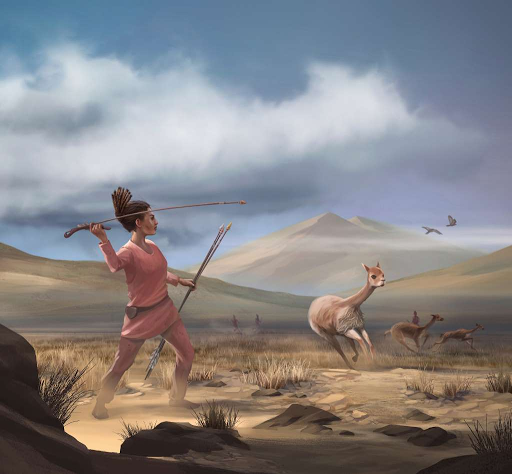
An Artistic Rendering of an Ancient Female Hunter Using an Atlatl to Hunt Vacunas in the Andean Highlands of Peru (Based on an Archaeological Discovery by Randall Haas and His Colleagues)


The cover article for the November issue of Scientific American is "Woman the Hunter" by Cara Ocobock and Sarah Lacy.  This article briefly summarizes the argument and evidence that Ocobock and Lacy have recently elaborated in two articles for American Anthropologist.  Much of the research that they cite in these articles has come up in some of my previous posts on this "Woman the Hunter" thesis.

Ocobock and Lacy frame their argument as a refutation of the book Man the Hunter, edited by Richard Lee and Irven DeVore, and first published in 1968.  This collection of papers was the first extensive survey of the hunter-gatherer way of life that was considered the first stage of human evolutionary development.  One of the central themes of the book was the sexual division of labor in the foraging for food, in which men were predominantly the hunters of wild animals, and women were predominantly the gatherers of wild plants.

Contrary to what Ocobock and Lacy repeatedly assert, the authors in Man the Hunter did not say that "only men hunted" or that "women were excluded from hunting" (see Ocobock and Lacy 2023a: 24; Lacy and Ocobock 2023: 2-3, 5-6, 9).  The claim of the "Man the Hunter" hypothesis was that while some women in foraging societies sometimes hunted, men were predominantly the hunters.  So, when Ocobock and Lacy present evidence that some foraging women hunted, and thus refute the idea that only men hunted, they are attacking a straw man (or straw woman).

Ocobock and Lacy offer three kinds of evidence for "Woman the Hunter"--ethnographic, archaeological, and physiological.  While this evidence does show that some foraging women hunted and that modern women today still have the mental and physical capacities required for hunting, this does not deny the fact that in foraging societies, hunting (and particularly the hunting of big mammals) has been mostly a male activity.  

Moreover, what they say about the comparative athletic physiology of men and women confirms that men have a power activity advantage, while women have an endurance activity advantage.  This explains why someone like Caster Semenya--a chromosomal (XY) male with some external female features--has an unfair male advantage in competing with women in an 800-meter race but not in a 5,000-meter race.


THE ETHNOGRAPHIC EVIDENCE

In their Scientific American article, Ocobock and Lacy report:

". . . A recent study of ethnographic data spanning the past 100 years--much of which was ignored by Man the Hunter contributors--found that women from a wide range of cultures hunt animals for food.  Abigail Anderson and Cara Wall-Scheffler of Seattle Pacific University and their colleagues report that 79 percent of the 63 foraging societies with clear descriptions of their hunting strategies feature women hunters. . . ." (29).

What Ocobock and Lacy fail to make clear for their readers, however, is that this study found that in these 50 foraging societies, some women sometimes engage in hunting.  This was said to refute "the traditional paradigm that women exclusively gather, and men exclusively hunt" (Anderson et al. 2023: 7).  

As I pointed out in my post on this article, the authors do a good job in refuting the idea that men are exclusively the hunters and women exclusively the gatherers.  James Woodburn expressed this idea in the original Man the Hunter volume when he said:  "Hunting is done exclusively by men and boys" (Woodburn 1968, 51).  But this one sentence is the only place in the book where this claim is made.  No one else said this.  The other authors explained that while hunting is "predominantly men's work," some women do sometimes hunt:  "women's hunting activities are confined to small animal hunts, communal hunts in which they take part in driving, and, very rarely, individual hunts of larger animals" (Lee and DeVore 1968: 74, 187). They would have agreed with Robert Kelly (2013, 218-24) that while hunting is not done exclusively by men, it is predominantly done by men, particularly the hunting of big game.  So, the difference between men and women is a matter of degree rather than kind.

None of the evidence in Anderson et al.'s article shows that women are the same as men in the regular hunting of large game.  Consider, for example, three societies where they see women hunting large game—the !Kung San, the Hadza, and the Bakola.  According to their authority for the !Kung San, although there are a few cases of women hunting small game, "basically they leave hunting to the men" (Lee 1979, 235).
According to their authority for the Hadza, although "the common view that males only hunt and females only gather is not true," it is nevertheless true that women mostly hunt small animals, and there is "a marked division of foraging labor" between men and women (Marlowe 2010, 269).
According to their authority for the Bakola, although the women participate in hunting, gathering "is reserved mostly for women and children" (Ngima 2006, 58); women participate in net hunting, but only as beaters and not as hunters (51, 57, 65-67); and women are excluded from ceremonial net hunting (66).
They cannot point to any evidence for a hunter-gatherer society where the hunting of big game is predominantly by women, or at least equally with men.

Anderson and her colleagues also cite the example of the Agta people of the Philippines.  Ocobock and Lacy repeat this claim: "Agta women hunt while menstruating, pregnant, and breastfeeding, and they have the same hunting success as Agta men" (Ocobock and Lacy 2023a: 29).  But they fail to point out that very few Agta women hunt (fewer than 100 in a population of 9,000), while all Agta men do hunt; and the most serious female Agta hunters are those who are sterile, those with children old enough to care for themselves, or those beyond their childbearing years (Kelly 2013: 218-22).


ARCHAEOLOGICAL EVIDENCE

In their paper on the archaeological evidence for "Woman the Hunter," Ocobock and Lacy present some indirect evidence that men and women in the Paleolithic might have been engaged in similar activities.  But that there might be evidence that women were engaged in hunting big game animals just as much as men is suggested in only one sentence: "In some cases, the grave goods and paleopathology agree in demonstrating women were well-practiced projectile hunters, such as at the Peruvian Early Holocene site of Wilamaya Pratxa (Haas et al. 2020)" (Lucy and Ocobock 2023: 7).

As I indicated in my post on the article cited here by Ocobock and Lucy, Richard Haas and his colleagues have provided us what looks like one clear case of an ancient female hunter.  In 2018, Haas's team excavated an archaeological site called Wilamaya Patjxa in the Andean highlands of southern Peru at an elevation of 12,877 feet. They found five human burial pits with six individuals.  Two of these individuals were associated with projectile points from the Early Holocene (beginning around 12,000 to 11,500 years ago).  

One of these two individuals--the Wilamayo Patjxa individual 6 (WMP6)--was identified as a 17-19 year old woman, which was determined by studies of her bones and tooth enamel protein. She was associated with stones that were identified as an integrated toolkit for hunting.  There were stone projectile points that could have been used to kill big game.  There were other stones that could have been used for dressing the game and red ochre nodules for tanning hides.  There were some mammal bone fragments that could have been from one of the species endemic to the Andean highlands--vicuna (a relative of llamas) or taruca (a species of deer).  As depicted in their artistic rendering of WMP6 hunting, Haas's team speculated that she used an atlatl made from a camelid radioulna bone to throw a spear at a vicuna.  However, there is nothing that looks like an atlatl at the burial site.  (I have a post on the evolution of the atlatl.)

And yet, even if one agrees that this is good evidence for identifying WMP6 as a female hunter of big game animals, one must then ask whether this is only one isolated case or part of a general behavioral pattern.  To find the evidence for a general pattern of female hunting, Haas's team reviewed the reports of Late Pleistocene and Early Holocene burials in the Americas.  They identified 429 individuals from 107 sites.  They found 27 individuals from 18 sites who were associated with big-game hunting tools.  Of theses, 11 of the individuals from 10 sites were identified as female, and 16 individuals from 15 sites were identified as male.  They see this distribution--11 female hunters and 16 male hunters--as "statistical parity" between males and females in hunting behavior, which supports "the hypothesis of non-gendered big-game hunting among early populations."

This step in their argument has been identified by their critics as the weakest part of their reasoning.  Notice that Haas and his colleagues have to assume that in ancient burials, "the objects that accompany people in death tend to be those that accompany them in life" (Haas et al. 2020, 5).  So, if individuals are buried with hunting tools, that proves that they were hunters.  Robert Kelly, Ben Potter, and others challenge this assumption: that individuals were buried with hunting tools does not directly prove that they were hunters.  Burial goods are symbolic offerings from the living to the dead, and the interpretations of their meaning are often ambiguous.

This problem is particularly clear in the case of the two female individuals buried at the Upward Sun River site in Alaska (dated to around 11,500 years ago), which has been studied by Potter and his colleagues (2014).  One individual was estimated to have died a few weeks after birth, and the other was identified as a late-term fetus.  Four antler rods, two large dart points, and a third biface lithic tool were found associated with these two individuals.  Potter's team observes: "The presence of the hafted points may reflect the importance of hunting implements in the burial ceremony at USR and within the population as a whole" (17064).  Potter's team does not see this as evidence that females were hunters in this ancient population of hunter-gatherers.  But Haas and his colleagues, in their online Supplement to their article, write: "The Upward Sun River females are both infants and thus were not hunters per se, although they appear to have been gendered in a way that recognized females as being associated with big game hunting."  So although these infants were not hunters, burying them with hunting tools was a symbolic ritual statement that they could have become hunters if they had lived to adulthood!  Potter disagrees.  In an email message to me, he wrote: "I think the most parsimonious and plausible interpretation of the hunting implements in the infants' grave is that they represent symbolic 'sacrifices' of perfectly usable hunting weapons by the father(s)."

There is another closely related problem here that Haas's team makes clear in their online Supplement but not in their article.  In determining whether females were buried with big-game hunting tools, they distinguish "secure" evidence and "tentative" evidence.  They also distinguish between "securely associated with big game hunting tools" and "securely identified as a big-game hunter burial."  There are "secure cases in which context, sex, and date estimates are each determined to be secure," and there are "tentative associations" where the evidence for context, sex, and dating is not so secure.

The WMP6 burial and the two Upward Sun River burials are the only female burials securely associated with big game hunting tools.  But the two Upward Sun River burials are not securely identified as big game hunter burials.  Consequently, in their Supplement, Haas's team concludes: "the WMP6 burial is the only burial securely identified as a big-game hunter burial in the entire sample of late Pleistocene and early Holocene burials in the Americas.  Under the most conservative criteria, we identify one female hunter burial and no male hunter burials."  

Remarkably, this statement is hidden away in the Supplement, and it does not appear in the article.  In effect, this concedes the point made by the critics--that Haas and his colleagues have at best found only one case of a female hunter burial, which suggests that while some individual females in hunter-gatherer societies will become hunters, there is still generally a sexual division of labor in which men hunt and women gather.

The 8 cases where Haas's team think they see "tentative" evidence for the burial of a female big-game hunter are actually quite dubious.  Consider this example, which they report: "Ashworth Shelter is a rockshelter site in Kentucky . . . .  The following summary is based on Walthall's review (46).  A primary inhumation identified as an adult female had a Kirk style projectile embedded in a vertebra and a second point located near the left patella."

Haas's team here is relying on an article by John Walthall (1999), in which he reports the findings of Philip DiBlasi (1981) in a Master's Thesis at the University of Louisville, which is available online.  In describing "burial #4" in the Ashworth Shelter, DiBlasi writes:

"As mentioned above, a projectile point was found imbedded in the body of the third thoracic vertebra.  This projectile entered from the left rear of the individual splitting the neural arch between the left superior and inferior articulating surfaces and the spinous process.  The extreme distal portion (tip) of the projectile entered the dorsal surface of the body of the vertebra with sufficient force to split the vertebra in half.  The left superior articular surface of the fourth vertebra was also damaged."

"A wound of this type would have caused death almost immediately.  The most apparent cause of death would have been hypotensive shock resulting from the direct reflex shock to the central nervous system caused by the impact and resulting rebound of the spinal cord. .  . Paralysis of intercostal muscles would make breathing impossible, again causing death within a short period of time" (1981, 74-75).

Neither DiBlasi nor Walthall identify this as evidence that this individual had been a female hunter. After all, how can the fact that she was killed by a projectile point thrust into her back with sufficient force to split her spine in half be even "tentative" evidence that she was a big-game hunter?

The careful reader might well conclude that the most important sentence in the writing of Haas and his colleagues is not in their published article but in the online Supplement to the article: "Thus the WMP6 burial is the only burial securely identified as a big-game hunter burial in the entire sample of late Pleistocene and early Holocene burials in the Americas."

The archaeological evidence for "Woman the Hunter" seems very skimpy indeed.


In my next post, I will take up Ocobock and Lacy's physiological evidence for female versus male athletic advantages, which they offer as evidence that women have the physiological capacity for hunting, particularly hunting that requires endurance running.


REFERENCES

Anderson, Abigail, Sophia Chilczuk, Kaylie Nelson, Roxanne Ruther, and Cara Wall-Scheffler. 2023. "The Myth of Man the Hunter: Women's Contribution to the Hunt Across Ethnographic Contexts."  PLoS ONE 18(6): e0287101.

DiBlasi, Philip. 1981. "A New Assessment of the Archaeological Significance of the Ashworth Site (15Bu236)." A Master's Thesis. University of Louisville

Haas, Randall, et al. 2020. "Female Hunters of the Early Americas." Science Advances 6: 1-10.

Kelly, Robert L. 2013. The Lifeways of Hunter-Gatherers: The Foraging Spectrum. Cambridge: Cambridge University Press.

Lacy, Sarah, and Cara Ocobock. 2023. "Woman the Hunter: The Archaeological Evidence." American Anthropologist, 1-13.  DOI: 10.1111/aman.13914

Lee, Richard B. 1979. The !Kung San: Men, Women, and Work in a Foraging Society. Cambridge: Cambridge University Press.

Lee, Richard B., and Irven DeVore, eds.  1968.  Man the Hunter.  Chicago: Aldine Publishing Company.

Marlowe, Frank W. 2010. The Hadza: Hunter-Gatherers of Tanzania.  Berkeley: University of California Press.

Ngima Mawoung, Godefroy.  2006.  "Perception of Hunting, Gathering, and Fishing Techniques of the Bakola of the Coastal Region, Southern Cameroon." African Study Monographs, Suppl. 33: 49-69.

Ocobock, Cara, and Sarah Lacy.  2023a.  "Woman the Hunter."  Scientific American.  November: 23-29.

Ocobock, Cara, and Sarah Lacy.  2023b.  "Woman the Hunter: The Physiological Evidence."  American Anthropologist, 1-12.  DOI: 10.1111/aman.13915.

Potter, Ben A., et al. 2014. "New Insights into Eastern Beringian Mortuary Behavior: A Terminal Pleistocene Double Infant Burial at Upward Sun River." Proceedings of the National Academy of Sciences. 111, no. 48: 17060-17065.

Walthall, John. 1999. "Mortuary Behavior and Early Holocene Land Use in the North American Midcontinent." North American Archaeologist 20: 1-30.

Woodburn, James. 1968. "An Introduction to Hadza Ecology." In Lee and DeVore, 49-55.