Is culture uniquely human? Or do some nonhuman animals have culture?
How we answer this question is crucial for our understanding of how we fit in the natural world. As I have indicated in Darwinian Natural Right and Darwinian Conservatism, Immanuel Kant originally formulated the modern concept of culture as that uniquely human realm of artifice in which human beings escape their natural animality to express their rational humanity and their freedom from the laws of nature. In doing this, Kant extended Thomas Hobbes' dichotomy of animal nature and human artifice in rejecting Aristotle's biological understanding of human beings as political animals by nature.
In Aristotle's biological studies of social and political behavior, he did not separate animal instinct and human learning. He saw that, in varying degrees, all social animals have natural instincts for social learning. Of course, in the capacity for learning, human beings far surpass other animals. Still, it is as true for nonhuman animals as it is for human beings that social life emerges as a joint product of nature and nurture. So, for example, Aristotle observed that some birds teach their young to sing, and the languages they teach differ in different localities in a manner comparable to the diversity of human languages, which suggests that among birds "language is not natural in the same way as voice but can be trained" (HA, 536b18-20).
Charles Darwin made the same observation about variable dialects of bird songs transmitted as traditions by social learning, and he saw this as showing "that an instinctive tendency to acquire an art is not peculiar to man" (Descent of Man, 2nd ed., Penguin Classics, p. 106-109). More recently, Peter Marler and other biologists studying bird-song dialects have presented this as an example of animal culture--that is, a behavioral tradition transmitted by social learning.
Over the past two decades, there has been an intense controversy over the possibility of animal culture. On the one hand, there has been growing evidence for elaborate cultural traditions among animals--particularly, chimpanzees, orangutans, whales, and dolphins. One highlight of this new research was the report in 1999 in Nature by Andrew Whiten et al. comparing seven chimp study sites in Africa and showing 39 behavior patterns customary in some communities but absent in others, so that each chimp community has its distinctive profile of behavioral patterns, which is comparable to the cultural diversity of human communities. On the other hand, many critics of this research deny that this is really evidence for true culture.
This whole debate is now conveniently surveyed in the new book The Question of Animal Culture, edited by Kevin Laland and Bennett Galef, published last year by Harvard University Press. Laland and Galef have arranged the book's chapters to move from the strongest advocates of animal culture (such as Frans de Waal, William McGrew, and Andrew Whiten) to the strongest skeptics (such as Michael Tomasello, Susan Perry, and Kim Hill).
As the book makes clear, much of the controversy turns on how one defines "culture." As Laland has said, "Culture is as rare or as common as it is defined to be" (101). So, if culture is defined narrowly as requiring uniquely human traits (such as symbolic teaching and moral norms), then nonhuman animals cannot have culture. But if culture is defined broadly as the transmission of behavioral traditions through social learning, then there is plenty of evidence for animal culture.
Under the broad definition of culture, the evidence for animal culture comes both from field studies of wild animals and laboratory experiments with captive animals. So, for instance, the comparative study of wild primate communities does show remarkably complex variation in the behavioral profiles of primate communities, which suggests social traditions initiated by individual innovators that have been passed on by social learning. But the inference that these behavioral profiles really do arise from socially learned traditions is largely circumstantial and based on arguments of plausibility. This inference is reinforced, however, by experimentation with captive primates showing that individual primates can learn a new behavioral pattern and then others in the primate group can learn the new behavior by imitation, which then becomes a group tradition.
But under the narrow definition of culture, we might concede that nonhuman animals show socially learned behavioral traditions, while still denying that this is sufficient to count as "culture" in the full sense. This position is best stated by Kim Hill. Hill is an interesting case. As an anthropologist and behavioral ecologist using models from evolutionary ecology to explain the behavior of hunter-gatherers, Hill has for many years rejected the claim of his colleagues in cultural anthropology that human culture is too unique to be explained as animal behavior. But recently Hill has changed his mind, and now he thinks the behavioral ecologists and evolutionary psychologists are mistaken in not facing up to the uniqueness of culture for human beings. Hill thus belongs to a growing movement among Darwinian social scientists who now see that a Darwinian account of human behavior requires explanation of the co-evolution of genes and culture in human history.
Hill agrees that nonhuman animals are capable of socially learned behavioral traditions. But he argues that such animal traditions differ in kind from human cultures. They differ in two respects. First, human culture shows a ratchet effect in which socially learned information accumulates over time to achieve ever more complex forms, while social learning among animals doesn't show such accumulation. Chimps can learn to crack open nuts with pointed stones used as hammers and flat stones used as anvils, and this technology can become a behavioral tradition in certain chimp communities. But they don't progressively improve on their technology to develop ever more intricate tools.
The second difference is that the content of human culture is unique. Human culture shows three categories of socially transmitted information. Animal traditions show the first but not the other two. The first category is "socially learned techniques, technology, and environmental information (traditions, beliefs)" (275). This can be seen among many animals.
The second category of socially transmitted information is unique to human culture--"regulations of individual behavior enforced by rewards and punishments (norms, conventions, institutions, laws)" (276). Other animals manifest some rules of behavior--for example, rules among chimps about subordinate individuals deferring to dominant individuals. But these rules of behavior are not enforced by third-party punishment and reward. Human beings will punish someone for violating social norms even when the punishment is costly to them and does not directly benefit them. "Morality is demonstrated by altruistic third-party punishment" (286).
Other animals don't show such altruistic punishment. For example, when human beings play the Ultimatum Game, responders will punish proposers who make unfair offers even when the punishment is costly for the responders. But when chimps play the Ultimatum Game, responders will not engage in such costly punishment.
The third category of human culture, which is not seen in other animals, is "symbolic means of reinforcing, and signaling adherence to, a specific rule system" (277). Human beings invest their social rules with such emotional weight that they become moral rules, so that violation of the rules elicits moral emotions of guilt, disgust, and anger. Often these moral rules are reinforced with religious sanctions, including supernatural rewards and punishments. And often human beings use symbolic ethnic markers--for example, dialects, clothing, ritual behavior, and dietary restrictions--to signal their commitment to a distinctive set of social norms, which allows them to interact with those who share the same norms, while avoiding those who don't.
What are these distinctively human social norms? Hill suggests that hunter-gatherer societies show a universal human pattern: "Hunter-gatherers universally regulate access to valuable resources (e.g., food, mates) and regulate how competition for these resources may be legitimately expressed." This would include the following social norms regulating behavior (279-80):
1. Mate access
a. Prohibitions and prescriptions (applied on the basis of age, kin, or ritual-group membership)
b. Polygyny (degree allowed and who may practice it)
2. Food production
a. Land use (territoriality)
b. Specific resource rights (ownership of specific plants or animals)
c. Niche specialization (informal trade unions)
3. Food redistribution
a. Sharing (who receives, how much they receive, and, what body parts of some game species)
b. Consumption taboos (applied on the basis of age, kin, or ritual-group membership)
4. Display rights (ritual participation)
a. Mating (who may participate in organized displays that are important forums for mate choice)
b. Other sociopolitical messages (who has the right to "broadcast" symbolic messages and in what context)
5. Access to kin and other allies
a. Residence rules (who is allowed to reside with close kin)
b. Activity and ritual regulations (who can be a member in some organized activities)
6. Political power
a. Designated positions (reserved for specified age, sex, kin or ritual-group members)
b. Transfer of power (rules of succession, turn taking, or context-specific leadership)
7. Regulation of violent conflict
a. Within-group contests (ritual dueling, divining, and justice)
b. Participation in social group defense (who may or must defend the group and in what contexts)
8. Regulation of life history
a. Age at first reproduction (acceptable age for sexual relations and marriage)
b. Investment in infants and juveniles (who must invest and in what contexts)
c. Age- and sex-specific rights and restrictions (that change during the life course) in competition over resources
Notice how these social norms correspond to my list of 20 natural desires, which I take to be rooted in evolved human nature. Notice also how these social norms underlie the natural moral sense as enforced by our moral emotions.
For example, "prohibitions and prescriptions" for "mate access" would include incest taboos. Other animals have behavioral mechanisms for avoiding incest. But only human beings reinforce incest avoidance with a deeply emotional incest taboo that cannot be violated without feelings of moral repugnance.
Chimps might avoid incest. But they don't have an incest taboo as a moral norm, because they don't have a "conscience" that is expressed as moral emotions such as guilt and anger. Hill concludes from this that chimps are like psychopaths--that is, they lack the moral emotions required for a moral sense or conscience. Human psychopaths apparently are innately psychopathic because they have alleles that incline them to emotional poverty, so that they don't feel the moral emotions that are normal for the rest of us. This suggests that the human moral sense arose from a genetic adaptation that separated normal members of Homo sapiens from our primate ancestors. This innate moral sense is now universally expressed in all human societies, although the presence of psychopaths as a small proportion of each society shows that there is still an adaptive niche for those without any conscience.
This moral sense as expressed in deep moral emotions is the ground for "normativity," for our feeling that one ought to obey our social norms. This normative ought is unique to human culture. But if it has an evolutionary history--the evolution of a propensity for moral emotions in the human brain and nervous system--then we can see it as an emergent property of human evolution. And like every emergent property, it shows an emergent difference in kind with an underlying difference in degree.
We can put this all in the evolutionary framework suggested by Eva Jablonka, distinguishing four dimensions of evolutionary history--genetic, epigenetic, behavioral, and symbolic. Animal traditions belong to behavioral evolution. Human morality belongs to symbolic evolution, which is a system of evolutionary inheritance that is unique to human beings.
Some posts on related themes can be found here, here, here, here, here, here, here, here, here, here, and here.
Showing posts sorted by relevance for query animal culture. Sort by date Show all posts
Showing posts sorted by relevance for query animal culture. Sort by date Show all posts
Wednesday, April 14, 2010


Friday, December 14, 2018
Flies Are Cultural Conformists in Their Sexual Preferences: The Biology of Cultural and Biographical History
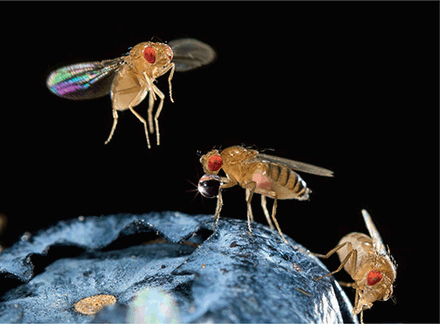
Fruitflies Show Social Learning of Mating Preferences
Unlike Hobbes, Aristotle saw no unbridgeable gulf between animal instinct and human learning. In his biological research, he observed that almost all animals have some natural instincts for social learning, and some are intelligent enough to live as social and political animals. What distinguishes human beings is that they are more political than other political animals because of the human capacities for language, conceptual abstraction, and shared intentionality that allow human beings to organize their collective life around shared symbolic norms of authority and justice.
Over the past two hundred years, it has been common for scholars to assume that Hobbes was right in claiming that human beings are unique in being the only cultural animals, and therefore that the "human sciences" (Geisteswissenschaften) as the study of cultural history must be separated from the "natural sciences" (Naturwissenschaften) as the study of natural phenomena. If this is so, then the evolutionary biology of human nature has no application to human social and political life.
But over the past fifty years, evolutionary scientists have gathered ever increasing evidence--from both observational and experimental studies of animal behavior--that many animal species show social learning and cultural traditions, and therefore Aristotle was right.
CULTURAL FLIES
Recently, for example, researchers have shown that even fruitflies are cultural animals (Danchin et al. 2018; Whiten 2018). Female fruitflies tend to conform to the mating preferences they observe in other females, which generates cultural traditions that are passed on to others through social learning. The researchers placed virgin female fruitflies in a hexagonal chamber, surrounded by six compartments in each of which they could see a female fly mating with a male dusted by either pink or green coloring, with another male of the alternative color standing nearby. Some females saw that all six of the mating males were pink. Others saw that all were green. Others saw different proportions of pink versus green males mating.

Two Females Watch a Copulating Green Male, While a Pink Male Is Rejected
So now fruitflies are added to a long and growing list of animals identified by scientists today as showing cultural behavior. The list includes many mammalian, avian, fish, and insect species (Galef and Whiten 2017; Whiten et al. 2017). Actually, however, this is only a rediscovery of what Aristotle reported long ago in his biological writings.
GENE-CULTURE COEVOLUTION
The advance beyond Aristotle has been in developing an evolutionary science of animal culture based on Charles Darwin's theory. Darwin understood that his principles of organic evolution--variation, selection, and inheritance--could be applied to cultural evolution, such as the cultural evolution of languages (Mesoudi, Whiten, and Laland 2004). Darwin did not understand, however, the genetic mechanisms of organic evolution. With their modern understanding of genetics, evolutionary scientists today see genes and culture as two distinct forms of evolutionary inheritance. Some evolutionary theorists argue that there are really four dimensions of evolution: genetic inheritance, epigenetic inheritance, behavioral inheritance, and symbolic inheritance (Jablonka and Lamb 2014).
Evolutionary science needs to explain the complex interaction of these systems of inheritance. This is hard to do, as indicated by the recent work on gene-culture coevolution. It's hard to define and identity the units of culture. Richard Dawkins suggested that we might speak of cultural "memes" as analogous to organic "genes," but there is little agreement as to what should count as memes.
It's also hard to discern the connections between genes and memes, because little is known about how exactly genes influence behavior, or how exactly behavior might influence gene expression and transmission.
There are only a few examples of well-understood gene-culture coevolution. One of the most famous cases is the evolution of lactase persistence. The production of the enzyme lactase in the gut is necessary for the digestion of the milk sugar lactose. This enzyme is produced in human infants so that they can digest the lactose in their mother's milk. But in most human adults, the production of lactase is shut down, and so they suffer severe indigestion from the consumption of milk. And yet lactase persistence--the production of lactase in adulthood--is common among those human beings with a northern and western European ancestry and those from some pastoralist groups in Africa, the Middle East, and southern Asia. The likely explanation for this is that lactase persistence evolved among dairying farmers around 7,500 years ago as a genetic adaptation to dairying culture (Itan et al. 2009). Geneticists have identified a particular genetic variation that supports lactase persistence, and they can see that this genetic variation correlates with the cultural evolution of dairying. So here is a clear case of where a cultural tradition created an environment that favored genetic change that would be adaptive.
It's unfortunate that Darwin did not understand this, because the mysterious intestinal illness from which he suffered throughout his life was probably a result of his being lactose intolerant. Medical researchers studying Darwin's records of his illness have noticed that it always arose a few hours after eating dairy foods (Campbell and Matthews 2005). All of his symptoms--vomiting, gut pain, headaches, tiredness, and depression--match the effects of lactose intolerance.
There are very few studies of nonhuman animal culture that can show this same clarity in the mechanism of gene-culture evolution. One case that comes close is the study of animal culture among the killer whales or orcas. Orcas stretch from the Arctic to the Antarctic, and they diets range over birds, fish, mammals, and reptiles. But as individuals, they belong to groups with different specialized diets and hunting traditions that are passed down over generations. These groups also show variations in their cultural traditions for vocal displays, habitat use, play, and migration routes. Some of the scientists studying them have seen stable genetic variation in each group that correlates with their cultural traditions, which suggests gene-culture coevolution (Foote et al. 2016; Whitehead 2017).
BIOLOGY INCLUDES CULTURAL HISTORY AND BIOGRAPHICAL HISTORY
Notice how this recognition of animal culture expands the range of biology to include cultural history and biographical history. The biological study of animal behavior must go beyond the natural history of a species--the universal species-specific patterns of behavior--to include the distinctive cultural history of each group of animals.
Moreover, the study of animal culture shows that cultural traditions originate from innovations initiated by particular individuals that have been so successful that they have been passed on by social learning to other individuals and to subsequent generations. Consequently, the study of animal behavior must include the study of the individual personalities of the animals responsible for cultural innovations. For example, scientists have observed that among wild capuchin monkeys some individuals are better than others at social invention and innovation (Perry et al. 2017). In fact, most of the detailed histories of particular animal groups--such as Jane Goodall's The Chimpanzees of Gombe--include biographical histories of the individual animals that have shaped the history of the group.
This supports my argument that a biopolitical science would have to move through three levels of political history--the natural history of the species, the cultural history of the group, and the biographical history of prominent individuals in the group.
Some of these points are elaborated in other posts here, here, here, here, here, here, and here,
REFERENCES
Campbell, Anthony, and Stephanie B. Matthews. 2005. "Darwin's Illness Revealed." Postgraduate Medical Journal 81: 248-51.
Danchin, Etienne, et al. 2018. "Cultural Flies: Conformist Social Leaning in Fruitflies Predicts Long-Lasting Mate-Choice Traditions." Science 362: 1025-1030.
Foote, Andrew D. et al. 2016. "Genome-Culture Coevolution Promotes Rapid Divergence of Killer Whale Ecotypes." Nature Communications 7:11693.
Galef, Bennett G., and Andrew Whiten. 2017. "The Comparative Psychology of Social Learning." In Joseph Call, et al., eds., APA Handbook of Comparative Psychology, 411-439. Washington, DC: American Psychological Association.
Itan, Yuval, et al. 2009. "The Origins of Lactase Persistence in Europe." PLoS Computational Biology 5 (8): e1000491.
Jablonka, Eva, and Marion Lamb. 2014. Evolution in Four Dimensions: Genetic, Epigenetic, Behavioral, and Symbolic Variation in the History of Life. Revised ed. Cambridge: MIT Press.
Mesoudi, Alex, Andrew Whiten, and Kevin N. Laland. 2004. "Is Human Cultural Evolution Darwinian? Evidence Reviewed From the Perspective of The Origin of Species." Evolution 58 (1): 1-11.
Perry, Susan E., Brendan J. Barrett, and Irene Godoy. 2017. "Older, Sociable Capuchins (Cebus caucinus) Invent More Social Behaviors, But Younger Monkeys Innovate More in Other Contexts." Proceedings of the National Academy of Sciences 114 (30): 7806-7813.
Whitehead, Hal. 2017. "Gene-Culture Coevolution in Whales and Dolphins." Proceedings of the National Academy of Sciences 114 (30): 7814-7821.
Whiten, Andrew. 2018. "Culture and Conformity Shape Fruitfly Mating." Science 362: 998-1000.
Whiten, Andrew. et al. 2017. "The Extension of Biology Through Culture." Proceedings of the National Academy of Sciences 114 (30): 7775-7781.
Monday, March 04, 2013
Incest Taboos as Secular Transcendence
In October of 2006, I wrote a post with the title "So What's Wrong with Incest?"
For the past six and a half years, that post has regularly had more pageviews than any other post that I have ever written. Apparently, people are Googling "What is wrong with incest?" and my post pops up. A lot of people are struggling with their incestuous thoughts and looking for some way to overcome the taboo against incest. Unfortunately, my post has even turned up on a porno website!
Of course, sex is interesting, and prohibited sex is especially interesting. But what is notable about the incest taboo is that it's a universal prohibition of a sexual activity that most human beings in every human society never consider as a possibility. Most human beings have no sexual interest in their parents, their siblings, or their children.
So why do we need a social rule to prohibit what no one wants to do? Well, actually, as the popularity of my post on incest indicates, some people are troubled by incestuous thoughts. After all, incest is a serious social problem, particularly with fathers sexually abusing their daughters. Even here, however, there's an interesting pattern: the most common form of incest is actually child abuse. Daughters who have been sexually abused by their fathers usually break away from this as adults. Incest between consenting adults within the nuclear family is extremely rare. But once we move to more distant kinship relationships--such as cousins--the strength of the inhibition weakens, because depending upon the circumstances of rearing and kinship rules, cousin marriage might be allowed or even preferred.
As I have argued in various posts, I find Edward Westermarck's Darwinian explanation of incest avoidance and the incest taboo to be the best account of this. Elaborating on some suggestions coming from Darwin himself, Westermarck laid out the reasoning for explaining our human reaction to incest as a biological adaptation. If close inbreeding tends to create high risks for the offspring--death or mental and physical defects--then we might predict that evolution by natural selection would favor a propensity to feel no sexual interest in those with whom one has been reared from early infancy. Consequently, as people are reared together with siblings and parents, they will tend to have no sexual interest in their parents, their siblings, or their children. This emotional aversion to incest might then be expressed as a general social disapproval of incest that could become an incest taboo. How far this taboo extends beyond the nuclear family will depend upon social conditions and kinship rules.
The evidence for the Westermarck hypothesis has increased over the past sixty years as biologists and social scientists have studied some natural experiments among human beings--particularly, the history of the kibbutzim in Israel and Chinese "minor" marriages--and incest avoidance among primates and other non-human animals. This evidence has been well surveyed by people like Arthur Wolf of Stanford University.
The leading opponent of Westermarck's theory was Sigmund Freud, who assumed that far from having a natural inclination to avoid incest, human beings were naturally inclined to it (the Oedipus Complex), and therefore the incest taboo must be understood as a purely cultural invention of human beings to repress their natural animal desires for incestuous relations.
Many cultural anthropologists have adopted the Freudian position. For example, Claude Levi-Strauss declares:
As Wolf has indicated, cultural anthropologists often see human culture as having a kind of redemptive or transcendent quality to it, because it preserves human dignity through an elevated image of the human species that cannot be explained in Darwinian terms. Westermarck's Darwinian explanation of incest avoidance and the incest taboo is rejected by them because it presents a morally degrading view of human beings as merely highly evolved animals.
This might explain why debates between biological anthropologists and cultural anthropologists become so emotional. Wolf has seen this at Stanford. In 1998, the split in the Department of Anthropology had become so combative that the Department was officially separated into two distinct departments--a Department of Cultural and Social Anthropology and a Department of Anthropological Sciences. As these titles indicate, the split was between culture and science--between those who think that culture transcends biological science and those who think that culture can be explained by biological science. (In 2007, the central administration of Stanford forced these two departments to be reunited as a Department of Anthropology, but many of the faculty members were angry about this.)
The radical separation of nature and culture that one sees in the work of many cultural anthropologists arose first in the thought of Thomas Hobbes and Immanuel Kant. Despite the monism of Hobbes's materialism, his political teaching presupposes a dualistic opposition between animal nature and human will or reason: in creating political order, human beings transcend and conquer nature. This dualism was explicitly developed by Kant, who originally formulated the modern concept of culture (Kultur). For Kant, culture is that uniquely human realm of artifice in which human beings escape their natural animality to express their rational humanity as the only beings who have a "supersensible faculty" for moral freedom. Through culture, human beings free themselves from the laws of nature.
Although culture has become a vague concept in the social sciences, it retains the four central features prescribed by Kant. (1) Culture is uniquely human. (2) It is uniquely human because only human beings have the understanding and the will to set purposes for themselves by free choice. (3) Culture is an autonomous human artifice that transcends nature. (4) Culture is the necessary condition for forming moral values.
Oddly enough, although Friedrich Nietzsche generally rejects Kantian dualism, the Nietzsche of the early and later writings actually embraces something like Kantian dualism in depicting human beings as capable of redeeming themselves from their animality by creating themselves through culture, allowing them to create what is "beyond" themselves. Only in the Darwinian writings of his middle period does Nietzsche escape from this "need for redemption" by accepting the animal nature of human beings.
For the past six and a half years, that post has regularly had more pageviews than any other post that I have ever written. Apparently, people are Googling "What is wrong with incest?" and my post pops up. A lot of people are struggling with their incestuous thoughts and looking for some way to overcome the taboo against incest. Unfortunately, my post has even turned up on a porno website!
Of course, sex is interesting, and prohibited sex is especially interesting. But what is notable about the incest taboo is that it's a universal prohibition of a sexual activity that most human beings in every human society never consider as a possibility. Most human beings have no sexual interest in their parents, their siblings, or their children.
So why do we need a social rule to prohibit what no one wants to do? Well, actually, as the popularity of my post on incest indicates, some people are troubled by incestuous thoughts. After all, incest is a serious social problem, particularly with fathers sexually abusing their daughters. Even here, however, there's an interesting pattern: the most common form of incest is actually child abuse. Daughters who have been sexually abused by their fathers usually break away from this as adults. Incest between consenting adults within the nuclear family is extremely rare. But once we move to more distant kinship relationships--such as cousins--the strength of the inhibition weakens, because depending upon the circumstances of rearing and kinship rules, cousin marriage might be allowed or even preferred.
As I have argued in various posts, I find Edward Westermarck's Darwinian explanation of incest avoidance and the incest taboo to be the best account of this. Elaborating on some suggestions coming from Darwin himself, Westermarck laid out the reasoning for explaining our human reaction to incest as a biological adaptation. If close inbreeding tends to create high risks for the offspring--death or mental and physical defects--then we might predict that evolution by natural selection would favor a propensity to feel no sexual interest in those with whom one has been reared from early infancy. Consequently, as people are reared together with siblings and parents, they will tend to have no sexual interest in their parents, their siblings, or their children. This emotional aversion to incest might then be expressed as a general social disapproval of incest that could become an incest taboo. How far this taboo extends beyond the nuclear family will depend upon social conditions and kinship rules.
The evidence for the Westermarck hypothesis has increased over the past sixty years as biologists and social scientists have studied some natural experiments among human beings--particularly, the history of the kibbutzim in Israel and Chinese "minor" marriages--and incest avoidance among primates and other non-human animals. This evidence has been well surveyed by people like Arthur Wolf of Stanford University.
The leading opponent of Westermarck's theory was Sigmund Freud, who assumed that far from having a natural inclination to avoid incest, human beings were naturally inclined to it (the Oedipus Complex), and therefore the incest taboo must be understood as a purely cultural invention of human beings to repress their natural animal desires for incestuous relations.
Many cultural anthropologists have adopted the Freudian position. For example, Claude Levi-Strauss declares:
"It will never be sufficiently emphasized that, if social organization had a beginning, this could only have consisted in the incest prohibition since . . . the prohibition is, in fact, a kind of remodelling of the biological conditions of mating and procreation (which know no rule, as can be seen from observing animal life) compelling them to become perpetuated only in an artificial framework of taboos and obligations. It is there, and only there, that we find a passage from nature to culture, from animal life to human life, and that we are in a position to understand the very essence of their articulation."This remarkably dramatic language--"from nature to culture, from animal life to human life"--suggests something like a Creation story of human origins, except that in this case the elevation from animal life to human life comes not through God's creative power, but from the power of human beings to create themselves through culture.
As Wolf has indicated, cultural anthropologists often see human culture as having a kind of redemptive or transcendent quality to it, because it preserves human dignity through an elevated image of the human species that cannot be explained in Darwinian terms. Westermarck's Darwinian explanation of incest avoidance and the incest taboo is rejected by them because it presents a morally degrading view of human beings as merely highly evolved animals.
This might explain why debates between biological anthropologists and cultural anthropologists become so emotional. Wolf has seen this at Stanford. In 1998, the split in the Department of Anthropology had become so combative that the Department was officially separated into two distinct departments--a Department of Cultural and Social Anthropology and a Department of Anthropological Sciences. As these titles indicate, the split was between culture and science--between those who think that culture transcends biological science and those who think that culture can be explained by biological science. (In 2007, the central administration of Stanford forced these two departments to be reunited as a Department of Anthropology, but many of the faculty members were angry about this.)
The radical separation of nature and culture that one sees in the work of many cultural anthropologists arose first in the thought of Thomas Hobbes and Immanuel Kant. Despite the monism of Hobbes's materialism, his political teaching presupposes a dualistic opposition between animal nature and human will or reason: in creating political order, human beings transcend and conquer nature. This dualism was explicitly developed by Kant, who originally formulated the modern concept of culture (Kultur). For Kant, culture is that uniquely human realm of artifice in which human beings escape their natural animality to express their rational humanity as the only beings who have a "supersensible faculty" for moral freedom. Through culture, human beings free themselves from the laws of nature.
Although culture has become a vague concept in the social sciences, it retains the four central features prescribed by Kant. (1) Culture is uniquely human. (2) It is uniquely human because only human beings have the understanding and the will to set purposes for themselves by free choice. (3) Culture is an autonomous human artifice that transcends nature. (4) Culture is the necessary condition for forming moral values.
Oddly enough, although Friedrich Nietzsche generally rejects Kantian dualism, the Nietzsche of the early and later writings actually embraces something like Kantian dualism in depicting human beings as capable of redeeming themselves from their animality by creating themselves through culture, allowing them to create what is "beyond" themselves. Only in the Darwinian writings of his middle period does Nietzsche escape from this "need for redemption" by accepting the animal nature of human beings.
Friday, August 16, 2013
How Hobbesian Baboons Find Their Inner Rousseau


The debate between Thomas Hobbes and Jean-Jacques Rousseau over the evolution of war, violence, and inequality continues today as one of the most intense debates in the natural and social sciences. In making their arguments, Hobbes and Rousseau appealed to the best evidence available to them concerning the "state of nature" in which the first human ancestors lived. They both studied reports about hunter-gatherers in the New World and elsewhere, with the assumption that this must resemble the original condition of the first human beings. Rousseau also studied reports about primates closely related to human beings. But this knowledge was too meagre to resolve the debate. For that reason, Rousseau called for systematic studies through international expeditions that would create a new science of human nature. It might seem that now we have so much more knowledge--in archaeology, anthropology, and primatology--that we can settle this debate. And yet, remarkably, the debate continues. This will be the first of a series of posts on how recent scientific research illuminates--even if it does not fully resolve--this debate in political philosophy between Hobbes and Rousseau (and perhaps including Locke, Hume, and Smith).
Is war an ancient natural adaptation, as the Hobbesians seem to say? Or is war a recent cultural invention, as the Rousseaueans seem to say? As I think we'll see, these stark dichotomies--nature versus nurture, biology versus culture, instinct versus learning, Hobbes versus Rousseau--are mistaken.
Consider the case of the baboons. Until recently, they have been depicted as manifesting the violent aggressiveness of primates that is deeply rooted in their biological nature. But now there is some evidence that their Hobbesian nature can be at least mitigated by a Rousseauean culture.
Robert Sapolsky has been studying baboons in Kenya for over thirty years. He is best known for showing how the aggression within baboon troops produces high levels of psychological stress that are manifested in physiological markers of chronic stress, which can produce disease. Much of this stress comes from displacement aggression, in which an individual who is frustrated for some reason attacks a lower-ranking individual who in turn attacks an even lower-ranking individual. I first learned about Sapolsky's research in 1988, when he lectured to a class I was auditing in the Program in Human Biology at Stanford.
In 1983, Sapolsky observed that some unusual events brought about a change in the social culture of one baboon troop towards lower aggression and higher affiliative behavior, and this new culture has persisted for decades. He published his study of this cultural change in 2004 as an article in PLOS Biology, which is available online. An article on this appeared in the New York Times. Recently, he has published a revised version of this article as a book chapter: "Rousseau with a Tail: Maintaining a Tradition of Peace Among Baboons," in Douglas Fry, ed., War, Peace, and Human Nature: The Convergence of Evolutionary and Cultural Views (New York: Oxford University Press, 2013), 421-438.
"Forest Troop" is a troop of olive baboons that in the early 1980s slept in trees not far from a tourist lodge, which was within the home range of the "Garbage Dump" troop that got its name from regularly foraging from the open garbage pit at the lodge. About half of the Forest Troop males developed the habit of feeding at the garbage pit every morning. These were the most aggressive and least affiliative males, because they had to be aggressive enough to fight the Garbage Dump males, and because they missed the early morning female-male grooming in their troop.
In 1983, tuberculosis from infected meat in the dump killed most of the Garbage Dump baboons and all of the Forest Troop males feeding at the dump. This eliminated almost half of all the males in Forest Troop. While baboon troops usually have an equal proportion of males and females, Forest Troop now had almost twice as many females as males, and the males were less aggressive than those who had died.
This changed the social culture of Forest Troop. The male dominance hierarchy continued, but there was less displacement aggression by dominant males, and they were more relaxed in allowing some occasional reversals of dominance. There was also more time spent by the troop in grooming one another.
Sapolsky ended his observations of this troop in 1986. When he resumed study of this troop in 1993, he saw that this new social culture had persisted. This was especially remarkable because no adult males remained from 1986. Since all male baboons at puberty migrate out of their natal troop, all of the adult males in Forest Troop in 1993 had grown up in some other troop. Somehow the culture of low aggression and high affiliation that had been founded in 1983 had been transmitted to the new males.
Sapolsky considers various possible mechanisms though which this cultural transmission could have occurred. He surmises that this cultural change was preserved by a change in the behavior of the females. When new males arrive in a troop, the resident females are usually slow to treat them in an affiliative way until two or three months have passed. But in Forest Troop in 1993, the females were grooming new males within a few weeks of their arrival. Sapolsky concludes that the new males were responding to this more relaxed and affiliative behavior of the females by becoming themselves more relaxed and affiliative.
In his book chapter, he writes: "It involves a cascade: when females are less stressed by the random aggression of males, they are more likely to be spontaneously affiliative to new males; when new males are treated in this more affiliative manner, they gradually become more affiliative themselves. This is not cultural transmission where males acquire a new behavioral style; instead, the social atmosphere of the troop, most proximally mediated by the behavior of females, facilitates the emergence of these behaviors from males. Within the limits of baboon sociality, in the absence of Hobbesian treatment, a young male reverts to his inner Rousseau" (433-34).
Notice the qualification--"within the limits of baboon sociality." As Sapolsky explains, this case shows the malleability of baboon social life in being open to cultural change. But still this new culture of Forest Troop did not bring "an unrecognizably different utopia" (436). There was still a dominance hierarchy. There was still displacement aggression, although it had been reduced. And while the rate of reconciliations had increased, the need for reconciliations showed the persistence of conflict. In his original article, Sapolsky even indicated that the overall rate of aggressive conflict in Forest Troop was similar to other troops. So despite the cultural malleability shown here, "there are not infinite amounts of social plasticity in a primate social system" (436).
I suggest that we see three levels of social order here--baboon nature, baboon culture, and baboon individuals. The repertoire of social behavior characteristic of a baboon species sets the natural limits of baboon sociality. This baboon nature constrains but does not determine baboon culture. And, finally, nature and culture constrain but do not determine individual behavior.
Individual baboons have distinctive personalities or temperaments. Although males tend to be more aggressive and less affiliative than females, there is individual variation among the males, and that's why the elimination of the most aggressive males from Forest Troop changed the social culture.
Do these baboons really have a culture that might be different from troop to troop? If so, is that culture changeable in response to changeable historical circumstances? Since the late 1990s, the question of whether some nonhuman animals have culture has been a hot topic, particularly among primatologists.
This is a critical issue for Rousseau, because the uniqueness of human culture seems to be the basis for what he calls "perfectibility." By tracing human evolution back to prehuman ancestors, he shows the malleability of human nature. Throughout human history, "the soul and human passions, altering imperceptibly, change their nature so to speak" (Second Discourse, Masters ed., 178). What distinguishes human nature from the nature of other animals is not so much its rationality as its "perfectibility," the plasticity or openness to change in response to the environment (114-15). To understand human nature, therefore, we must understand its history.
This Rousseauean idea was developed by anthropologists as the idea of culture as the uniquely human realm of freedom from nature that sets human beings apart from all other animals. Cultural anthropologists like Marshall Sahlins can then argue that sociobiologists and evolutionary psychologists are wrong in trying to explain human social behavior biologically, because this fails to see how human culture transcends animal biology in a way that makes human sociality radically changeable. When biological anthropologists like Richard Wrangham and Michael Wilson explain the evolution of war by comparing the warfare of chimpanzees and human foragers, the cultural anthropologists argue that human war is a cultural invention, not a biological adaptation.
But if Sapolsky and others are right about animal culture, then explaining the evolution of violence and war among nonhuman animals like baboons has to take into account the contingency and malleability of cultural history among these animals. Even if their nature is Hobbesian, baboon males can develop a social culture that taps into their "inner Rousseau."
In a commentary accompanying Sapolsky's article in PLOS Biology, Frans de Waal observes that Sapolsky's study of the Forest Troop baboons is a work of social history that shows how an accident of history--the deaths of the most aggressive males feeding at the garbage dump--can change the cultural order of a social group. And so, "like human societies, each animal society has its own ecological and behavioral history, which determines its prevalent social style."
This was one of my main points in my recent article in Perspectives on Politics responding to an article by John Hibbing on the biological study of politics. I generally agree with Hibbing and his colleagues, who apply biological reasoning to the study of human political behavior. But I disagree with them when they restrict biology to genetics and neurobiology and imply that the study of political history in all of its contingency is beyond biology. Surely, biology includes ethology and behavioral ecology, which include the observational and experimental study of animal societies--such as the work of someone like Sapolsky. And as one can see in Sapolsky's study of Forest Troop, this includes the scientific study of the cultural and political history of particular societies, which turns on contingent events. Therefore, I argue, the study of human history in all of its contingency can be part of a comprehensive biopolitical science.
Sapolsky points in this direction in the conclusion of his article in PLOS Biology, where he compares the cultural change brought to Forest Troop by the deaths of the most aggressive males to the cultural consequences of the American Civil War.
It is not clear to me, however, that Sapolsky's study of baboon aggression goes very far in illuminating the evolution of human war. If the evolutionary ancestry of monkeys separated from the ape-human line over 25 million years ago, then there's a great evolutionary distance between baboons and humans.
An even more fundamental problem is that the violence of baboons is not really war. Baboon aggression is very different from the lethal raiding of chimpanzees and human foragers. If war is defined as lethal conflict between coalitions from different groups, then--as Wrangham argues--we would see war among mammals in at least three primates (humans, chimps, and capuchins) and three carnivores (wolves, lions, and spotted hyenas).
If war as an evolved primate adaptation is manifest in the lethal raiding of chimps and human foragers, this suggests that Rousseau was partly wrong and partly right about the evolution of war. He was wrong if he thought that lethal raiding was not part of the life of the earliest human ancestors. But he was right in seeing that the emergence of complex warfare--mass military organizations under bureaucratic command--was a cultural invention arising after the development of agricultural societies and centralized states.
Some posts on related topics can be found here, and here.
Thursday, February 25, 2010
Culture Vultures and Sick Societies
As sociologist George Homans once observed, many social scientists are "culture vultures." Culture vultures explain social behavior by saying that this is "because of the culture." The problem is that this doesn't really explain anything, unless we can explain why a culture is the way it is and how it came to be that way. To explain how and why cultural beliefs and practices work (or don't work) the way they do, we need to explain how cultural history is constrained by human nature. But modern proponents of the idea of culture often reject this, because they think of culture as a constructive activity that transcends nature.
Immanuel Kant originally formulated the modern concept of culture (Kultur), particularly in his essay "Speculative Beginning of Human History" and in his Critique of Judgment (secs. 83-84). Kant conceived of culture as that uniquely human realm of artifice in which human beings escape their natural animality to express their rational humanity as the only beings who have a "supersensible faculty" for moral freedom. Through culture, human beings free themselves from the laws of nature. Although culture has become a vague concept in the social sciences, it retains all of the central features prescribed by Kant. (1) Culture is uniquely human. (2) It is uniquely human because only human beings have the understanding and the will to set purposes for themselves by free choice. (3) Culture is an autonomous human artifice that transcends nature. (4) Culture is the necessary condition for forming moral values.
This understanding of culture entered English anthropology in 1871, when Edward Tylor in Primitive Culture defined culture as "that complex whole which includes knowledge, belief, art, law, morals, custom, and any other capabilities and habits acquired by man as a member of society." Beyond anthropology, this concept of culture supports the common view of the "social sciences" and the "humanities" as separated from the "natural sciences." The "sciences of the spirit" (Geisteswissenschaften) must be separated from the "sciences of nature" (Naturwissenschaften). This same separation supports the idea of history as the human transcendence of nature.
Darwin's argument for the continuity between human beings and other animals denies the Kantian concept of culture by denying the dichotomies on which it rests: biology versus culture, nature versus nurture, instinct versus learning, animality versus humanity, facts versus values. But those social scientists who accept Darwin's argument provoke intense opposition from their colleagues. For example, the conflict between biological anthropologists and cultural anthropologists often becomes so heated that they have to be put into separate academic departments, because they can't find any common ground.
Human societies are cultural constructions. But cultural constructions are not arbitrary products of some autonomous realm of mental experience that floats above the natural world. The cultural constructions of human society are constrained by the natural desires and natural conditions of human existence.
Far from being set apart from biology, culture is part of animal biology, because if culture is defined as the behavioral transmission of information through social learning and social traditions, then many animals have cultures. Eva Jablonka and Marion Lamb recognize this in their book Evolution in Four Dimensions, when they present animal cultures as belonging to behavioral inheritance as one of the four dimensions of evolution.
In this way, Jablonka and Lamb break from the Kantian conception of culture as transcending biological nature. But then they also argue for symbolic culture as uniquely human, because it manifests a capacity for symbolic abstraction that goes beyond animal communication through signs.
Although I agree with them about the human uniqueness of symbolic culture, I am dissatisfied by their failure to elaborate a Darwinian science of symbolic culture and by their occasional suggestions that symbolic culture can become a purely arbitrary construction. I agree with them that although social events are unique as products of contingent circumstances, we should be able to develop "a general theory of historical cultural changes" (228). But while I think such a general theory of culture requires a general theory of human nature--of the regularities of natural human desires and propensities--as constraining cultural evolution, Jablonka and Lamb sometimes imply that they accept a Kantian conception of culture as showing a human freedom in transcending biological nature. They write:
"A broader view of heredity and evolution makes explicit the wealth of possibilities that are open to us, and the fact that our activities, as individuals and as groups, construct the world in which we live. In particular, recognizing that we have a history and can plan our future, that we are able to construct shared imaginary worlds and systematically explore them and strive for them, greatly expands our freedom. The plasticity of human behavior is enormous. On the basis of present biological knowledge, there is no way one can dismiss the power of historical social construction and explain the social and behavioral status quo in terms of genes or memes. We cannot transfer explanatory power and responsibility to these entities!" (380).
Here and elsewhere in their book (203, 230), Jablonka and Lamb come close to espousing a radical utopianism in which the uniquely human capacity for symbolic culture allows us to construct any imaginable world and then live in that imaginary construction. They say nothing about the history of utopias or of how that history shows that human biological nature frustrates utopian hopes. In Darwinian Natural Right, I devoted a lot of space to the history of utopias--from Plato's Republic to John Humphrey Noyes' Oneida Community to the Jewish kibbutzim--to show how the ultimate failure of these projects manifests the limits set by human biological nature.
"All societies are sick, but some are sicker than others." That's how anthropologist Robert Edgerton begins his book Sick Societies: Challenging the Myth of Primitive Harmony (1992). In contrast to the radical freedom for cultural constructions celebrated by Jablonka and Lamb, Edgerton argues that all societies can be rightly judged by how well they conform to human nature, and when we do that, we discover that most societies are maladaptive. Some societies serve the natural needs and desires of human beings better than others, but no society is fully successful. More particularly, Edgerton argues against the common assumption (particularly among anthropologists and Rousseauian philosophers) that primitive societies were always happy and harmonious, in contrat to the despair and conflict in modern urban societies. In laying out his evidence from anthropological studies, Edgerton shows how the evolved biological nature of human beings--their evolved desires and propensities--constrain cultural or symbolic evolution, so that those societies that frustrate natural human needs must necessarily become maladaptive.
Edgerton writes: "Populations the world over have not been well served by some of their beliefs such as, for example, those concerning witchcraft, the need for revenge, or male supremacy, and many of their traditional practices involving nutrition, health care, and the treatment of children have been harmful as well. Slavery, infanticide, human sacrifice, torture, female genital mutilation, rape, homicide, feuding, suicide, and environmental pollution have sometimes been needlessly harmful to some or all members of a society and under some circumstances they can threaten social survival" (p. 1).
The belief in witchcraft is a product of human symbolic culture that has appeared throughout human history. It is an example of a highly maladaptive belief that shows how prone human beings are to irrational beliefs that cause unnecessary harm. For instance, Edgerton cites the case of the Gebusi of Papua New Guinea, who had one of the highest homicide rates ever recorded by anthropologists, and most of the homicide victims were people thought to be witches. Even in Renaissance Europe, the belief in witchcraft caused social disruption.
In parts of Hindu India, people have believed that a widow could become divine by immolating herself on her husband's funeral pyre. Anthropologist Richard Shweder has explained this practice of sati (or "suttee") as a heroic act that manifests "the deepest properties of Hinduism's moral world." But Edgerton recognizes it as another example of a delusional cultural practice that is maladaptive. He notes that sati has been prescribed only for women--widowers feel no duty to burn themselves to death to join their deceased wives. He also notes that most widows have resisted social pressure in choosing to live rather than killing themselves. Along with Chinese foot-binding and female genital mutilation, sati shows how practices harmful for women can be imposed on them by male-dominated cultures.
Cultural beliefs and practices are almost never equally beneficial for all members of society because individuals and groups have conflicting interests. Those with greater power and status will often favor beliefs and practices that allow them to exploit those with less power and status. Slavery is one prominent example of such an exploitative cultural practice. Similarly, tyrannical rulers have used their power to exploit those over whom they rule. The assassination of tyrants and rebellion against tyrannical rule show the popular resistance to maladaptive exploitation.
Warfare can be an adaptive practice insofar as every society must defend itself against military attack. But excessive militarism can become self-destructive. Many traditional societies have become caught in a cycle of blood feuding that leads to extinction.
I agree with Edgerton that the anthropological record of cultural evolution supports not cultural relativism but cultural evaluation. If we recognize the natural desires of human biological nature, we can judge societies by how well they satisfy those desires. We can then distinguish between those cultural beliefs and practices that are more adaptive and those that are maladaptive.
Does such a stance allow us to see progress in human social evolution? I think so. We can judge that the best regime (so far) is liberal democratic capitalism, because such a regime tends to be adaptive for most human beings in most circumstances. A liberal society allows human beings to freely pursue their diverse moral and religious visions without fear of repression from those who disagree with them, and it also allows for a freedom of scientific inquiry that ultimately increases our knowledge of and mastery over nature. A democratic polity allows human beings to organize political rule so that the power of rulers is limited and checked in ways that promote the common good and restrain the tendency to exploitation. A capitalist economy creates incentives for productive market exchanges that foster economic prosperity.
By many obvious measures, this modern regime of liberal democratic capitalism is more adaptive than previous regimes. Never before in human history have so many human beings lived such healthy and happy lives. This has emerged through a historical process of trial and error, and this historical process will continue to produce cultural innovations in the future. We haven't reached the "end of history." But we can say that while liberal democratic capitalist societies are sick, they are not as sick as most other societies in our history.
We might also judge that the best world regime (so far) is an international system of sovereign nations with international norms for free trade, just war, and human rights. This also has emerged by historical trial and error, which will continue into the future. And despite all the horrors of world history over the past century, we can see that this system of liberal internationalism is more adaptive for human beings than previous world systems.
Immanuel Kant originally formulated the modern concept of culture (Kultur), particularly in his essay "Speculative Beginning of Human History" and in his Critique of Judgment (secs. 83-84). Kant conceived of culture as that uniquely human realm of artifice in which human beings escape their natural animality to express their rational humanity as the only beings who have a "supersensible faculty" for moral freedom. Through culture, human beings free themselves from the laws of nature. Although culture has become a vague concept in the social sciences, it retains all of the central features prescribed by Kant. (1) Culture is uniquely human. (2) It is uniquely human because only human beings have the understanding and the will to set purposes for themselves by free choice. (3) Culture is an autonomous human artifice that transcends nature. (4) Culture is the necessary condition for forming moral values.
This understanding of culture entered English anthropology in 1871, when Edward Tylor in Primitive Culture defined culture as "that complex whole which includes knowledge, belief, art, law, morals, custom, and any other capabilities and habits acquired by man as a member of society." Beyond anthropology, this concept of culture supports the common view of the "social sciences" and the "humanities" as separated from the "natural sciences." The "sciences of the spirit" (Geisteswissenschaften) must be separated from the "sciences of nature" (Naturwissenschaften). This same separation supports the idea of history as the human transcendence of nature.
Darwin's argument for the continuity between human beings and other animals denies the Kantian concept of culture by denying the dichotomies on which it rests: biology versus culture, nature versus nurture, instinct versus learning, animality versus humanity, facts versus values. But those social scientists who accept Darwin's argument provoke intense opposition from their colleagues. For example, the conflict between biological anthropologists and cultural anthropologists often becomes so heated that they have to be put into separate academic departments, because they can't find any common ground.
Human societies are cultural constructions. But cultural constructions are not arbitrary products of some autonomous realm of mental experience that floats above the natural world. The cultural constructions of human society are constrained by the natural desires and natural conditions of human existence.
Far from being set apart from biology, culture is part of animal biology, because if culture is defined as the behavioral transmission of information through social learning and social traditions, then many animals have cultures. Eva Jablonka and Marion Lamb recognize this in their book Evolution in Four Dimensions, when they present animal cultures as belonging to behavioral inheritance as one of the four dimensions of evolution.
In this way, Jablonka and Lamb break from the Kantian conception of culture as transcending biological nature. But then they also argue for symbolic culture as uniquely human, because it manifests a capacity for symbolic abstraction that goes beyond animal communication through signs.
Although I agree with them about the human uniqueness of symbolic culture, I am dissatisfied by their failure to elaborate a Darwinian science of symbolic culture and by their occasional suggestions that symbolic culture can become a purely arbitrary construction. I agree with them that although social events are unique as products of contingent circumstances, we should be able to develop "a general theory of historical cultural changes" (228). But while I think such a general theory of culture requires a general theory of human nature--of the regularities of natural human desires and propensities--as constraining cultural evolution, Jablonka and Lamb sometimes imply that they accept a Kantian conception of culture as showing a human freedom in transcending biological nature. They write:
"A broader view of heredity and evolution makes explicit the wealth of possibilities that are open to us, and the fact that our activities, as individuals and as groups, construct the world in which we live. In particular, recognizing that we have a history and can plan our future, that we are able to construct shared imaginary worlds and systematically explore them and strive for them, greatly expands our freedom. The plasticity of human behavior is enormous. On the basis of present biological knowledge, there is no way one can dismiss the power of historical social construction and explain the social and behavioral status quo in terms of genes or memes. We cannot transfer explanatory power and responsibility to these entities!" (380).
Here and elsewhere in their book (203, 230), Jablonka and Lamb come close to espousing a radical utopianism in which the uniquely human capacity for symbolic culture allows us to construct any imaginable world and then live in that imaginary construction. They say nothing about the history of utopias or of how that history shows that human biological nature frustrates utopian hopes. In Darwinian Natural Right, I devoted a lot of space to the history of utopias--from Plato's Republic to John Humphrey Noyes' Oneida Community to the Jewish kibbutzim--to show how the ultimate failure of these projects manifests the limits set by human biological nature.
"All societies are sick, but some are sicker than others." That's how anthropologist Robert Edgerton begins his book Sick Societies: Challenging the Myth of Primitive Harmony (1992). In contrast to the radical freedom for cultural constructions celebrated by Jablonka and Lamb, Edgerton argues that all societies can be rightly judged by how well they conform to human nature, and when we do that, we discover that most societies are maladaptive. Some societies serve the natural needs and desires of human beings better than others, but no society is fully successful. More particularly, Edgerton argues against the common assumption (particularly among anthropologists and Rousseauian philosophers) that primitive societies were always happy and harmonious, in contrat to the despair and conflict in modern urban societies. In laying out his evidence from anthropological studies, Edgerton shows how the evolved biological nature of human beings--their evolved desires and propensities--constrain cultural or symbolic evolution, so that those societies that frustrate natural human needs must necessarily become maladaptive.
Edgerton writes: "Populations the world over have not been well served by some of their beliefs such as, for example, those concerning witchcraft, the need for revenge, or male supremacy, and many of their traditional practices involving nutrition, health care, and the treatment of children have been harmful as well. Slavery, infanticide, human sacrifice, torture, female genital mutilation, rape, homicide, feuding, suicide, and environmental pollution have sometimes been needlessly harmful to some or all members of a society and under some circumstances they can threaten social survival" (p. 1).
The belief in witchcraft is a product of human symbolic culture that has appeared throughout human history. It is an example of a highly maladaptive belief that shows how prone human beings are to irrational beliefs that cause unnecessary harm. For instance, Edgerton cites the case of the Gebusi of Papua New Guinea, who had one of the highest homicide rates ever recorded by anthropologists, and most of the homicide victims were people thought to be witches. Even in Renaissance Europe, the belief in witchcraft caused social disruption.
In parts of Hindu India, people have believed that a widow could become divine by immolating herself on her husband's funeral pyre. Anthropologist Richard Shweder has explained this practice of sati (or "suttee") as a heroic act that manifests "the deepest properties of Hinduism's moral world." But Edgerton recognizes it as another example of a delusional cultural practice that is maladaptive. He notes that sati has been prescribed only for women--widowers feel no duty to burn themselves to death to join their deceased wives. He also notes that most widows have resisted social pressure in choosing to live rather than killing themselves. Along with Chinese foot-binding and female genital mutilation, sati shows how practices harmful for women can be imposed on them by male-dominated cultures.
Cultural beliefs and practices are almost never equally beneficial for all members of society because individuals and groups have conflicting interests. Those with greater power and status will often favor beliefs and practices that allow them to exploit those with less power and status. Slavery is one prominent example of such an exploitative cultural practice. Similarly, tyrannical rulers have used their power to exploit those over whom they rule. The assassination of tyrants and rebellion against tyrannical rule show the popular resistance to maladaptive exploitation.
Warfare can be an adaptive practice insofar as every society must defend itself against military attack. But excessive militarism can become self-destructive. Many traditional societies have become caught in a cycle of blood feuding that leads to extinction.
I agree with Edgerton that the anthropological record of cultural evolution supports not cultural relativism but cultural evaluation. If we recognize the natural desires of human biological nature, we can judge societies by how well they satisfy those desires. We can then distinguish between those cultural beliefs and practices that are more adaptive and those that are maladaptive.
Does such a stance allow us to see progress in human social evolution? I think so. We can judge that the best regime (so far) is liberal democratic capitalism, because such a regime tends to be adaptive for most human beings in most circumstances. A liberal society allows human beings to freely pursue their diverse moral and religious visions without fear of repression from those who disagree with them, and it also allows for a freedom of scientific inquiry that ultimately increases our knowledge of and mastery over nature. A democratic polity allows human beings to organize political rule so that the power of rulers is limited and checked in ways that promote the common good and restrain the tendency to exploitation. A capitalist economy creates incentives for productive market exchanges that foster economic prosperity.
By many obvious measures, this modern regime of liberal democratic capitalism is more adaptive than previous regimes. Never before in human history have so many human beings lived such healthy and happy lives. This has emerged through a historical process of trial and error, and this historical process will continue to produce cultural innovations in the future. We haven't reached the "end of history." But we can say that while liberal democratic capitalist societies are sick, they are not as sick as most other societies in our history.
We might also judge that the best world regime (so far) is an international system of sovereign nations with international norms for free trade, just war, and human rights. This also has emerged by historical trial and error, which will continue into the future. And despite all the horrors of world history over the past century, we can see that this system of liberal internationalism is more adaptive for human beings than previous world systems.
Saturday, February 02, 2013
Part 4 of "Nietzsche's Sociobiology of Animal Morality"
"THE BEGINNINGS OF . . . THE SOCRATIC VIRTUES, ARE ANIMAL."
Nietzsche identifies only the "beginnings" of the virtues as animal, In the writings of his middle period, he makes it clear that while the evolutionary precursors of human morality can be found in nonhuman animals, the full development of morality requires the evolution of culture and reason in ways that are uniquely human.
In Human, All Too Human (40), he writes:
This history of cultural evolution has shaped the anatomy of the brain--the oldest parts of the brain manifesting the oldest epochs of human evolution and the latest parts manifesting the latest epochs. Unusually cruel people might be people who have by accidents of heredity brains structured like those of our prehistoric ancestors (HH, 43).
But now that this cultural history of errors has succeeded in separating human beings from the animals, the next great goal is to throw off these errors as scientific knowledge and the pursuit of truth grow. Yet this must be done cautiously, because only a few human beings are capable of becoming free spirits embracing scientific philosophy. The time has not yet come for all human beings to become free-spirited lovers of truth. Such a life--in which the love of scientific inquiry is the highest pleasure--must be a life for only a few individuals who can live for the sake of Socratic science (WS, 350).
Previously, Nietzsche observes, culture developed unconsciously, but increasingly it becomes possible for culture to develop consciously through a scientific understanding of cultural history. "The new, conscious culture kills the old culture, which, seen as a whole, led an unconscious animal-and-vegetable life; it also kills the distrust of progress: progress is possible" (HH, 24).
And yet, progress is not necessary. Each epoch of cultural progress brings some loss, and it's possible that scientific culture could be completely lost in a reversion to barbarism (HH, 24, 239, 251, 262; WS, 183, 222). After all, some cultural epochs have shown regression, as when the scientific culture of the Renaissance was later reversed by the Reformation and Counter-Reformation, which retarded the growth of science until it's revival in the 18th century (HH, 237). Even earlier in ancient Greece, when Socrates turned away from the natural philosophy of the pre-Socratic philosophers, he thus slowed the development of natural science, which was later revived by the Epicureans, and then much later renewed by modern scientists in the Epicurean tradition (HH, 68, 102, 261, 275; WS, 192, 227). To assume that cultural evolution is always and necessarily progressive would be an illusory "deification of evolution," as if evolution were guided by some divine mind (HH, 238).
Now it is possible for a scientific free spirit to repeat in his individual life all the cultural phases of previous human history. He can move from religion to metaphysical philosophy, to art, and finally to science. He can thus recapitulate in the first thirty years of his life perhaps thirty thousand years of human cultural history. He can climb a cultural ladder of a hundred rungs, understanding each cultural epoch through his own life experience, and yet rising above each as he recognizes the impure thinking at its foundation. He thus becomes "an inevitable chain of culture rings," deducing the course of cultural history in general, and trying to project the future culture. He does all of this purely for the sake of knowledge as the sweetest pleasure (HH, 272, 276, 278, 292).
If one were such a man, Nietzsche explains:
Nietzsche believed that modern science had to reverse Socrates' turn away from natural philosophy to moral and political philosophy (described in Plato's Phaedo), because modern science needed to explain how human life could be understood as part of the natural history of the universe, and thus fulfil the dream of the pre-Socratic philosophers of the unification of all knowledge (HH, 261). (In Consilience, E. O. Wilson presents his own program for the unity of knowledge as a fulfillment of what the pre-Socratic Greek philosophers had sought.)
Similarly, when Darwin died in 1882, Thomas Henry Huxley's obituary in Nature compared him with Socrates:
Also like Nietzsche, Darwin believed that this cultural evolution of morality could be seen as progressive, from the lower morality of savage societies to the higher morality of civilized societies. The morality of savages is erroneous because they fail to see the bearing of the self-regarding virtues on the welfare of the tribe, because they lack self-control, because their sympathy does not extend beyond the tribe, because they enforce the good of the community in ways that ignore the welfare of individuals, and because human reasoning has not developed sufficiently to allow thoughtful individuals to become the judge of their own conduct. On all of these points, modern moral culture is superior (Descent, 120-122, 129-37, 141-51, 157-59, 163, 169, 171-72, 679-82, 688-89). Eventually, the growth in sympathy, self-command, and reasoning could produce a universal morality.
Nevertheless, as I have indicated in some previous posts, books like Robert Wright's Nonzero, Steven Pinker's Better Angels of Our Nature, and Matt Ridley's Rational Optimist provide evidence and arguments for the kind of cultural moral progress foreseen by Nietzsche and Darwin. Indeed, the preceding passage from Darwin's Descent is quoted in all three of those books as a statement of what those authors see as the fundamental pattern of human evolution.
Nietzsche identifies only the "beginnings" of the virtues as animal, In the writings of his middle period, he makes it clear that while the evolutionary precursors of human morality can be found in nonhuman animals, the full development of morality requires the evolution of culture and reason in ways that are uniquely human.
In Human, All Too Human (40), he writes:
"The super-animal [Das Uber-Thier]. The beast in us wants to be lied to; morality is a white lie, to keep it from tearing us apart. Without the errors inherent in the postulates of morality, man would have remained an animal. But as it is, he has taken himself to be something higher and has imposed stricter laws upon himself. He therefore has a hatred of those stages of man that remain closer to the animal state, which explains why the slave used to be disdained as a nonhuman, a thing."The evolutionary history of morality has been a cultural evolution driven by the errors of religion, art, and metaphysics. The cultural epochs are "systems of thought and feeling" that constitute a distinctive ordering of the good. So, for example, "if someone prefers revenge to justice, he is moral by the standard of an earlier culture, yet by the standard of the present culture, he is immoral" (HH, 42, 274). These errors were chains that human beings put upon themselves so that they would no longer behave like animals. This great goal has been achieved, because now man "has in truth become gentler, more spiritual, more joyful, more reflective than any animal" (WS, 350).
This history of cultural evolution has shaped the anatomy of the brain--the oldest parts of the brain manifesting the oldest epochs of human evolution and the latest parts manifesting the latest epochs. Unusually cruel people might be people who have by accidents of heredity brains structured like those of our prehistoric ancestors (HH, 43).
But now that this cultural history of errors has succeeded in separating human beings from the animals, the next great goal is to throw off these errors as scientific knowledge and the pursuit of truth grow. Yet this must be done cautiously, because only a few human beings are capable of becoming free spirits embracing scientific philosophy. The time has not yet come for all human beings to become free-spirited lovers of truth. Such a life--in which the love of scientific inquiry is the highest pleasure--must be a life for only a few individuals who can live for the sake of Socratic science (WS, 350).
Previously, Nietzsche observes, culture developed unconsciously, but increasingly it becomes possible for culture to develop consciously through a scientific understanding of cultural history. "The new, conscious culture kills the old culture, which, seen as a whole, led an unconscious animal-and-vegetable life; it also kills the distrust of progress: progress is possible" (HH, 24).
And yet, progress is not necessary. Each epoch of cultural progress brings some loss, and it's possible that scientific culture could be completely lost in a reversion to barbarism (HH, 24, 239, 251, 262; WS, 183, 222). After all, some cultural epochs have shown regression, as when the scientific culture of the Renaissance was later reversed by the Reformation and Counter-Reformation, which retarded the growth of science until it's revival in the 18th century (HH, 237). Even earlier in ancient Greece, when Socrates turned away from the natural philosophy of the pre-Socratic philosophers, he thus slowed the development of natural science, which was later revived by the Epicureans, and then much later renewed by modern scientists in the Epicurean tradition (HH, 68, 102, 261, 275; WS, 192, 227). To assume that cultural evolution is always and necessarily progressive would be an illusory "deification of evolution," as if evolution were guided by some divine mind (HH, 238).
Now it is possible for a scientific free spirit to repeat in his individual life all the cultural phases of previous human history. He can move from religion to metaphysical philosophy, to art, and finally to science. He can thus recapitulate in the first thirty years of his life perhaps thirty thousand years of human cultural history. He can climb a cultural ladder of a hundred rungs, understanding each cultural epoch through his own life experience, and yet rising above each as he recognizes the impure thinking at its foundation. He thus becomes "an inevitable chain of culture rings," deducing the course of cultural history in general, and trying to project the future culture. He does all of this purely for the sake of knowledge as the sweetest pleasure (HH, 272, 276, 278, 292).
If one were such a man, Nietzsche explains:
"one would live among men and with oneself as in nature, without praise, reproaches, overzealousness, delighting in many things as in a spectacle that one formerly had only to fear. One would be free of emphasis and would no longer feel the goading thought that one was not simply nature, or that one was more than nature. Of course, as I said, a good temperament would be necessary--a secure, mild, and basically cheerful soul. . . . a man from whom the ordinary chains of life have fallen in such measure that he continues to live on only to better his knowledge must be able to renounce without envy and chagrin much, indeed almost everything, that other men value. He must be content with that free, fearless hovering over men, customs, laws and the traditional evaluations of things, which is for him the most desirable of states." (HH, 34)Such a man faces the end of his life without fear. Nietzsche observes:
"Only when you are older will you perceive properly how you listened to the voice of nature, that nature which rules the world through pleasure. The same life that comes to a peak in old age also comes to a peak in wisdom, in that gentle sunshine of continual spiritual joyfulness; you encounter both old age and wisdom on one ridge of life--that is how nature wanted it. Then it is time, and no cause for anger that the fog of death is approaching. Towards the light--your last movement; a joyful shout of knowledge--your last sound." (HH, 292)This could be a description of Charles Darwin. Before his thirtieth birthday, he had sailed around the world on the Beagle, using scientific observation and inference to study every stage of human cultural evolution--from the primitive foragers of Tierra del Fuego to the global civilization of the British Empire--while beginning to explain how this human history could be understood as part of the entire evolutionary history of life on earth. At the end of his life, he wrote his Autobiography, which included the history of his moral and religious beliefs--from theistic religion to agnosticism to sceptical rationalism--and concluding that without any belief in a future existence with rewards and punishments: "I believe I have acted rightly in steadily following and devoting my life to science" (Autobiography, Barlow ed., 95).
Nietzsche believed that modern science had to reverse Socrates' turn away from natural philosophy to moral and political philosophy (described in Plato's Phaedo), because modern science needed to explain how human life could be understood as part of the natural history of the universe, and thus fulfil the dream of the pre-Socratic philosophers of the unification of all knowledge (HH, 261). (In Consilience, E. O. Wilson presents his own program for the unity of knowledge as a fulfillment of what the pre-Socratic Greek philosophers had sought.)
Similarly, when Darwin died in 1882, Thomas Henry Huxley's obituary in Nature compared him with Socrates:
"One could not converse with Darwin without being reminded of Socrates. There was the same desire to find some one wiser than himself; the same belief in the sovereignty of reason; the same ready humour; the same sympathetic interest in all the ways and works of men. But instead of turning away from the problems of nature as hopelessly insoluble, our modern philosopher devoted his whole life to attacking them in the spirit of Heraclitus and of Democritus, with results which are as the substance of which their speculations were anticipatory shadows.Like Nietzsche, Darwin thought that while morality could be explained as having evolutionary roots in the animal world, morality in the strict sense was uniquely human in combining social instincts, habituation, language, and reason. Morality required innate emotional and intellectual capacities that had been shaped by natural selection. But the full development of those capacities into morality required cultural evolution.
Also like Nietzsche, Darwin believed that this cultural evolution of morality could be seen as progressive, from the lower morality of savage societies to the higher morality of civilized societies. The morality of savages is erroneous because they fail to see the bearing of the self-regarding virtues on the welfare of the tribe, because they lack self-control, because their sympathy does not extend beyond the tribe, because they enforce the good of the community in ways that ignore the welfare of individuals, and because human reasoning has not developed sufficiently to allow thoughtful individuals to become the judge of their own conduct. On all of these points, modern moral culture is superior (Descent, 120-122, 129-37, 141-51, 157-59, 163, 169, 171-72, 679-82, 688-89). Eventually, the growth in sympathy, self-command, and reasoning could produce a universal morality.
"As man advances in civilization, and small tribes are united into larger communities, the simplest reason would tell each individual that he ought to extend his social instincts and sympathies to all the members of the same nation, though personally unknown to him. This point being once reached, there is only an artificial barrier to prevent his sympathies extending to the men of all nations and races. If, indeed, such men are separated from him by great differences in appearance or habits, experience unfortunately shows us how long it is, before we look at them as our fellow-creatures. Sympathy beyond the confines of man, that is, humanity to the lower animals seems to be one of the latest moral acquisitions. It is apparently unfelt by savages, except toward their pets. How little the old Romans knew of its is shown by their abhorrent gladiatorial exhibitions. The very idea of humanity, as far as I could observe, was new to most of the Gauchos of the Pampas. This virtue, one of the noblest with which man is endowed, seems to arise incidentally from our sympathies becoming more tender and more widely diffused, until they are extended to all sentient beings. As soon as this virtue is honored and practised by some few men, it spreads through instruction and example to the young, and eventually becomes incorporated in public opinion." (Descent, 147)Of course, it would be a utopian delusion to expect that we are evolving into a world of perpetual peace and love without any conflicts, because even if we extend our moral sympathy to all human beings and perhaps even to all sentient beings, that sympathy will always be stronger for those beings closer to us than for those far away, and that love of one's own will always produce tragic conflicts of interest.
Nevertheless, as I have indicated in some previous posts, books like Robert Wright's Nonzero, Steven Pinker's Better Angels of Our Nature, and Matt Ridley's Rational Optimist provide evidence and arguments for the kind of cultural moral progress foreseen by Nietzsche and Darwin. Indeed, the preceding passage from Darwin's Descent is quoted in all three of those books as a statement of what those authors see as the fundamental pattern of human evolution.
Friday, June 03, 2016
Animal Personalities: Biography and History in Biology
I have argued that a biopolitical science would have to move through at least three levels of political evolutionary history: the natural history of political universals as shaped by the genetic evolution of each political species, the social history of political cultures as shaped by the cultural evolution of each community, and the biographical history of individual political actors in a community. To illustrate this, I have written a paper studying Abraham Lincoln's Emancipation Proclamation at these three levels of biopolitical science.
In making this argument, I disagree with those many critics of sociobiology who assume a nature/history dichotomy in claiming that the biological study of animal nature cannot explain human history. One of the first critiques of Ed Wilson's Sociobiology was Kenneth Bock's Human Nature and History: A Response to Sociobiology, first published in 1980. The central argument of this book is "that explication of social and cultural differences is a primary task of the human sciences and that such explication is best sought in comparison of human histories, not in human biology or comparative ethology" (ix). Human biology or comparative ethology can study the biological nature that human beings share with other animals. But Bock insisted that "animals other than man do not have histories" (198). Animal behavior is determined by the biological nature of each species, which can be studied by biologists. But human history in its contingency and diversity shows a human freedom from nature that transcends human biology, Bock argued, and this human history can be studied by historians, but not by biologists.
Bock does admit, if only in passing, that sometimes changes in an animal's environment can give rise "from time to time and from place to place to activities in one population of a species that were not there before and are not present among other populations of the species," and thus these animal populations might be said to have "histories," and those who study human history should be interested in this as possibly illuminating the character of historical phenomena (147-48).
Here Bock was referring to some of the early evidence for animal cultural history. And now we have much more evidence that many animals do indeed have cultural histories, so that animal groups of the same species develop distinctive behavioral traditions that distinguish one group from another. We can see this, for example, in the different chimpanzee groups in Africa. Jane Goodall's Chimpanzees of Gombe is a political history of the chimpanzees in Gombe National Park in Tanzania, who have a unique suite of cultural traditions.
Goodall's political history of the Gombe chimps includes political biographies of the individual chimps who shaped that political history. She gives all of the chimps names, and she records the stories that display their unique personalities. When she went to Cambridge University to work on her Ph.D. in ethology (animal behavior), she was told that this was all wrong--that speaking about animals as having individual personalities is an anthropomorphic projection of uniquely human traits onto nonhuman animals. To be truly scientific, she was told, she needed to reduce chimp behavior to general patterns of data without trying to explain the personal histories of individual chimps.
Similarly, John Hibbing, who is a leading proponent of the biological study of political behavior, has said that biopolitics must be limited to studying the "bedrock dilemmas of politics" that are universal to all political communities (Hibbing 2013). While biology can illuminate "cross-polity commonality," biology has no application to variable traditions of political culture or to the biographical history of individual political actors. Thus, like Bock, he assumes that human cultural history and individual history transcend nature. When I refer to the biographical history of Lincoln's decision to issue the Emancipation Proclamation as a necessary part of a biopolitical science, Hibbing says that this is bringing in "non-biological factors" that cannot be studied biologically. But if one includes the science of animal behavior within biology, and if one sees that the biological study of animal behavior includes the study of particular events in the political history of animal groups shaped by unique cultural traditions and unique individuals, then any biopolitical science must include political history and political biography.
For a long time, many biologists were not interested in the evolution of animal personalities, because they assumed that evolution would shape a species typical psychology shared by all individuals of the species with little heritable variation. Evolutionary psychologists (like Leda Cosmides and John Tooby) have concentrated on human universals as evolutionary adaptations shared by all human individuals (Nettle 2006).
But in recent decades, the biological study of animal personalities has become one of the hottest topics in biology (Carere and Maestripieri 2013; Pennisi 2016). Actually, this is a rediscovery of what Aristotle explained in his biological works. He recognized that "in a number of animals, we observe gentleness or fierceness, mildness or cross temper, courage or timidity, fear or confidence, high spirit or low cunning, and, with regard to intelligence, something equivalent to shrewdness" (History of Animals, 8.1). In his Generation of Animals, Aristotle distinguished between three levels of inherited traits among animals. An animal species, including the human species, shows generic traits shared with some other animals, specific traits shared with members of the same species, and temperamental traits that differ among individuals of the species. Thomas Aquinas adopted this biological idea from Aristotle as showing three levels of natural law corresponding to generic nature, specific nature, and temperamental nature.
In the recent biological studies of animal personality, personality designates behavioral and physiological differences among individuals of the same species, which are stable across time and across different situations. An individual personality is a consistent pattern in how an individual feels, thinks, and acts. Some researchers have used different terms for this--such as temperments, behavioral syndromes, and predispositions.
Extensive empirical studies of animals in the wild and in laboratories have shown personalities across animal taxa--including invertebrates, fish, birds, and both nonhuman and human primates. One of the most commonly observed traits of personality arises from the distinction between the active, risk-taking, aggressive, and bold personality, on the one hand, and the passive, risk-averse, nonaggressive, and shy personality, on the other hand. Jerome Kagan has shown that human infants from an early age can be seen as showing either a bold and uninhibited personality or a shy and inhibited personality, and that as adults these differences in personality remain. He also showed that these behavioral traits were correlated with distinctive neuroendrocine activity.
This same continuum of behavioral traits from extreme boldness to extreme shyness can be found in other animals. For example, among the great tits, a common Eurasian bird, some individuals are aggressively bold in their foraging for food, while others are less aggressive and more shy. One might think that the aggressive individuals would always win out over the unaggressive individuals, but that's not true. In one study, 541 individuals were tracked for 4 years. It was found that when bird populations were low, and resources were abundant, aggressive individuals had higher rates of survival and reproduction. But when bird populations were high, and resources were scarce, competition for territory and food sharpened, and the aggressive individuals wore themselves out by getting into too many fights, while the less aggressive individuals were more likely to survive and reproduce.
One of the most extensively studied models of human personality among psychologists is the Five Factor Model that describes human personality differences across five domains--Openness to Experience, Conscientiousness, Extraversion, Agreeableness, and Neuroticism (OCEAN). Each domain corresponds to an axis running from high to low. So, for example, those individuals high in Agreeableness tend to be helpful, trusting, and cooperative with everyone. Individuals lower in Agreeableness tend to be less helpful, more suspicious of others, and more competitive than cooperative.
This same Five Factor Model can be applied to the study of nonhuman animal personalities, using the same methods as are used in studying human beings. Four of the factors appear in many animal species. But Conscientiousness seems to appear only among chimpanzees and human beings. One possible explanation for this is that Conscientiousness requires a high cognitive ability for making plans and controlling impulses in executing those plans, which requires the large frontal lobes found only in chimps and humans.
The five factors of personality have been found to be highly heritable and thus genetically influenced. But these factors also vary according to environmental experience, particularly the environment of early experience, which influences personality throughout life. So personality seems to arise from genetic predisposition, from environmental learning, and from the interaction of genes and environment (including the cultural environment). Through experimentation with animals in the wild and in laboratories, scientists can make testable predictions about the genetic and environmental causes of personality.
They can also study the correlation of these personality traits with distinctive neurobiological and physiological substrates. For example, the low neurotransmission of serotonin and the high neurotransmission of dopamine are associated with novelty-seeking and risk-taking. Consequently, psychotropic drugs that alter this neurotransmission can have profound effects on mood and behavior.
It might seem strange that adaptive evolution by natural selection has not eliminated these differences in personality. If natural selection is selecting for the optimal adaptation of a species to its environment for survival and reproduction, why wouldn't all or most individual animals of the same species show that same behavioral propensities, as suggested by evolutionary psychologists like Cosmides and Tooby?
One possible answer, as argued by David Nettle, is that there often is no optimal solution to the problems faced by animals, because they face trade-offs between different fitness costs and benefits, where there is no unconditionally best behavioral strategy. We should consider the possibility that each personality trait in the Five Factor Model has evolutionary costs and benefits, and whether the benefits exceed the costs depends on contingent and fluctuating circumstances. If this is so, then we should expect to see individuals showing alternative personality traits that are sometimes better and sometimes worse for the animal.
So, for instance, being high on Agreeableness might be beneficial for an individual in being attentive to the mental states of others, in enjoying cooperative relationships with others, and in being a good coalitional partner. But that same personality trait of Agreeableness might also be costly for an individual who is too trusting in being exposed to social cheating and failing to maximize one's selfish advantage.
It is possible that the cultural evolution of the bourgeois virtues in modern liberal societies depended on an evolutionary history favoring personality traits like high Agreeableness and high Conscientiousness. The evidence from cross-cultural economic game experiments that show that being integrated into market exchange is correlated with a greater sense of fairness might support this conclusion.
In making this argument, I disagree with those many critics of sociobiology who assume a nature/history dichotomy in claiming that the biological study of animal nature cannot explain human history. One of the first critiques of Ed Wilson's Sociobiology was Kenneth Bock's Human Nature and History: A Response to Sociobiology, first published in 1980. The central argument of this book is "that explication of social and cultural differences is a primary task of the human sciences and that such explication is best sought in comparison of human histories, not in human biology or comparative ethology" (ix). Human biology or comparative ethology can study the biological nature that human beings share with other animals. But Bock insisted that "animals other than man do not have histories" (198). Animal behavior is determined by the biological nature of each species, which can be studied by biologists. But human history in its contingency and diversity shows a human freedom from nature that transcends human biology, Bock argued, and this human history can be studied by historians, but not by biologists.
Bock does admit, if only in passing, that sometimes changes in an animal's environment can give rise "from time to time and from place to place to activities in one population of a species that were not there before and are not present among other populations of the species," and thus these animal populations might be said to have "histories," and those who study human history should be interested in this as possibly illuminating the character of historical phenomena (147-48).
Here Bock was referring to some of the early evidence for animal cultural history. And now we have much more evidence that many animals do indeed have cultural histories, so that animal groups of the same species develop distinctive behavioral traditions that distinguish one group from another. We can see this, for example, in the different chimpanzee groups in Africa. Jane Goodall's Chimpanzees of Gombe is a political history of the chimpanzees in Gombe National Park in Tanzania, who have a unique suite of cultural traditions.
Goodall's political history of the Gombe chimps includes political biographies of the individual chimps who shaped that political history. She gives all of the chimps names, and she records the stories that display their unique personalities. When she went to Cambridge University to work on her Ph.D. in ethology (animal behavior), she was told that this was all wrong--that speaking about animals as having individual personalities is an anthropomorphic projection of uniquely human traits onto nonhuman animals. To be truly scientific, she was told, she needed to reduce chimp behavior to general patterns of data without trying to explain the personal histories of individual chimps.
Similarly, John Hibbing, who is a leading proponent of the biological study of political behavior, has said that biopolitics must be limited to studying the "bedrock dilemmas of politics" that are universal to all political communities (Hibbing 2013). While biology can illuminate "cross-polity commonality," biology has no application to variable traditions of political culture or to the biographical history of individual political actors. Thus, like Bock, he assumes that human cultural history and individual history transcend nature. When I refer to the biographical history of Lincoln's decision to issue the Emancipation Proclamation as a necessary part of a biopolitical science, Hibbing says that this is bringing in "non-biological factors" that cannot be studied biologically. But if one includes the science of animal behavior within biology, and if one sees that the biological study of animal behavior includes the study of particular events in the political history of animal groups shaped by unique cultural traditions and unique individuals, then any biopolitical science must include political history and political biography.
For a long time, many biologists were not interested in the evolution of animal personalities, because they assumed that evolution would shape a species typical psychology shared by all individuals of the species with little heritable variation. Evolutionary psychologists (like Leda Cosmides and John Tooby) have concentrated on human universals as evolutionary adaptations shared by all human individuals (Nettle 2006).
But in recent decades, the biological study of animal personalities has become one of the hottest topics in biology (Carere and Maestripieri 2013; Pennisi 2016). Actually, this is a rediscovery of what Aristotle explained in his biological works. He recognized that "in a number of animals, we observe gentleness or fierceness, mildness or cross temper, courage or timidity, fear or confidence, high spirit or low cunning, and, with regard to intelligence, something equivalent to shrewdness" (History of Animals, 8.1). In his Generation of Animals, Aristotle distinguished between three levels of inherited traits among animals. An animal species, including the human species, shows generic traits shared with some other animals, specific traits shared with members of the same species, and temperamental traits that differ among individuals of the species. Thomas Aquinas adopted this biological idea from Aristotle as showing three levels of natural law corresponding to generic nature, specific nature, and temperamental nature.
In the recent biological studies of animal personality, personality designates behavioral and physiological differences among individuals of the same species, which are stable across time and across different situations. An individual personality is a consistent pattern in how an individual feels, thinks, and acts. Some researchers have used different terms for this--such as temperments, behavioral syndromes, and predispositions.
Extensive empirical studies of animals in the wild and in laboratories have shown personalities across animal taxa--including invertebrates, fish, birds, and both nonhuman and human primates. One of the most commonly observed traits of personality arises from the distinction between the active, risk-taking, aggressive, and bold personality, on the one hand, and the passive, risk-averse, nonaggressive, and shy personality, on the other hand. Jerome Kagan has shown that human infants from an early age can be seen as showing either a bold and uninhibited personality or a shy and inhibited personality, and that as adults these differences in personality remain. He also showed that these behavioral traits were correlated with distinctive neuroendrocine activity.
This same continuum of behavioral traits from extreme boldness to extreme shyness can be found in other animals. For example, among the great tits, a common Eurasian bird, some individuals are aggressively bold in their foraging for food, while others are less aggressive and more shy. One might think that the aggressive individuals would always win out over the unaggressive individuals, but that's not true. In one study, 541 individuals were tracked for 4 years. It was found that when bird populations were low, and resources were abundant, aggressive individuals had higher rates of survival and reproduction. But when bird populations were high, and resources were scarce, competition for territory and food sharpened, and the aggressive individuals wore themselves out by getting into too many fights, while the less aggressive individuals were more likely to survive and reproduce.
One of the most extensively studied models of human personality among psychologists is the Five Factor Model that describes human personality differences across five domains--Openness to Experience, Conscientiousness, Extraversion, Agreeableness, and Neuroticism (OCEAN). Each domain corresponds to an axis running from high to low. So, for example, those individuals high in Agreeableness tend to be helpful, trusting, and cooperative with everyone. Individuals lower in Agreeableness tend to be less helpful, more suspicious of others, and more competitive than cooperative.
This same Five Factor Model can be applied to the study of nonhuman animal personalities, using the same methods as are used in studying human beings. Four of the factors appear in many animal species. But Conscientiousness seems to appear only among chimpanzees and human beings. One possible explanation for this is that Conscientiousness requires a high cognitive ability for making plans and controlling impulses in executing those plans, which requires the large frontal lobes found only in chimps and humans.
The five factors of personality have been found to be highly heritable and thus genetically influenced. But these factors also vary according to environmental experience, particularly the environment of early experience, which influences personality throughout life. So personality seems to arise from genetic predisposition, from environmental learning, and from the interaction of genes and environment (including the cultural environment). Through experimentation with animals in the wild and in laboratories, scientists can make testable predictions about the genetic and environmental causes of personality.
They can also study the correlation of these personality traits with distinctive neurobiological and physiological substrates. For example, the low neurotransmission of serotonin and the high neurotransmission of dopamine are associated with novelty-seeking and risk-taking. Consequently, psychotropic drugs that alter this neurotransmission can have profound effects on mood and behavior.
It might seem strange that adaptive evolution by natural selection has not eliminated these differences in personality. If natural selection is selecting for the optimal adaptation of a species to its environment for survival and reproduction, why wouldn't all or most individual animals of the same species show that same behavioral propensities, as suggested by evolutionary psychologists like Cosmides and Tooby?
One possible answer, as argued by David Nettle, is that there often is no optimal solution to the problems faced by animals, because they face trade-offs between different fitness costs and benefits, where there is no unconditionally best behavioral strategy. We should consider the possibility that each personality trait in the Five Factor Model has evolutionary costs and benefits, and whether the benefits exceed the costs depends on contingent and fluctuating circumstances. If this is so, then we should expect to see individuals showing alternative personality traits that are sometimes better and sometimes worse for the animal.
So, for instance, being high on Agreeableness might be beneficial for an individual in being attentive to the mental states of others, in enjoying cooperative relationships with others, and in being a good coalitional partner. But that same personality trait of Agreeableness might also be costly for an individual who is too trusting in being exposed to social cheating and failing to maximize one's selfish advantage.
It is possible that the cultural evolution of the bourgeois virtues in modern liberal societies depended on an evolutionary history favoring personality traits like high Agreeableness and high Conscientiousness. The evidence from cross-cultural economic game experiments that show that being integrated into market exchange is correlated with a greater sense of fairness might support this conclusion.
Just as we have bred domesticated animals to favor those personality traits that we find desirable, we might understand human culture as self-domestication that selects for those personality traits that are adapted to the culture. The "human self-domestication hypothesis" has been defended by Hare and Woods (2020) and Wrangham (2019). We might be like those silver foxes who were bred by Dmitri Belyaev for docility, which I wrote about in a previous post.
REFERENCES
Carere, Claudio, and Dario Maestripieri, eds. 2013. Animal Personalities: Behavior, Physiology, and Evolution. Chicago: University of Chicago Press.
Carere, Claudio, and Dario Maestripieri, eds. 2013. Animal Personalities: Behavior, Physiology, and Evolution. Chicago: University of Chicago Press.
Hare, Brian, and Vanessa Woods. 2020. Survival of the Friendliest: Understanding Our Common Humanity. New York: Random House.
Hibbing, John. 2013. "Ten Misconceptions Concerning Neurobiology and Politics." Perspectives on Politics. June 2013.
Nettle, Daniel. 2006. "The Evolution of Personality Variation in Humans and Other Animals." American Psychologist 61: 622-31.
Pennisi, Elizabeth. 2016. "The Power of Personality." Science 352: 644-47.
Hibbing, John. 2013. "Ten Misconceptions Concerning Neurobiology and Politics." Perspectives on Politics. June 2013.
Nettle, Daniel. 2006. "The Evolution of Personality Variation in Humans and Other Animals." American Psychologist 61: 622-31.
Pennisi, Elizabeth. 2016. "The Power of Personality." Science 352: 644-47.
Wednesday, July 15, 2020
What Jane Goodall Has Taught Us About Biopolitical History
 s
sYesterday was the 60th anniversary of Jane Goodall's arrival at the Gombe Stream Preserve in Tanzania on July 14, 1960. There she initiated the first long-term study of a wild chimpanzee group. Remarkably, she was only 26 years old; and she did not even have a college degree. She supervised the work at Gombe until 1986. Others have continued the work at Gombe up to the present.
By the early 1970s, the National Geographic Society had crafted Goodall into one of the celebrated scientists of the 20th century--mostly through its National Geographical TV documentaries.
I can now see that Goodall was crucial in teaching me that a biopolitical science of political animals (including humans and chimps) would have to move through three levels of evolutionary history in complex interaction: the genetic history of the species, the cultural history of the group, and the individual history of animals within the group.
In 1975, I read Edward O. Wilson's Sociobiology: The New Synthesis, which planted in my mind the idea of developing a biopolitical philosophy that would be both Aristotelian and Darwinian. Then, in 1980, I read Kenneth Bock's Human Nature and History, which was one of the first critiques of Wilson's book. Bock argued that the biological study of animal nature cannot explain human history, because "animals other than man do not have histories," and human history in its contingency and diversity shows a human freedom from nature that transcends human biology. Human history can be studied by historians, but not by biologists.
I saw that Bock was taking the side of Thomas Hobbes against Aristotle, because Hobbes argued that Aristotle was wrong in declaring that human beings were political animals by nature, because while human politics was a product of uniquely human social learning and individual judgment, the politics of the political animals was determined by fixed instincts. But I wondered whether Aristotle might be right in claiming in his biological works that the political life of nonhuman animals was shaped by their cultural learning and individual personalities, just like human politics.
In 1986, I read Goodall's Chimpanzees of Gombe: Patterns of Behavior; and I was surprised to see that she took the side of Aristotle against Hobbes, because her book was a political history of the Gombe chimpanzees showing that they had distinctive cultural traditions and individual personalities. She showed that the genetic nature of the species set the "patterns of behavior"--predictable general propensities found in every chimpanzee group, like dominance hierarchies. But she could not predict the precise history of the "chimpanzees of Gombe," because of the historical contingences of the cultural traditions and individual personalities that made the chimpanzee group at Gombe unique. If she was right, Bock was wrong: these Gombe chimps did have a history, and this history of animal culture and individuality would have to be part of any biological science of politics.
Also in 1986, I attended an international conference on chimpanzee studies in Chicago sponsored by the Chicago Academy of Sciences. Goodall was there. And one of the preeminent topics was the growing interest in chimpanzee culture. The high point for me was sharing an elevator with Goodall!
In 1998, in Darwinian Natural Right: The Biological Ethics of Human Nature, I was able to defend Aristotle's account of political animals against the Hobbesian and Kantian claim that "culture" is the human transcendence of animal nature. I could argue: "Like human beings and other primates, chimpanzees are cultural and historical animals."
In 2012, in my book chapter "Biopolitical Science," I gave a fuller account of the three-levelled analysis of biopolitical science--the unity of political universals, the diversity of political cultures, and the individuality of political judgments. I worked through those three levels of biopolitical history as they are generally manifested in human politics and as they were particularly illustrated in Abraham Lincoln's decision to issue the Emancipation Proclamation in 1863.
I argued that the individual personality of animals had to be included in any biopolitical science, because biologists now recognize that personality is part of animal psychology. One of the most extensively studied models of human personality is the Five Factor Model that describes human personality differences across five domains--Openness to Experience, Conscientiousness, Extraversion, Agreeableness, and Neuroticism (OCEAN). Each domain corresponds to an axis running from high to low. This same OCEAN model can be applied to the study of nonhuman animals. And it has been shown that chimpanzee personalities display all five domains, just like human beings.
More recently, in some of my posts, I have argued that a Darwinian social psychology needs to understand the interaction of genetic history (the evolutionary psychology of Tooby and Cosmides), cultural history (the cultural group selection of Richerson, Boyd, and Henrich), and biographical history (the evolved personality and life history of self-interested individuals who are agents of cultural change acting through coercion or persuasion, as presented by Singh, Wrangham, and Glowacki).
There is complex co-evolutionary interaction between these three levels of history. Genetic history enables and constrains, but does not determine, cultural history. Genetic history and cultural history jointly enable and constrain, but do not determine, biographical history.
The interaction also moves in the opposite direction: biographical history enables and constrains, but does not determine, cultural history; and biographical history and cultural history jointly enable and constrain, but do not determine, genetic history.
Perhaps the most famous illustration of how cultural history can shape genetic history is the evolution of adult lactose tolerance. Most human beings around the world today cannot easily digest milk, because after weaning from their mother's milk, they no longer produce lactase--the enzyme necessary for digesting the sugar lactose in milk. This was probably true for most human beings throughout evolutionary history. But then in pastoral societies with cultural traditions of dairying, milk was available as food for adults, which created a cultural environment in which genetic mutations for the production of lactase in adults would be favored by natural selection. The people today who are lactose tolerant are descendants of those human beings who lived in dairying cultures. Their genetic history was shaped by cultural history.
For me, understanding this co-evolution of genes, culture, and individuals began with Goodall's chimps.
Some of these points are elaborated in previous posts here, here, here, here, here, here, here., and here.
For me, understanding this co-evolution of genes, culture, and individuals began with Goodall's chimps.
Some of these points are elaborated in previous posts here, here, here, here, here, here, here., and here.
Subscribe to:
Posts (Atom)