Showing posts sorted by relevance for query gene-culture coevolution. Sort by date Show all posts

Friday, December 14, 2018

Flies Are Cultural Conformists in Their Sexual Preferences: The Biology of Cultural and Biographical History

                                     Fruitflies Show Social Learning of Mating Preferences


In his biological writings, Aristotle identified human beings as by nature political animals, and he compared them with other political animals such as ants, bees, wasps, and cranes.  Thomas Hobbes denied this by insisting that Aristotle failed to see the radical separation between animal societies as founded on natural instinct and human societies as founded on social learning.  Human beings cannot be political animals by nature, Hobbes explained, because "man is made fit for society not by nature but by education" (De Cive, ch. 1).  Hobbes thus supported the modern notion of culture as the uniquely human realm of social learning through which human beings express their rational humanity by transcending their natural animality.

Unlike Hobbes, Aristotle  saw no unbridgeable gulf between animal instinct and human learning.  In his biological research, he observed that almost all animals have some natural instincts for social learning, and some are intelligent enough to live as social and political animals.  What distinguishes human beings is that they are more political than other political animals because of the human capacities for language, conceptual abstraction, and shared intentionality that allow human beings to organize their collective life around shared symbolic norms of authority and justice.

Over the past two hundred years, it has been common for scholars to assume that Hobbes was right in claiming that human beings are unique in being the only cultural animals, and therefore that the "human sciences" (Geisteswissenschaften) as the study of cultural history must be separated from the "natural sciences" (Naturwissenschaften) as the study of natural phenomena.  If this is so, then the evolutionary biology of human nature has no application to human social and political life.

But over the past fifty years, evolutionary scientists have gathered ever increasing evidence--from both observational and experimental studies of animal behavior--that many animal species show social learning and cultural traditions, and therefore Aristotle was right.


CULTURAL FLIES

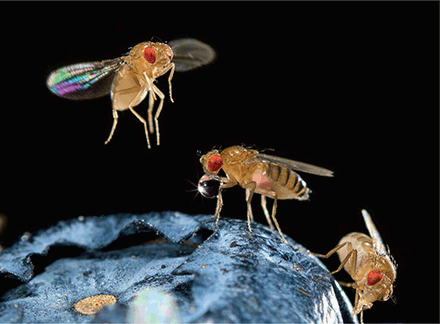
Recently, for example, researchers have shown that even fruitflies are cultural animals (Danchin et al. 2018; Whiten 2018).  Female fruitflies tend to conform to the mating preferences they observe in other females, which generates cultural traditions that are passed on to others through social learning.  The researchers placed virgin female fruitflies in a hexagonal chamber, surrounded by six compartments in each of which they could see a female fly mating with a male dusted by either pink or green coloring, with another male of the alternative color standing nearby.  Some females saw that all six of the mating males were pink.  Others saw that all were green.  Others saw different proportions of pink versus green males mating.

Two Females Watch a Copulating Green Male, While a Pink Male Is Rejected


It was observed that the virgin females who had seen a majority of females mating with pink males preferred to mate with pink males; and similarly those who had seen most females mating with green males preferred to mate with green males.  Moreover, this mating preference was passed on to later generations of females as a culturally inherited tradition.

So now fruitflies are added to a long and growing list of animals identified by scientists today as showing cultural behavior.  The list includes many mammalian, avian, fish, and insect species (Galef and Whiten 2017; Whiten et al. 2017).  Actually, however, this is only a rediscovery of what Aristotle reported long ago in his biological writings.


GENE-CULTURE COEVOLUTION

The advance beyond Aristotle has been in developing an evolutionary science of animal culture based on Charles Darwin's theory.  Darwin understood that his principles of organic evolution--variation, selection, and inheritance--could be applied to cultural evolution, such as the cultural evolution of languages (Mesoudi, Whiten, and Laland 2004).  Darwin did not understand, however, the genetic mechanisms of organic evolution.  With their modern understanding of genetics, evolutionary scientists today see genes and culture as two distinct forms of evolutionary inheritance.  Some evolutionary theorists argue that there are really four dimensions of evolution: genetic inheritance, epigenetic inheritance, behavioral inheritance, and symbolic inheritance (Jablonka and Lamb 2014).

Evolutionary science needs to explain the complex interaction of these systems of inheritance.  This is hard to do, as indicated by the recent work on gene-culture coevolution.  It's hard to define and identity the units of culture.  Richard Dawkins suggested that we might speak of cultural "memes" as analogous to organic "genes," but there is little agreement as to what should count as memes.

It's also hard to discern the connections between genes and memes, because little is known about how exactly genes influence behavior, or how exactly behavior might influence gene expression and transmission.

There are only a few examples of well-understood gene-culture coevolution.  One of the most famous cases is the evolution of lactase persistence.  The production of the enzyme lactase in the gut is necessary for the digestion of the milk sugar lactose.  This enzyme is produced in human infants so that they can digest the lactose in their mother's milk.  But in most human adults, the production of lactase is shut down, and so they suffer severe indigestion from the consumption of milk.  And yet lactase persistence--the production of lactase in adulthood--is common among those human beings with a northern and western European ancestry and those from some pastoralist groups in Africa, the Middle East, and southern Asia.  The likely explanation for this is that lactase persistence evolved among dairying farmers around 7,500 years ago as a genetic adaptation to dairying culture (Itan et al. 2009).  Geneticists have identified a particular genetic variation that supports lactase persistence, and they can see that this genetic variation correlates with the cultural evolution of dairying.  So here is a clear case of where a cultural tradition created an environment that favored genetic change that would be adaptive.

It's unfortunate that Darwin did not understand this, because the mysterious intestinal illness from which he suffered throughout his life was probably a result of his being lactose intolerant.  Medical researchers studying Darwin's records of his illness have noticed that it always arose a few hours after eating dairy foods (Campbell and Matthews 2005).  All of his symptoms--vomiting, gut pain, headaches, tiredness, and depression--match the effects of lactose intolerance.

There are very few studies of nonhuman animal culture that can show this same clarity in the mechanism of gene-culture evolution.  One case that comes close is the study of animal culture among the killer whales or orcas.  Orcas stretch from the Arctic to the Antarctic, and they diets range over birds, fish, mammals, and reptiles.  But as individuals, they belong to groups with different specialized diets and hunting traditions that are passed down over generations.  These groups also show variations in their cultural traditions for vocal displays, habitat use, play, and migration routes.  Some of the scientists studying them have seen stable genetic variation in each group that correlates with their cultural traditions, which suggests gene-culture coevolution (Foote et al. 2016; Whitehead 2017).


BIOLOGY INCLUDES CULTURAL HISTORY AND BIOGRAPHICAL HISTORY

Notice how this recognition of animal culture expands the range of biology to include cultural history and biographical history.  The biological study of animal behavior must go beyond the natural history of a species--the universal species-specific patterns of behavior--to include the distinctive cultural history of each group of animals.

Moreover, the study of animal culture shows that cultural traditions originate from innovations initiated by particular individuals that have been so successful that they have been passed on by social learning to other individuals and to subsequent generations.  Consequently, the study of animal behavior must include the study of the individual personalities of the animals responsible for cultural innovations.  For example, scientists have observed that among wild capuchin monkeys some individuals are better than others at social invention and innovation (Perry et al. 2017).  In fact, most of the detailed histories of particular animal groups--such as Jane Goodall's The Chimpanzees of Gombe--include biographical histories of the individual animals that have shaped the history of the group.

This supports my argument that a biopolitical science would have to move through three levels of political history--the natural history of the species, the cultural history of the group, and the biographical history of prominent individuals in the group.

Some of these points are elaborated in other posts herehereherehereherehere, and here,


REFERENCES

Campbell, Anthony, and Stephanie B. Matthews. 2005. "Darwin's Illness Revealed." Postgraduate Medical Journal 81: 248-51.

Danchin, Etienne, et al. 2018. "Cultural Flies: Conformist Social Leaning in Fruitflies Predicts Long-Lasting Mate-Choice Traditions." Science 362: 1025-1030.

Foote, Andrew D. et al. 2016. "Genome-Culture Coevolution Promotes Rapid Divergence of Killer Whale Ecotypes." Nature Communications 7:11693.

Galef, Bennett G., and Andrew Whiten. 2017. "The Comparative Psychology of Social Learning." In Joseph Call, et al., eds., APA Handbook of Comparative Psychology, 411-439.  Washington, DC: American Psychological Association.

Itan, Yuval, et al. 2009. "The Origins of Lactase Persistence in Europe." PLoS Computational Biology 5 (8): e1000491.

Jablonka, Eva, and Marion Lamb. 2014. Evolution in Four Dimensions: Genetic, Epigenetic, Behavioral, and Symbolic Variation in the History of Life. Revised ed. Cambridge: MIT Press.

Mesoudi, Alex, Andrew Whiten, and Kevin N. Laland. 2004. "Is Human Cultural Evolution Darwinian?  Evidence Reviewed From the Perspective of The Origin of Species."  Evolution 58 (1): 1-11.

Perry, Susan E., Brendan J. Barrett, and Irene Godoy. 2017. "Older, Sociable Capuchins (Cebus caucinus) Invent More Social Behaviors, But Younger Monkeys Innovate More in Other Contexts." Proceedings of the National Academy of Sciences 114 (30): 7806-7813.

Whitehead, Hal. 2017. "Gene-Culture Coevolution in Whales and Dolphins." Proceedings of the National Academy of Sciences 114 (30): 7814-7821.

Whiten, Andrew. 2018. "Culture and Conformity Shape Fruitfly Mating." Science 362: 998-1000.

Whiten, Andrew. et al. 2017. "The Extension of Biology Through Culture." Proceedings of the National Academy of Sciences 114 (30): 7775-7781.


Wednesday, May 14, 2014

Human Biodiversity (4): The Importance of Culture in Gene-Culture Coevolution

The readers of Nicholas Wade's Troublesome Inheritance should notice the importance of culture in his argument.  While he rejects the "culture alone" or "all-culture" position, he embraces a "mostly culture" view of institutions in his account of gene-culture coevolution (6, 57-61, 241). 

Consider the following comments.  "Culture is far more important in most short-term interactions.  As with most human behaviors, the genes provide just a nudge in a certain direction" (53).  "A society's achievements, whether in economics or the arts or military preparedness, rests in the first place on its institutions, which are largely cultural in essence.  Genes may nudge social behavior in one direction rather than another, thus affecting the nature of a society's institutions on the timescale of the generations and setting the framework within which culture operates, but this is a long-term effect that leaves ample room for culture to play a major role" (250).  "The genes that govern human behavior seldom issue imperatives.  They operate by setting mere inclinations, of which even the strongest can be overridden.  There are almost certainly genes that predispose people to regard incest as abhorrent, yet cases of incest are far from rare because those neural prohibitions can be ignored.  Because the prompting of behavior genes can be resisted, ingrained social behavior may be subject to a variety of manipulations, ranging from education and social pressure to tax incentives.  In short, many social behaviors are modifiable and this is probably the case even if they are genetically influenced.  Where behavior is concerned, genetic does not mean immutable" (250-51).

One might even see here a gene-culture-judgment coevolution.  Genes constrain but do not determine culture, and genes and culture jointly constrain but do not determine judgment.  Within the constraints of genetic nature and cultural traditions, individuals are free in their judgments in ways that can alter the course of human history.

There are many examples of the power of culture in Wade's argument.  He notes that "the universal instinct to conform to social rules seems to ensure that the political behaviors of the host country supplant those of the immigrants.  Chinese Americans do not organize themselves into authoritarian structures, nor Arab and African Americans into tribal ones" (188).

Even in Africa, the African tribalism that has impeded economic development has recently shown some signs of change.  Over the past 15 years, sub-Saharan Africa has had some of the fastest rates of economic growth in the world.  Wade acknowledges this, and he observes: "fierce pressures are clearly at work in the continent, and people will adapt to them.  These adaptations may include a reduction of tribalism" (176-77).  (A good survey of the remarkable improvements in Africa over recent decades was written by Oliver August as a long special report for The Economist, March 2, 2013.)

The cultural environment can also have a powerful effect on IQ scores.  Wade observes:
"IQ scores increase 10 or more points in a generation when a population becomes richer, showing clearly that wealth can raise IQ scores significantly.  East German children averaged 90 in 1967 but 99 in 1984.  In West Germany, which has essentially the same population, averages range from 99 to 107.  This 17 point range in the German population, from 90 to 107, was evidently caused by the alleviation of poverty, not genetics.
"There is a 10 to 15 point difference in IQ scores between the richer and poorer countries of Europe, yet these differences disappear when the inhabitants migrate to the United States, so the differences are evidently an environmental effect, not a genetic one.  If European IQ scores can vary so widely across different decades and locations, it is hard to be sure that any other ethnic differences are innate rather than environmental" (192).
This shows the "Flynn effect"--IQ scores rising as the result of environmental changes, particularly modern education that stimulates improving cognitive abilities.

As another example of how cultural conditions can change genetic nature, Wade indicates that while the races have arisen when people were fragmented into small tribal groups with little intermarriage, the modern move away from ethnocentric tribalism to inclusive societies is bringing increasing intermarriage that is reversing the racial differentiation of the human species (71, 78-80).  This ultimate triumph of inclusive institutions through racial intermarriage could eliminate racial tribalism.

What one sees here is that far from being racist, Wade's scientific argument for overcoming ethnocentric tribalism is actually a powerful argument against racism as belonging to a primitive stage of human evolution.

Friday, May 16, 2014

Human Biodiversity (5): Cultural Group Selection Through Migration and Assimilation

In A Troublesome Inheritance, Nicholas Wade writes: "Behavioral traits are particularly likely to be retained, but the universal instinct to conform to social rules seems to ensure that the political behaviors of the host country supplant those of the immigrants.  Chinese Americans do not organize themselves into authoritarian structures, nor Arab and African Americans into tribal ones" (188).  He also observes that "the forces of differentiation [of the races] seem now to have reversed course due to increased migration, travel, and intermarriage" (71).

Here and elsewhere in his book, Wade points to the power of cultural group selection and gene-culture coevolution, which has been studied by Darwinian theorists of cultural evolution.  Some of these theorists--such as Robert Boyd and Peter Richerson--have suggested that the historical turn towards liberal capitalism could be explained as a process of cultural group selection driven by immigration and assimilation.  And that seems to be what Wade is pointing to in the above passages.

In some papers--found here and here--Boyd and Richerson have argued that one important mechanism of social evolution is cultural group competition for immigration in which people "vote with their feet."  Although it is true, that groups have often competed through violent conflict and conquest, they argue (as did Darwin) that a more powerful form of group competition is cultural competition for immigration.  People tend to move from poorer, violent, and exploitative societies into richer, peaceful, more just societies.  And thus immigration tends to promote the spread of ideas and institutions that favor prosperity, peace, and justice. 

A dramatic example of this was the Berlin Wall during the Cold War, which showed how an oppressive regime might have to use barbed wire and armed border guards to keep its people from leaving in the pursuit of a better life elsewhere.

Boyd and Richerson also cite the example of two neighboring village societies in New Guinea.  The Gebusi were driving themselves into extinction through disruptive witchcraft trials and executions.  Some of the Gebusi were able to migrate to the society of the Bedamini, who had a better social order.

Similarly, some of the ancient empires--such as Rome and China--flourished because their institutions (such as Roman law and Confucian bureaucracy) attracted immigrants from other societies that were disordered and oppressive.

Beginning in the 18th century, classical liberal regimes based on Lockean political thought--like Great Britain and the United States--have attracted immigrants because of the prosperity, peace, and justice that liberal regimes promote.

Wade captures this same idea when he speaks of the historical move from "extractive" institutions that provoke people to leave to "inclusive" institutions that attract immigrants looking for a better life.

There are genetic propensities at work here.  The natural propensity to "better one's condition" (as Adam Smith called it) motivates people to migrate to societies that offer opportunities for improvement.  And "the universal instinct to conform to social rules" (in Wade's words) ensures that the immigrants will assimilate into their new societies.  This latter corresponds to what Boyd and Richerson identify as the genetically evolved disposition for social learning by conforming one's behavior to the social norms of the majority in the population, which explains why the children of immigrants can pick up the norms of their surrounding culture.  In this way, the process of cultural group selection through migration and assimilation is part of a gene-culture coevolution.

And thus one can explain the power of classical liberal ideas and institutions as cultural traditions that appeal to natural human desires and thus tend to win the competition with illiberal regimes.

Some of these points have come up in previous posts here, here, and here.

Gillian Brown and Peter Richerson have written an excellent paper comparing "cultural evolution," "human behavioral ecology," and "evolutionary psychology" as three schools of evolutionary social science.

Thursday, January 17, 2019

Evolutionary Psychology or Cultural Group Selection? Or Both? And Biographical History?

At his Internet salon for the discussion of ideas--Edge--John Brockman asks one question at the beginning of each year and then over a 150 smart people answer the question in short essays.  In 2014, his question was "What scientific idea is ready for retirement?"  The answer of Peter Richerson (a Professor of Environmental Studies and Policy at the University of California-Davis) was "Human Nature."  The answer of John Tooby (a Professor of Anthropology at the University of California-Santa Barbara) was "Learning and Culture."

While Richerson and Tooby are both leaders in evolutionary science, they disagree in their view of the primary subject of human evolution.  As a leading proponent of Cultural Group Selection, Richerson thinks human evolution is fundamentally about the evolution of human culture.  As a leading proponent of Evolutionary Psychology, Tooby thinks human evolution is fundamentally about the evolution of human nature.

For Richerson, the concept of human nature clouds our understanding of human evolution by assuming a mistaken dichotomy of nature and nurture or nature and culture, in which nature is wrongly seen as prior to culture in both evolutionary and developmental time.  In fact, Richerson argues, the evolutionary evidence for stone tool technology going back millions of years and the developmental evidence for social learning beginning early in infancy indicate  that human culture is prior to human nature, and that cultural evolution has driven genetic evolution.

For Tooby, the concepts of human culture and human learning explain nothing, because the phenomena of culture and learning themselves require explanation.  The idea of culture in the social sciences is like the idea of protoplasm in cell biology.  Protoplasm was once identified as the substance that worked through unknown mechanisms to carry out the vital processes of the cell.  But this was only a confession of ignorance.  "Now we recognize that protoplasm was magician's misdirection--a black box placeholder for ignorance, eclipsing the bilipid layers, ribosomes, Golgi bodies, proteasome, mitochondria, centrosomes, cilia, vesicles, sliceosomes, vacuoles, microtubules, lamellipodia, cisternae, etc. that were actually carrying out cellular processes."  Similarly, Tooby argues, the idea of culture needs to be replaced with a map of the evolved cognitive and motivational programs in the brain (the "organelles") that actually carry out our mental functions.

Despite the apparent opposition between these two positions, a careful study of the debate here reveals the underlying compatibility of cultural group selection and evolutionary psychology.  We need a science of human evolution that explains the complex coevolutionary interaction of human nature and human culture, which was originally proposed by Charles Darwin himself.

The proponents of gene-culture coevolution--the idea that human genes and culture are equally important in the human coevolutionary system--see support for this in Darwin's writings.  They even see Darwin as using his understanding of cultural evolution as the model for organic evolution (Mesoudi, Whiten, and Laland 2004; Richerson and Boyd 2010).  Friedrich Hayek made the same point--that Darwin's theory of biological evolution was the application to biology of the idea among the Scottish philosophers that social order arose by the cultural evolution of spontaneous order.

The logic of Darwin's argument for evolution depends on three principles--variation, competition, and inheritance.  Evolution requires variation of characters.  It also requires that those variable characters compete in such a way that some characters are more advantageous than others in the struggle for life.  Finally, if those characters are inherited, then the more advantageous characters will tend to spread in subsequent generations; and the accumulation of those favorable variations will produce adaptive designs for survival and reproduction.  This same logic applies to both biological and cultural evolution.

Darwin saw this evolutionary logic in the cultural evolution of language.  In The Descent of Man, he observed:
"The formation of different languages and of distinct species, and the proofs that both have been developed through a gradual process, are curiously the same. . . . Dominant languages and dialects spread widely and lead to the gradual extinction of other tongues. . . . We see variability in every tongue, and new worlds are continually cropping up; but as there is a limit in the powers of the memory, single words, like whole languages, gradually become extinct.  As Max Muller has well remarked: 'A struggle for life is constantly going on amongst the words and grammatical forms in each language.  The better, the shorter, the easier forms are constantly gaining the upper hand, and they owe their success to their own inherent virtue.' . . . The survival or preservation of certain favoured words in the struggle for existence is natural selection" (1871, 1:60-61; 2004, 112-13).
The evolution of language shows the coevolution of biological instinct and social learning.  The human brain has evolved adaptations for learning language, so that once they reach the critical learning period for language, all normal human children learn whatever language they hear spoken around them.  As Darwin said, "every language has to be learnt," but "man has an instinctive tendency to speak" (1871, 1:55; 2004, 108).  Rather than separating instinct from learning, we need to see that language shows an instinct for learning.

Darwin saw a similar evolutionary logic in the cultural evolution of morality.  He thought that human morality could have evolved through four overlapping stages of instinctive and cultural evolution.  First, social instincts led early human ancestors to feel sympathy for others in their group, which promoted a tendency to mutual aid.  Then with the development of their intellectual faculties and their capacities for language and habit, they were able to formulate and obey social norms of good conduct that could be transmitted as social traditions and inherited habits.  Darwin also stressed the importance of tribal warfare in the development of morality: such contests spurred the development of the moral and intellectual capacities that allow individuals to cooperate within groups so as to compete successfully against other groups.  Thus, Darwin proposed what today would be called evolution by group selection.  "Ultimately," he concluded, "our moral sense or conscience becomes a highly complex sentiment--originating in the social instincts, largely guided by the approbation of our fellow-men, ruled by reason, self-interest, and in later times by deep religious feelings, and confirmed by instruction and habit" (2004, 121-22, 130, 155-58).

Darwin had no knowledge of genetics, and so he could not understand the genetic evolution of instincts.  Nor did he clearly formulate the modern concept of culture.  Nevertheless, evolutionary scientists today can see in Darwin's writings at least a rudimentary conception of what today is called gene-culture coevolutionary theory based on the complex interaction of genetic evolution and cultural evolution.

And yet, as indicated by the debate between Richerson and Tooby, evolutionary scientists seem to be split between those who stress the evolution of human culture and those who stress the evolution of human nature.  One can see that split in the journal Behavioral and Brain Sciences in the debate over an article by Richerson et al. (2016).  But if one studies that debate carefully, one can also see that despite the apparent split, cultural group selection and evolutionary psychology are fundamentally compatible and complementary.  I also see here the need for a third level of analysis--the level of human individuals added to the levels of human nature and human culture.  We need to understand the evolution of human social order through the complex interaction of human natural history, cultural history, and biographical history.

The initial question raised by Richerson and other proponents of cultural group selection is how can we explain the evolution of cooperation in modern mass societies with huge populations of millions of people and in global social networks of exchange that encompass the entire Earth.  Throughout 99% of human evolutionary history, for millions of years, our ancestors lived in small bands of nomadic hunter-gatherers that might sometimes have met in tribes of no more than a few hundred people.  It was less than 10,000 years ago that some human beings moved into larger sedentary settlements and then with the development of agriculture there arose large cities with expanding populations.  We can explain cooperation in small foraging bands as based on the genetically evolved instincts for kin selection and reciprocal exchange among people in face-to-face relationships. But it's hard to see how these genetically evolved social instincts for cooperation in small groups of relatives and known individuals can sustain cooperation extended to millions or even billions of human beings who are not kin and not personally known to one another.  We still have the genetically evolved social psychology of our ancient foraging ancestors, because there hasn't been enough time for human beings to become genetically adapted to modern mass societies.

This has led Richerson and others (like Robert Boyd, Joseph Henrich, and Kevin Laland) to propose that we have become adapted for social cooperation in modern societies not by genetic evolution but by cultural group selection. So, for example, the cultural evolution of "Axial Age" universalistic religions beginning around 500 B.C.E. created ethical systems enforced by belief in eternal rewards and punishments by moralistic "Big Gods," which fostered cooperation among co-religionists living in expanded social orders (Richerson et al. 2016, 13).  Those living in religious groups that were successful in surviving,  in recruiting converts, and in promoting high birth rates among their members prevailed over other religious groups that were less successful.  The rapid expansion of Christianity in competition with pagan religions illustrates this cultural group selection of religions.

Proponents of cultural group selection argue that we can see the three principles of "Darwin's syllogism"--variation, inheritance, and competition--in cultural evolution through group selection.  1.  Human groups often vary culturally.  2. This cultural variation is transmitted vertically from generation to generation and horizontally within a group.  3. Success in intergroup competition is frequently determined by cultural differences, so that some cultural groups are more successful in survival and reproduction than competing groups.  The evidence for these three claims--as surveyed by Richerson et al. (2016)--is evidence for cultural group selection.

There is some evidence that the first two claims are true for some other animals, but not the third claim.  Chimpanzee communities, for example, show cultural variation that is transmitted by social learning.  To that extent, chimpanzees are cultural animals.  But while chimpanzee communities compete, there is no clear evidence that success in group competition is influenced by cultural differences, and therefore there is no cultural group selection among chimpanzees.  There is some evidence, however, that whale and dolphin species could satisfy all three principles of the Darwinian syllogism; and if so, they could show cultural group selection (Richerson et al. 2016, 57).

Against Richerson and his colleagues, John Tooby and Leda Cosmides have responded by arguing that human cooperation in modern mass societies can be explained through the instinctive adaptations to small-scale social life without any need for cultural group selection.  They write:
"The properties of individual carbon atoms allow them to chain into complex molecules of immense length.  They are not limited to structures involving only a few atoms.  The design features of our evolved neural adaptations appear similarly extensible.  Individuals with forager brains can link themselves together into unprecedentedly large cooperative structures without the need for large group-beneficial modifications to evolved human design.  Roles need only be intelligible to our social program logic and judged better than alternatives" (Tooby and Cosmides 2016, 42).
In particular, they argue that the ancient evolved instinct for exchange or trade in foraging bands can be extended to encompass modern networks of exchange in mass societies:
"The dazzlingly extended forms of modern cooperation we see today (Adam Smith's division of labor supporting globe-spanning trade) appear differentially built out of adaptations for small-scale sociality that modularly scale, such as exchange--rather than the marginal benevolence of Smith's butcher, brewer, and baker.  Evidence indicates that political attitudes toward welfare and redistribution reflect a specialized forager psychology of sharing for variance reduction (Peterson et al. 2012) and resource-conflict (Peterson et al. 2013).  Societies that attempted to harness general benevolence to organize institutions and production--the USSR, East Germany, China, Cambodia, North Korea, Cuba--were spectacular cooperative failures.  That they functioned at all depended on other scalable small-scale specializations--aggressive threats (conditional punishment), hierarchy, dominance, coalitions, and so forth" (Tooby and Cosmides 2016, 42).
Notice that Tooby and Cosmides reject the claim of Marxist anthropologists that ancient human foraging bands were societies of primitive communism, and so modern communism could be a revival of this original natural state of humanity.  Notice also that in rejecting this Marxist claim, they also reject Friedrich Hayek's claim that socialism's popularity comes from its atavistic appeal to the socialist instincts shaped in ancient foraging bands, and therefore that a modern extended order of liberal capitalism requires a cultural suppression of evolved tribal instincts.  In contrast to Hayek, Tooby and Cosmides agree with Adam Smith that "the propensity to truck, barter, and exchange" is natural for human beings, who engaged in exchange or trade even in their ancient foraging bands.

Tooby and Cosmides agree with Alan Page Fiske that "market pricing" is one of the four psychological models of social organization found universally in human societies, including prehistoric foraging bands.  Consequently, socialist societies that attempt to abolish or suppress "market pricing" must fail because this runs contrary to evolved human nature (Tooby and Cosmides 1992, 211-218).  Contrary to Hayek's argument, modern liberal capitalism satisfies some instinctive desires of human beings.  (I have written about this in some previous posts hereherehere, here, and here.)

"Market pricing" and trade among foragers are well illustrated by the Aboriginal Australians.  The whole continent of Australia was crisscrossed with trading paths, usually along waterhole routes.  Goods such as pearl shells, spears, stone axes, shields, boomerangs, and bamboo necklaces travelled by trade across Australia (Berndt and Berndt 1988).  For example, the Yir Yoront group on the west coast of the Cape York Peninsula (in the far north of Queensland) traded sting ray spears for stone axes.  The flat alluvial country of the Yir Yoront provided no suitable stone for axes.  The best stone for stone axes came from quarries 400 miles to the south, which came to them through long lines of trading partners.  The Yir Yoront had a surplus supply of sting ray spears, which are good fighting spears because the sting ray barbs break into fragments when they penetrate human flesh.  At the coast, where sting ray spears were plentiful, a man might have to trade a dozen spears for one stone axe head.  But 150 miles south of Yir Yoront, closer to the stone quarries, one spear might be traded for one stone axe head.  People near the middle of this trading chain, who made neither spears nor axes, acted as middlemen who took a certain number of both as their middleman's profit.  The Yir Yoront men understood the laws of supply and demand and the gains from trade (Cosmides and Tooby 1992, 216-17; Sharp 1952).

It is true that foraging bands show communal sharing of resources--particularly, in the sharing of meat--which Marxist anthropologists have interpreted as a primitive form of communism.  But as Cosmides and Tooby indicate, this sharing is not general or indiscriminate.  Foragers share meat brought back to camp by hunters for "variance reduction."  Success in hunting wild game depends not just on skill and effort but also on luck.  Even good hunters often come back from a day of hunting without any meat.  To protect themselves against the risk of having no meat, successful hunters share their meat, with the understanding that when they are unsuccessful, they will be the beneficiaries of sharing.  But those who try to cheat--those who take the shared meat but never reciprocate by sharing the meat they have procured--are punished by expulsion from the meat sharing system.  As some anthropologists have noted, this is like a system of commercial insurance where losses are shared among many individuals to reduce the risk to each.  By contrast, the gathering of wild plants does not show such variance.  Those who make any effort to gather plants usually return to camp with some food.  Consequently, foragers share their plant food within their families but not with others outside the family (Cashdan 1989; Cosmides and Tooby 1992, 212-17).

Tooby and Cosmides think this evolved psychology for sharing to reduce variance in resources due to luck explains political attitudes about social welfare programs.  Modern social welfare institutions involving millions of people who are non-kin and personally unknown to one another are modern cultural inventions that did not exist in ancient foraging societies.  But the evolved human psychology for systems of exchange shaped in foraging societies is still manifest in the political opinions about welfare programs.  Around the world, people support welfare for needy individuals suffering from bad luck who are willing to find jobs; but people are less inclined to help individuals who are identified as cheaters or free-riders who do not deserve public aid (Peterson et al. 2012; Peterson 2015, 2016).

Sometimes Cosmides and Tooby imply that if they can explain the extended forms of modern cooperation (such as social welfare programs) through a specialized forager psychology (such as sharing for variance reduction), this shows there is no need for an explanation through cultural group selection.  But the proponents of cultural group selection have argued that evolutionary psychology and cultural group selection are not alternatives but rather complements.  The very possibility of cultural group selection depends on human beings having genetically evolved instincts for learning culture.  And intergroup competition will favor those group-beneficial cultural traits--social norms, beliefs, and practices--that conform most closely to our evolved psychology (Henrich and Boyd 2016; Richerson et al. 2016, 49-50).  So, for instance, one could predict that social welfare programs that satisfy the evolved psychological propensity to punish cheaters will fare better than social welfare programs that frustrate this propensity.

Actually, even Cosmides and Tooby have admitted that evolutionary biology requires multi-level explanations that are complementary rather than contradictory.  They have observed: "In evolutionary biology, there are several different levels of explanation that are complementary and mutually compatible.  Explanation at one level (e.g., adaptive function) does not preclude or invalidate explanations at another (e.g., neural, cognitive, social, cultural, economic)" (Cosmides and Tooby 1997, 14).

Tooby's argument in 2014 that the concept of "culture" has no proper place in evolutionary science contradicts what he and Cosmides have written about cultural evolution.  They have said that "we are not abandoning the classic concept of culture" (Tooby and Cosmides 1992, 118).  They do propose, however, decomposing the traditional concept of culture into three kinds of culture (Tooby and Cosmides 1992, 121).  First, "metaculture" is their term for the cross-cultural regularities in human life that correspond to universal human nature, which make it possible for human beings to understand cultures beyond their own, without which cultural anthropology would be impossible.

Second, "evoked culture" arises when local circumstances trigger specific mechanisms of evolved human psychology in individual minds that create cultural representations without any transmission of cultural contents from other individuals.  They explain this through the metaphor of evolved humans as being like juke boxes identically designed with thousands of songs, and with devices designed to select songs on the basis of the juke box's location, time, and date.  (OK, I know that you young folks out there have no understanding of juke boxes, unless you've watched the cable TV reruns of Happy Days.)  This would create a global pattern of song cultures with cultural similarity within each group and cultural diversity between the groups.  This could generate the patterns of culture that we see without any social learning or transmission of culture from one generation to the next.  But they admit that "the juke box thought experiment is an unrealistically extreme case in which a complex, functionally organized, content-sensitive architecture internalizes no transmitted informational input other than an environmental trigger" (Tooby and Cosmides 1992, 117). Proponents of cultural group selection recognize evoked cultural responses to the environment as psychological switches that cultural group selection could harness (Henrich and Boyd 2016).

As I have indicated in a previous post, Tooby and Cosmides explain both socialism and capitalism as "evoked culture": socialism appeals to us today by evoking the evolved rules of sharing for risk pooling, while capitalism evokes the evolved system of cooperation through social exchange or trade.  Socialism fails because the rules evolved for sharing among small bands of hunters for which the rules were adaptive, but these rules are maladaptive for large modern societies in which people are interacting anonymously with thousands or millions of people.  Capitalism succeeds because the rules of the evolved cognitive system for social exchange can reach far beyond individual perception through the globally extended order of markets, and thus the evolved rules for social exchange can be adaptive both for small foraging bands and for modern mass societies.

The third form of culture recognized by Tooby and Cosmides is the "epidemiological culture" that is transmitted by social learning both within each generation of individuals and across the generations, which is a fundamental part of cultural group selection.

So Tooby, Cosmides, and the other evolutionary psychologists don't reject the idea of culture as such.  But they do reject the idea of culture if it is grounded on a "blank slate" view of the human mind that denies human nature--the idea that the human mind has no (or very little) content of its own except for whatever content has been imposed on it by the external cultural environment.  Richerson seemed to confirm that this fear of the "blank slate" version of cultural theory is warranted when he argued in 2014 that the concept of human nature should be discarded.

But then Richerson contradicts himself when he says that cultural group selection does not defend a "blank slate hypothesis," because cultural evolution is enabled and constrained by the universal human nature of evolved social instincts for learning (Richerson et al. 2016, 6, 49-51).

My conclusion from all of this is that an evolutionary science of social order requires a multi-leveled analysis of the interaction of natural history (evolutionary psychology) and cultural history (cultural group selection).

Even that is not enough, however, because we need a third level--biographical history (the evolved personality and life history of self-interested individuals who are agents of cultural change acting through coercion or persuasion).  In many animal groups, we can see how dominant individuals shape the social norms for the group.  For example, dominant macaques police conflicts in ways that protect their dominance while reducing conflict within the group (Flack et al. 2005, 2006).  This is surely true for human beings as well.  Consider, for instance, how the cultural history of the United States was altered by the dominant individuals in the American Continental Congress that drafted and signed the Declaration of Independence, or those in the Constitutional Convention who drafted and promoted the Constitution of 1787.  What we need here is an agent-based theory of how "self-interested agents create, maintain, and modify group functional culture" (Singh, Glowacki, and Wrangham 2016; Singh, Wrangham, and Glowacki 2017).

Part of this evolutionary biographical history would include the biological study of animal personalities and the individual psychology of cultural leaders--including moral, religious, political, and intellectual leaders.  Some of my posts on this can be found here and here.

In future posts, I will have more to say about applying cultural group selection and evolutionary psychology to Hayek's evolutionary science of capitalism and the liberal order.


REFERENCES

Berndt, Ronald M., and Catherine H. Berndt. 1988. The World of the First Australians: Aboriginal Traditional Life, Past and Present. 5th ed. Canberra, Australia: Aboriginal Studies Press.

Cashdan, Elizabeth. 1989. "Hunters and Gatherers: Economic Behavior in Bands." In Stuart Plattner, ed., Economic Anthropology, 21-48. Stanford, CA: Stanford University Press.

Cosmides, Leda, and John Tooby. 1992. "Cognitive Adaptations for Social Exchange." In Jerome H. Barkow, Leda Cosmides, and John Tooby, eds., The Adapted Mind: Evolutionary Psychology and the Generation of Culture, 163-228.

Cosmides, Leda, and John Tooby. 1997. "Evolutionary Psychology: A Primer." Center for Evolutionary Psychology, University of California, Santa Barbara.

Darwin, Charles. 1859. The Descent of Man. 2 vols. London: John Murray.

Darwin, Charles. 2004. The Descent of Man. 2nd ed. London: Penguin Books.

Flack, J. C., et al. 2005. "Social Structure, Robustness, and Policing Cost in a Cognitively Sophisticated Species." The American Naturalist 165: E126-39.

Flack, J.C., et al. 2006. "Policing Stabilizes Construction of Social Niches in Primates." Nature 439: 426-29.

Henrich, Joseph, and Robert Boyd. 2016. "How Evolved Psychological Mechanisms Empower Cultural Group Selection." Behavioral and Brain Sciences (2016): e40.

Mesoudi, Alex, Andrew Whiten, and Kevin Laland.  2004. "Is Human Cultural Evolution Darwinian? Evidence Reviewed from the Perspective of The Origin of Species." Evolution 58: 1-11.

Peterson, Michael B. et al. 2012. "Who Deserves Help? Evolutionary Psychology, Social Emotions, and Public Opinion About Welfare."  Political Psychology 33: 395-318.

Peterson, Michael B. 2015. "Evolutionary Political Psychology: On the Origin and Structure of Heuristics and Biases in Politics." Political Psychology 36: 45-78.

Peterson, Michael B. "Evolutionary Political Psychology." In David M. Buss, ed., The Handbook of Evolutionary Psychology, 1084-1101.  2 vols. 2nd ed. Hoboken, NJ: Wiley.

Richerson, Peter, et al. 2016. "Cultural Group Selection Plays an Essential Role in Explaining Human Cooperation: A Sketch of the Evidence." Behavioral and Brain Sciences (2016): e30.

Richerson, Peter, and Robert Boyd. 2010. "The Darwinian Theory of Human Cultural Evolution and Gene-Culture Coevolution." In Michael Bell, Douglas Futuyma, Walter Eanes, and Jeffrey Levinton, eds., Evolution Since Darwin: The First 150 Years, 561-88.  Sunderland, MA: Sinauer Associates.

Sharp, Lauriston. 1952. "Steel Axes for Stone-Age Australians." Human Organization 11 (2): 17-22.

Singh, Manvir, Luke Glowacki, and Richard W. Wrangham. 2016. "Self-Interested Agents Create, Maintain, and Modify Group-Functional Culture." Behavioral and Brain Sciences (2016): e52.

Singh, Manvir, Richard Wrangham, and Luke Glowacki. 2017. "Self-Interest and the Design of Rules." Human Nature 28:457-480.

Tooby, John, and Leda Cosmides. 2016. "Human Cooperation Shows the Distinctive Signatures of Adaptations to Small-Scale Social Life." Behavioral and Brain Sciences (2016): e54.

Tooby, John, and Leda Cosmides. 1992. "The Psychological Foundations of Culture." In Jerome H. Barkow, Leda Cosmides, and John Tooby, eds., The Adapted Mind: Evolutionary Psychology and the Creation of Culture, 19-136.  Oxford: Oxford University Press.
Saturday, October 11, 2008

E. O. Wilson's Darwinian Ethics of Natural Law

In Consilience, Edward O. Wilson recognizes that crucial for his unification of all knowledge is a biological account of ethics as rooted in evolved human nature. He rightly notes that in doing this, he is following in the tradition of naturalistic ethics that stretches from Aristotle to David Hume to Adam Smith and, finally, to Charles Darwin. He is also right to see this naturalistic tradition of ethics as being "empiricist" in contrast to the "transcendentalist" ethics of those thinkers like Immanuel Kant who look to a transcendent realm of moral freedom beyond the natural world of human inclinations and experience. But in rejecting Thomas Aquinas's natural law ethics as transcendentalist, Wilson fails to see the common ground shared by Thomistic natural law and Aristotelian natural right.

Wilson shares with Aquinas--and Aquinas's teacher Albert the Great--the belief that nature is a rational order of causal regularities that can be understood by human observation and reasoning. This scientific study of nature includes biology--as manifested in Albert's zoology, which continued Aristotle's biology and passed it on to Aquinas. Just as Albert and Aquinas sought to explain the natural moral law as rooted in human biological nature, Wilson wants to explain the natural moral sentiments as part of a comprehensive science of nature. Wilson's quest for "consilience" shows how the tradition of natural law reasoning can be extended and deepened through a modern science of human nature.

Human nature, Wilson insists, is not a product of genes alone or of culture alone. Rather, human nature is constituted by "the epigenetic rules, the hereditary regularities of mental development that bias cultural evolution in one direction as opposed to another, and thus connect the genes to culture" (164) For example, the rules of human language are not strictly determined by either genes alone or culture alone, but instead arise from the interaction of genetic mechanisms and cultural learning. Genes initiate a process of development that endows the human brain with neural mechanisms for acquiring language, so that in normal circumstances, a normal human child is prepared to learn whatever language in spoken in the social environment. Despite the diversity of human languages as shaped by diverse cultural traditions, there is a natural pattern of regularities: all normal human beings are prepared to learn a language, and the languages that they learn have universal traits that reflect the human brain's adaptation for learning language (132-33, 161-63). Such regularities of gene-culture interaction are what Wilson means by "epigenetic rules."

The gene-culture coevolution of morality is similar to that of language. The genetic evolution of the human species has endowed human beings with an instinctive propensity to learn morality. Human morality shows universal patterns shaped by the natural desires that constitute human nature. But the specification of those patterns will be shaped by human cultural traditions and by individual judgments as constrained by both the natural desires and the cultural traditions. This similarity between morality and language as based on instinctive capacities for social learning is a fundamental theme in Marc Hauser's recent book--Moral Minds--surveying the evidence for the biology of morality. My blog post on Hauser can be found here.

Wilson argues that since morality is ultimately rooted in the moral sentiments of human nature, a natural science of morality requires a biology of the moral sentiments. Although Wilson concedes that we are a long way from achieving such a biology, he has repeatedly throughout his writings used Edward Westermarck's Darwinian theory of the incest taboo as the prime example of how biology can explain the moral sentiments. My blog post on Westermarck's theory can be found here.

All moral rules might ultimately be explained in the same way that Westermarck explains the incest taboo. Morality, at the deepest level, depends on gut feelings that some things are right and others are wrong. The precise content of these feelings depends on what human beings learn through social experience, and this experience varies greatly across different cultural traditions. Yet the regularities in these moral feelings manifest the natural inclinations of a universal human nature that is prepared to learn some things more easily than others.

Wilson argues that social cooperation was advantageous for survival and reproduction during the evolutionary history of intelligent social animals like human beings. Natural selection favored those genetically heritable dispositions that promoted cooperative behavior, which included innate propensities to social emotions such as sympathy, love, guilt, shame, and indignation. Eventually, the highly developed intellectual faculties of human beings allowed them to formulate customary norms of conduct that expressed these social emotions of approval and disapproval. For example, the natural dependence of children on adults favored the emotional attachment of parent-child bonding. This dependence came to be expressed as social rules approving of parental care and disapproving of parental neglect. Similarly, the benefits of cooperating for mutual advantage in evolutionary history favored dispositions that enforce reciprocity--emotional approval of fairness and emotional disapproval of cheating. The innate disposition to learn such emotions would then be expressed as social rules that rewarded cooperators and punished cheaters.

Citing the research of neurologists like Antonio Damasio, Wilson infers that the innate propensity to experience moral emotions, which has been shaped by natural selection, is etched into the neural circuitry of the human brain (112-15). To live successfully as social animals, human beings must make practical decisions guided by the emotional control centers of their brains. Our brains incline us to feel sympathy and concern for the pleasures and pains of others, to feel love and gratitutde toward those who help us, to feel anger and indignation toward those who harm us, to feel guilt and shame when we have betrayed our family and friends, and to feel pride and honor when others recognize our good deeds. Insofar as these moral emotions are felt generally across a society, they support seocial rules of love, loyalty, honesty, and justice.

It might be, however, that a few human beings suffer from abnormal circuitry in their brains that prevents them from feeling, or feeling very strongly, the moral emotions that sustain morality. This seems to be the case for psychopaths, who feel no obligation to obey moral rules because they apparently do not feel the moral emotions that support such rules. If so, we must treat them as moral strangers (as I suggest in my chapter on psychopaths in Darwinian Natural Right).

If we saw Wilson's biology of moral sentiments as part of the natural law tradition, we might see that much (if not all) of what Aquinas said about the natural inclinations supporting natural law would be confirmed by modern biological research. For example, we might conclude taht the biological study of the social bonding between male and female and between parents and children provides a modern, scientific way of understanding what Aquinas identifies as the natural inclinations towards conjugal bonding and parental care. Aquinas's reasoning about marriage--that monogamy is completely natural, polygyny only partly natural, and polyandry completely unnatural--makes sense in the light of modern biological theories of human mating and parenting. Aquinas explained the natural inclinations by appealing to Aristotle's biological account of human nature compared to the natures of other animals. Wilson's biology of the moral sentiments continues in that same tradition of Aristotelian biological naturalism.

Wilson is certainly right in thinking that Aquinas regards the natural law as ultimately an expression of God's will, because he believes in God as the Creator of nature. But Wilson is wrong in thinking that Aquinas must therefore be an ethical "transcendentalist" who believes that moral knowledge comes only from some supernatural source beyond the natural experience of human beings. After all, Aquinas distinguishes the natural law, as known by the human mind's grasp of the natural inclinations, from the divine law, as known by God's revelation of His will through the Bible. Natural law conforms to the natural ends of human beigns as directed toward earthly happiness. Divine law, by contrast, conforms to their supernatural ends as directed toward eternal happiness.

Aquinas contends that the "moral precepts" of the Mosaic law--such as the rules against murder, theft, and adultery--belong to natural law, and, consequently, that they can be known by natural experience even without being revealed as divine commandments. These precepts belong to natural law, Aquinas says, because they derive their force from "natural instinct." The Mosaic law incorporates natural law insofar as it secures the conditions for satisfying the natural human desires for life, sexuality, familial bonding, and social order generally. Unlike the moral precepts, the "judicial" and "ceremonial" precepts of Mosaic law--such as the Jewish dietary restrictions and procedures of worship--could not have been known if they had not been revealed as divine law. These precepts derive their force from being instituted for the people of Israel. Before they were instituted, it was arbitrary whether the matters covered by these precepts were arranged in one way rather than another.

The contrast between Aquinas's "empiricist" view of natural law and his "transcendentalist" view of divine law is clear in his account of marriage. Aquinas believes that marriage belongs to natural law insofar as it serves two natural ends--the parental care of children and conjugal bonding. A Darwinian scientist like Wilson can accept this moral claim because it depends upon the observable nature of human beings. Aquinas believes, however, that marriage also serves a supernatural end that goes beyond natural experience. As a sacrament of the Catholic Church, marriage symbolizes the supernatural mystery of Christ's union with the Church. If this religious doctrine strenthens the marital commitment of those who believe it, then it reinforces the natural moral sense associated with marital bonding and thereby promotes the earthly happiness of human beings. Yet the sacred meaning of the doctrine points beyond nature to the eternal happiness that Aquinas believes to be the final end of human longing. This sacred meaning of marriage comes from a divine law that transcends human understanding and is beyond the realm of natural science. Yet the secular meaning of marriage comes from a natural law that can be known by natural experience and is open to scientific study. This secular meaning is compatible with Wilson's "empiricist" view of morality.

This should allow proponents of Aristotelian and Thomistic ethics to see Darwinian science as providing a scientific foundation for their ethics. One can see this, for example, in the writing of Alasdair MacIntyre. In his After Virtue (1981), he defended an Aristotelian and Thomistic account of morality as rooted in the moral and intellectual virtues, but he rejected any appeal to Aristotle's biology. Some years later, however, he indicated in Dependent Rational Animals (1999), that he had changed his mind--partly through reading my Darwinian Natural Right--because he had concluded that his Aristotelian/Thomistic ethics could be rooted in a Darwinian account of evolved human nature.

Thursday, June 04, 2026

Nicholas Wade's Darwinian Liberal Conservatism

In 1975, the left-wing critics of Ed Wilson's Sociobiology accused him of promoting a genetic determinism and a conservative (or even neo-Nazi) politics that denied the possibility and desirability of the social change through cultural learning that could establish a socialist society.  Nicholas Wade, writing for the journal Science, responded by pointing out that Wilson could not be a strict genetic determinist because he recognized that human social behavior was largely shaped by cultural learning.  The evolution of social behavior works through the interaction of genes and culture, so that genetic evolution both enables and constrains cultural evolution.  

Wade also dismissed the charge that Wilson was supporting Nazi-like eugenics as unfairly inflammatory political rhetoric.  After all, Wade noted, Wilson "describes himself as a liberal."  Wilson himself had said that human sociobiology could explain the human resistance to oppressive despotism as an expression of those human rights that are rooted in human biological nature--"rights that are innate, rooted in the ineradicable drives for survival and self-esteem."  So it seemed that if Wilson's sociobiology promoted conservatism, it must be a liberal conservatism--conservative in the sense of conserving those genetically evolved behaviors and traditions that have worked in the past, but liberal in the sense of being open to the cultural evolution of the liberal institutions that secure human liberty.

In his new book The Origin of Politics: How Evolution and Ideology Shape the Fate of Nations, Wade elaborates both of these themes--the gene-culture coevolution of human social behavior and the need for both liberal and conservative attitudes to sustain a free, flourishing, and enduring social order.  He also adds a third theme--the evolution of the modern nation-state--that supports an illiberal nationalism that seems to contradict his liberal conservatism.


THE GENE-CULTURE COEVOLUTION OF POLITICS

Many of the leftist critics of sociobiology worried that any conception of a genetic human nature as a constraint on cultural change would deny the possibility of creating a socialist society.  Wade confirms that fear by arguing that the history of socialis utopias--particularly, the socialist kibbutzim in Israel-- shows that any attempt to conquer human nature in establishing socialism must ultimately fail.

The kibbutzim were collective farms established in Israel in the early 20th century.  To achieve complete equality, they abolished the family, abolished the traditional division of labor between men and women, abolished private property, and abolished differential compensation for workers.

The kibbutzim practiced a pure socialism that came as close to absolute equality as any human community has ever achieved.  The members rotated jobs.  They took all of their meals in a common dining hall.  They had no private property.  They did not even own the clothing they wore, which was provided for them by the community.  When children were born, they were sent to a children's house to be cared for and educated by the community.  Children were allowed to visit their parents only a few hours in the afternoon.  This was understood as necessary for the sexual equality of men and women, because women were free from the burden of caring for their children. All decisions about the organization of the community were made by consensus in a general assembly, usually held weekly, where every member participated equally.  The kibbutzniks saw themselves as putting into practice the Marxist principle of "from each according to his ability, to each according to his need."  They also seemed to be following Plato's recommendation in The Republic that the Guardians in the just city should not have private property or private families, because they should care for the common good of the whole community rather than their selfish private interests.

But then, beginning in the 1950s and 1960s, young mothers began to complain that they did not have enough time with their children.  They wanted at least to be able to put their children to sleep at night.  As the children matured to adulthood, many of them left the kibbutz because they didn't like the communal childrearing.  Beginning in the 1970s, many of the kibbutzim decided to allow family sleeping rather than collective sleeping.  Socialists complained that allowing children to live with their parents would lead to the privatization of other things and inequality.

The kibbutzniks wanted not only private families but also private property.  Some of them returning from serving in the British army in World War Two came back with teakettles.  Allowing some people to own private teakettles, and to drink tea privately in their homes rather than in the communal dining room, violated socialist equality.  Then some people wanted to own their own clothes and to select their clothing.  They also wanted to own their homes.

The kibbutzim had to abandon job rotation to keep skilled people in their specialized jobs.  The most skilled workers wanted extra pay for their work, and they complained about those people who didn't work hard but received equal pay.  By the end of the 1990s, many kibbutzim were assigning wages according to skill level.

So socialism was successful for the founding generation of the kibbutzniks because of their ideological commitment to the project.  But it ultimately failed because the second and third generations rejected it as frustrating their natural human desires for familial bonding, private property, and earnings according to merit.  The socialist culture of the kibbutzim failed to abolish evolved human nature.

But even if cultural learning cannot abolish human nature, Wade observes, human nature is flexible enough that it can be bent in certain directions by cultural learning.  His two examples of this happening are the rise of monogamy and the fall of tribalism in human history.

Although monogamous pair-bonding is deeply rooted in human evolutionary history, there is also an evolutionary logic for men to compete with one another for sexual access to many women.  Since women can bear only a few children in their lifetimes, but men can father many, a man who mates with many women increases his Darwinian fitness.  But only men with power, status, and wealth can provide multiple women with the resources they need for bearing and rearing children.  So it was only after the development of agriculture, which allowed a few men to accumulate great wealth and power, that high status men were able to have many wives.  For example, Wade notes that the Moroccan ruler Moulay Ismail was reputed to have had over 500 concubines and to have fathered over 1,000 children by the time of his death in 1727.  Since the emergence of agriculture, most societies have allowed polygamy.  Actually, this means polygyny (multiple women mated with one man), because polyandry (multiple men mated with one woman) is extremely rare.

But then in ancient Greece and Rome, there arose a cultural rule forbidding anyone from marrying more than one person at a time.  The Christian Church then strictly enforced this cultural rule of monogamy across the Roman Empire and then across the European states.

Rich men are worse off from this cultural rule because it limits their male desire to leave as many (legitimate) offspring as possible.  But it benefits poor men in a way that benefits society at large.

In a polygamous society, the highest status men will have many wives.  Some middle status men will have one wife each.  Consequently, the lowest status men will have little chance of finding a wife.  These young wifeless men will become resentful and violent and thus disruptive to the social order.  

Monogamy evenly distributes the women as mates for the men, and then every man has a stake in the existing order, which strengthens social cohesion.  For that reason, monogamous societies will tend to be more stable and enduring than polygamous societies.

This cultural evolution of monogamy illustrates how a cultural rule can bend but not break a natural human propensity.  In a monogamous society, rich and powerful men (such as politicians) will enjoy sexual access to many women, but these adulterous affairs will not be socially or legally legitimized.

Another example of a cultural curbing of a natural propensity that was necessary for the emergence of modern state societies is the repression of tribalism.  With the appearance of the first horticulturalists about 10,000 years ago--small-scale cultivators of plants--people lived in small villages organized into clans and tribes.  A clan is a social group consisting of families who claim a common ancestor.  The informal leadership of a clan is usually elders or a chief.  A tribe is composed of multiple clans claiming common ancestry and shared culture, language, territory, and traditions.  The tribe is governed by chiefs or councils, but they have nothing like a formal government or bureaucratic state.  John Locke understood the American Indian tribes (particularly, the Huron tribes described by Gabriel Sagard) as living in the state of nature with informal governance but no formal political institutions.

For thousands of years, tribalism was the predominant social organization for most human beings around the world.  History's largest land empire--the Mongol Empire--was tribally organized, and by 1279 AD it stretched from the Pacific Ocean to Eastern Europe.

In Europe, Wade observes, tribalism was undermined by the Catholic Church.  Tribes depend on a network of marriages between people who are closely related to preserve male lineages and inheritance of property in the male line.  Because of the short life spans in premodern times, families often had no male heir.  To keep wealth within the family or tribe, men were required to marry their brother's widow, or a widowed man was required to marry his sister-in-law.  Or a family could resort to adoption.  The Church used its power over marriage rules to forbid these practices under the pretext of preventing incest.  Then, when people on their deathbeds had no male descendants, they could be persuaded by a priest to give their property to the Church as a way of assuring their heavenly salvation.  Consequently, so much of the wealth of the tribes was transferred to the Church that tribal structures were dissolved.

Wade argues that what we see here is the coevolution of genetic instincts and cultural traditions, so that cultural norms can curb genetic instincts like polygamy and tribalism, but those instincts can never be totally extinguished.  Rich and powerful men will always be tempted by the polygamous instinct for extramarital sex.  And people will always have a tribalistic instinct to favor their relatives.


THE EVOLUTION OF LIBERAL CONSERVATISM

The cultural suppression of polygamy and tribalism, allowed for the emergence of the monogamous nuclear family in Europe as the normative institution for organizing marriage and kinship.  The monogamous nuclear family—a couple and their dependent children living together—has historically been linked to the rise of individualism in Western societies. This arises from its role in shaping personal identity, property rights, and social roles.

But people were still under the authoritarian religious and political authority of the ruling elites who controlled the church and the state.  Securing the social, economic, and political freedoms enjoyed by people in a modern liberal democracy, Wade explains, required the cultural evolution of the liberal constitutionalism that first emerged fully in England in the Glorious Revolution of 1688.

The Stuart monarchs claimed to rule by divine right, and thus they could not be under the law, since the King was the Law--Rex Lex.  Their opponents in Parliament argued that the king must be subject to the law.  By the late 17th century, there were two political factions in this debate.  The Tories defended the divine right authority of the King.  The Whigs argued for parliamentary supremacy and the rule of law over the King.  This debate was settled when the last of the Stuarts, James II, was forced into exile and replaced in 1689 by William III of the Dutch House of Orange.  This established that the king was subject to the law and Parliament and that governments could rule only with the consent of the people.  Most Tories then accepted constitutional monarchy and gave up the idea of divine-right monarchy.

Wade sees here the cultural evolution of the three components of the modern liberal democratic order.

First, the state was strong enough to defend itself and prevent unrest within its borders.  Second, such conditions allowed the emergence of the rule of law and respect for property rights.  Third, because of the existence and legitimacy of the law, Parliament was able to challenge the king's absolute power and make him subject to the will of elected government (94-95).

For Wade, this allowed for "institutions such as property rights, free markets, and an unbiased legal system . . . open and impersonal institutions, or 'inclusive institutions'" that "stand in contrast to 'extractive institutions' that are designed to sequester a society's resources for the benefit of a small elite" (98-99).  This cultural evolution from "extractive institutions" to "inclusive institutions" corresponds to what Stephen Balch would call the move from a Takers regime to a Makers regime (Naturalizing History: A Biocultural Theory of Human Progress [Newcastle upon Tyne, UK: Cambridge Scholars Publishing, 2026).  The Makers are those who produce wealth.  The Takers are those who expropriate the wealth produced by others.

David Hume saw the conflict between the Tories as the party of authority and obedience to rulers and the Whigs as the party of liberty and resistance to tyranny as a political battle in which the partisans of each faction refused to see the partial truth in each side: good government requires a tense balance between authority and liberty, so that each side moderates the other.  Extreme authoritarianism creates tyranny.  Extreme libertarianism creates anarchy.  Hume thought the task of a philosopher is not to become a partisan for one side over the other but to mediate between the two extremes and promote compromise and accommodation.

Although Wade is not completely clear on this point, he seems to agree with Hume in suggesting that the genetic and cultural evolution of political order requires a balance or accommodation between conservative political attitudes (expressed by the Tories) and liberal political attitudes (expressed by the Whigs), which I have called "liberal conservatism."  

Wade agrees with those political scientists--John Hibbing, Peter Hatemi, and their colleagues--who argue that twin studies have shown that political attitudes are to a significant degree genetically influenced (see John R. Hibbing, Kevin B. Smith, and John R. Alford, Predisposed: The Left, The Right, and the Biology of Political Differences, second edition [New York: Routledge, 2024].  In some studies, questionnaires are given to identical twins, who have 100% of their genome in common, and to fraternal twins, who share on average 50% of their genes.  When the responses from the identical twin pairs are more similar than those from the fraternal twin pairs, a genetic influence can be inferred.  The twins can be asked to answer yes or no to a series of questions about political issues such as the death penalty, gay rights, immigration, and abortion.  In one study, researchers constructed an index of conservatism based on typically conservative answers to the questions and then estimated the heritability of conservatism--the extent to which the variability in the population is influenced by genetics--as 43%.  Studies of identical twins reared apart show that if you know that one of the twins is politically conservative, you can predict that the other twin is likely to be politically conservative.  So it seems that there is some genetic influence on whether one is politically conservative or liberal.

In some previous posts, I have criticized this "genopolitics" research of Hibbing and his colleagues.  One of my main criticisms has been that Hibbing's group gives us an implausibly simplistic model that cannot account for the complex diversity of evolved political ideology.  Isn't it hard to see how the complexity of political thought and behavior could be reduced to two categories at opposite ends of one dimension--the political left or the political right--or perhaps three categories if we include the political center?  At the very least, we need to recognize libertarianism or classical liberalism as a position that is neither purely liberal nor purely conservative, a position that is ignored by Hibbing's group.

The insistence of Hibbing's group that everyone is either liberal or conservative, left or right, requires that everyone be forced to make dichotomous choices about the "bedrock issues of social organization."  They have done this by using a "Society Works Best Instrument" (Kevin Smith et al., "Linking Genetics and Political Attitudes: Reconceptualizing Political Ideology," Political Psychology 32 [2011]: 390-91).  People are given a series of 14 binary choices about how "Society works best when . . ."  Amazingly, they ask about how "society" works best, but they ask nothing about "government" or "the state"; and so they make it impossible to distinguish between the natural and voluntary associations in civil society and the coercive power of government.

Here are some examples.  "Society works best when . . . 1. Those who break the rules are punished. 2. Those who break the rules are forgiven.  1. Every member contributes. 2. More fortunate members sacrifice to help others.  1. People are rewarded according to merit.  2. People are rewarded according to need.  1. People take primary responsibility for their welfare. 2. People join together to help others.  1. People are proud they belong to the best society there is.  2. People realize that no society is better than any other."

Every choice of a 1 was given a score of 1, and every choice of a 2 was given a score of -1.  Those whose total score was close to 14 were extreme conservatives.  Those whose total score was close to -14 were extreme liberals.

I assure you I am not making this up.  This is what Hibbing and his group regard as real social science. 

Wouldn't any reasonable person--any liberal or conservative--object that most of these dichotomous choices are ridiculous, because they are false dichotomies?  Would the conservative say that those who break the rules should always be punished and never forgiven?  Or would the liberal say that they should always be forgiven and never punished?  Would the conservative say that people should always be rewarded according to merit and never according to need?  Or would the liberal say that people should always be rewarded according to need and never according to merit?  Would the conservative say that people should always take primary responsibility for their welfare and never help others?  Or would the liberal say that people should always help others and never take primary responsibility for their own welfare?  Surely, the answer to all these questions is no.

If you insist that political ideology consists of a choice between only two alternatives, these are the kind of silly choices that you have to give to people.

Perhaps we need a somewhat wider range of choices.  Hibbing et al. are silent about the proposal by some political scientists--such as William Maddox and Stuart Lilie (in Beyond Liberal and Conservative: Reassessing the Political Spectrum [Cato Institute, 1984])--for using the two dimensions of freedom--economic freedom and personal freedom--to construct a matrix of four or five political ideologies.  American public opinion survey data shows, they contend, that American citizens are not just divided into liberals and conservatives, but also into libertarians and populists.  Some libertarian theorists (such as David Boaz), as well as the Libertarian Party, have adopted this analysis to construct a matrix of political ideologies based on two dimensions--personal liberty and economic liberty:


You can take a short quiz to see where you belong.  If you score high on personal liberty but low on economic liberty, you're a liberal.  If you score low on personal liberty but high on economic liberty, you're a conservative. If you score low on both personal liberty and economic liberty, you're a statist (or an authoritarian).  (Maddox and Lilie would call you a populist.)   If you score high on both personal liberty and economic liberty, you're a libertarian.  If you score towards the middle on both scales, you're a centrist.

Since the libertarian (or classical liberal) agrees with the liberal about the importance of personal liberty and agrees with the conservative about the importance of economic liberty, the libertarian could also be called a liberal conservative.

Wade never explicitly affirms what I am calling "liberal conservatism," but it's implied in much of what he says.  "Evolution has embedded four major structural elements of society in the human genome," Wade claims.  "These are the family, the specialized roles of the two sexes, social institutions [such as religion, commerce, and politics], and the tribe with its successor institution the nation-state" (60, 205).  Wade argues that while conservatives firmly support those evolutionary pillars of social order, liberals--or at least those belonging to the "ultra-left"--undermine those pillars.  But then he insists: "The evolutionary perspective provides no basis for favoring conservative over liberal politics" (211).  On the contrary, "a healthy society needs to maintain in its genetic patrimony the full range of political behavior," combining "its liberal-promoting alleles" and its "conservative alleles," because a healthy society needs to be conservative in preserving its traditional norms but also liberal in making changes in response to a changing environment (158).

Wade seems to be agreeing with Hume that a healthy social order requires a balancing of the Tory party of authority and the Whig party of liberty as expressing two sides of the human nature of social order.  But as I have already suggested, a better position would be to affirm a Darwinian liberal conservatism that recognizes both liberty and authority as grounded in our evolved human nature.

I will say more about this in my next post.