Showing posts sorted by relevance for query Mesopotamia. Sort by date Show all posts

Friday, November 05, 2021

Democracy in Ancient Mesopotamia?

Some years ago, I wrote some posts (herehere, and here) on how "Liberty Begins at Sumer."  Sumer was the earliest human civilization, located in southern Mesopotamia (now southern Iraq).  I was particularly interested in understanding why Pierre Goodrich adopted the cuneiform symbol for the Sumerian word amagi as the logo for the Liberty Fund--the first word in the oldest written language for "liberty."  I suggested that recent archaeological studies of ancient Mesopotamian history confirm Goodrich's insight that here we can find the first written evidence for the human struggle for liberty in the rebellion against autocratic government over 5,000 years ago.  

Recently, I have been thinking more about this after reading David Stasavage's claim in The Decline and Rise of Democracy that democracy began in Sumer and elsewhere in Mesopotamia.  If democracy in its broadest sense means political rule by consent of the people, then democracy began long before Sumer among our prehistoric hunter-gatherer ancestors living in stateless societies.  But in Sumer, we see the emergence of the first "states"--such as the city-state of Uruk, where a city wall was first built around 3,200 BCE--and so here we can look for evidence of how democracy might have first emerged in a society with a specialized state apparatus (with a royal bureaucracy, military, and priestly class).  If there is such evidence, that would indicate that the formation of states did not extinguish the natural desire for democratic liberty that had evolved among prehistoric hunter-gatherers. 


IS IT DEMOCRACY VERSUS AUTOCRACY?

In 1943, Thorkild Jacobsen--a famous Assyriologist at the Oriental Institute of the University of Chicago--wrote an article on "Primitive Democracy in Ancient Mesopotamia."  Beginning in the middle of the nineteenth century, European archaeologists had led excavations in the Near East that uncovered evidence for the emergence of the first human civilizations--with the first cities, the first writing systems, the first religious temples, and the first bureaucratic states--in the ancient Near East over 5,000 years ago.  The monumental architecture and the written records displayed the grand power of kings ruling with absolute and divine authority, which seemed to confirm what the ancient Greeks had said about the "Oriental Despotism" of the East as the powerful alternative to the freedom-loving world of the Greek polis.  But Jacobsen challenged this old story of Western freedom versus Eastern despotism by arguing that prehistoric Mesopotamia had a tradition of democratic governance that had left some traces even in the autocratic kingdoms of historic Mesopotamia.

Jacobsen assumed a simple dichotomous taxonomy of political regimes--democracy or autocracy.  He defined democracy according to the original Athenian conception of democracy as the regime in which a large portion of the community--the free adult male citizens--consent to all the major decisions, exercise supreme judicial authority, and consent to rulers and magistrates.  He defined autocracy as any form of governance that concentrates power in a single individual and those he appoints to carry out his will.

The ancient Greeks who invented the word democracy (democratia) distinguished three forms of government based on the rule of one, few, or many, corresponding to kingship, oligarchy, or democracy.  Oligarchy was rule by a council of aristocrats or nobles.  Democracy was rule by an assembly open to the great multitude of the people (the demos), or at least the free adult male citizens, which was a large group but still a minority of the whole population of a polis.

By contrast, Jacobsen thought that oligarchy merged into democracy insofar as both were forms of collective governance as opposed to autocracy.  Even in a democracy, those of high status or seniority (the elders, the wealthy, or the nobles) will often fill the councils of governance, but these councils will sometimes have to have the approval of popular assemblies.  So what Jacobsen calls democracy might be identified as what Aristotle called the "mixed regime," which combined aristocratic and democratic elements.

Stasavage agrees with this, and he points out that classical scholars have recognized that in ancient Greece, "all polis constitutions were mixed" (Hansen and Nielsen 2004:84).  Most oligarchies had both an assembly of the people to which all citizens had access and an oligarchic council to which only the wealthiest citizens had access (Hansen 2006:112).  Some Greek historians (like Thucydides) and philosophers (like Aristotle) identified the balanced mixture of the few and the many as the best regime.

I should add here, however, that there is a good argument for Clifford Bates's claim that the best regime for Aristotle is actually limited democracy--democracy restrained by the rule of law.  All regimes are imperfect, Aristotle suggests, but democracy constrained by law is the least imperfect (Bates 2003).  Bates's book was originally a dissertation at Northern Illinois University that I supervised.

It might seem odd to look for democracy in ancient Mesopotamia, where the monarchic rulers identified themselves as kings with ultimate authority conferred on them by the gods; and so one might think they did not need the consent of their people to their rule.  But if one reads the legal and political documents from ancient Mesopotamia, it is clear that the ruler needed the cooperation of his people for the proper functioning of the state (Van De Mieroop 2017).  He needed soldiers to fight for him.  He needed laborers to work for him.  He needed taxpayers to provide revenue for him.  He needed judges to adjudicate legal disputes.  He also needed his people not to run away from or revolt against his state.  (In fact, as I have indicated in previous posts, over 3,000 years of Mesopotamian political life, there were hundreds of rebellions.)

And, sometimes, the king needed his people to meet in an "assembly" (unkin in Sumerian, puhrim in Akkadian) to consent to public policies.  For example, in the Laws of Hammurabi, which was compiled sometime around 1750 BC by the king of Babylon, it is said that if a judge unjustly overturns a judgment, "they shall unseat him from his judgeship in the assembly, and he shall never again sit in judgement with the judges" (Roth 1997, LH, para. 5).  One form of punishment for a criminal is that "he shall be flogged in the public assembly with 60 stripes of an ox whip" (LH, para. 202).

Jacobsen thought that these public assemblies in the historic Mesopotamian city-states were vestiges of a prehistoric Mesopotamian democracy in which popular assemblies had exercised the ultimate authority of the people to consent to governance, although gradually the government of Mesopotamia had moved from democracy to autocracy.  He offered four kinds of evidence for this.

First,  many Mesopotamian documents indicate that the adjudication of legal disputes, both civil and criminal, was carried out by each city or "town" (alum in Akkadian), and often the word "assembly" was equivalent to the "town," suggesting that the citizenry of each town had the authority to adjudicate cases. That this was open to the citizenry at large is implied by a Babylonian proverb that Jacobsen quotes:

"Do not go to stand in the assembly;

"Do not stray to the very place of strife.

"It is precisely in strife that fate may overtake you;

"Besides, you may be made a witness for them

"So that they take you along to testify in a lawsuit not your own" (Jacobsen 1943:164).

Here is seems that anyone who passes by an assembly could join it and participate in its legal process.

As we have seen, the Legal Code of Hammurabi assumes that the "assembly" will exercise judicial authority.  In previous posts on "The Lockean Social Contract in Ancient Mesopotamia," I have written about Seth Richardson's observation that Hammurabi's Code shows the "presumptive state"--that is, Hammurabi presumes in his code that he has absolute authority to make and enforce laws, but when you read through the laws, you notice that there are few references to the king; and so it seems that the actual exercise of legal power depends upon the people in each city.  The king's rhetorical presumption of absolute autocratic power is contradicted by the reality of popular assemblies exercising the real governing power.

So here we see within the presumptively autocratic state, Jacobsen suggests, a survival of the older traditions of popular rule that dominated the early stateless democracies in Mesopotamia before the emergence of states.

Jacobsen points to a second kind of evidence for the primacy of popular assemblies in prehistoric Mesopotamia in some of the epic tales about Gilgamesh.  The "Epic of Gilgamesh" in Akkadian is the most famous of those stories, which many of us read in college as the first assigned reading in our "world literature" class.  But there also are five Sumerian stories of Gilgamesh, one of which can be entitled "Gilgamesh and Agga."  

The Story of "Gilgamesh and Agga" in the Sulaymaniyah Museum, in the Kurdish Region of Iraq


Gilgamesh was a king of Uruk, who probably ruled sometime between 2900 BC and 2350 BC, although some scholars wonder whether he was a purely mythical creation.  "Gilgamesh and Agga" relates a story about the conflict between Gilgamesh as king of Uruk (or Erech) and Agga as the king of Kish (Kramer 1949).  The envoys of Agga to Gilgamesh ordered him to surrender Uruk to the rule of Agga.  In response, Gilgamesh convened "the assembly of the elders," and he proposed to them: "Let us not submit to the house of Kish, let us smite it with weapons."  But the elders rejected his proposal, saying "Let us submit to the house of Kish, let us not smite it with weapons."  Refusing to accept this advice from the elders, Gilgamesh convened the "assembly of the men of his city," and again he proposed: "Do not submit to the house of Kish, let us smite it with weapons."  This popular assembly agreed with him, and he was pleased: "At the word of the men of his city, his heart rejoiced, his spirit brightened."

Gilgamesh ordered his soldiers to go to battle, and Agga besieged Uruk.  The account of subsequent events is somewhat unclear, but apparently Agga was finally persuaded to lift the siege, and Uruk was not conquered.

In History Begins at Sumer: Thirty-Nine Firsts in Recorded History, famous Sumerologist Samuel Noah Kramer identified this as the story of "The First Bicameral Congress."  Here he saw the Sumerians taking the first steps towards democratic government in which the power of kings was restrained by popular political assemblies.  Like the American Congress, there were two "houses": a "senate" or assembly of elders and a "lower house" or assembly of arms-bearing male citizens.  So Kramer agreed  with Jacobsen in seeing this as evidence for "primitive democracy" in Mesopotamia.  (For the scholarly debate over the interpretation of the "Gilgamesh and Agga" story, see Ridley 2000.)

It was probably because Pierre Goodrich had read Kramer's book that Goodrich decided to put the name of Gilgamesh at the beginning of his history of liberty on the walls of the Goodrich Seminar Room at Wabash College.  (I have written about this in my post on "Amagi: Mesopotamian Liberty in the Goodrich Seminar Room.")  

Jacobsen's third piece of evidence for a prehistoric tradition of Mesopotamian democracy came from the Enuma Elish (named for the first words of the poem "When above"), the Babylonian Creation Myth, and the primary source for Sumerian cosmology (Heidel 1952).  The Enuma Elish was probably first composed during the reign of Hammurabi (1810-1750 BC).  Hammurabi extended Babylonian rule over almost all of Mesopotamia.  This Babylonian dominance of Mesopotamia included spreading the worship of Marduk, the supreme god of the Babylonians.  The Enuma Elish tells the story of how Marduk became the ruler of the gods, which might have provided cosmological justification for Babylonian dominance.

Hammurabi Receiving His Royal Insignia from Marduk (or Shamash), The Relief on the Top Part of the Stele of Hammurabi's Laws, Held in the Louvre in Paris


Since the Sumerians and the Akkadians depicted their gods as human-like in living a life like that of human beings, and thus the stories of the world of the gods were a projection of the human world, Jacobsen inferred that the political life of the gods should be an image of the earliest political life of the Mesopotamians.   He found it significant, therefore, that the political order of the gods looked democratic.

Enuma Elish refers many times to an "assembly of all the gods."  The word "assembly" (puhrum) is used 26 times (see Heidel 1952, I, 55, 146, 151-52; II, 33, 38-39, 125-26; III, 37, 43, 60-61, 95, 100-101, 118-19, 131-32; IV, 15; VI, 86, 162, 165; VII, 13, 37). Before the assembly, the gods sit down to a sumptuous meal with wine and beer, much like the lavish banquets that some Mesopotamians enjoyed.  Once the banquet is over, they talk about whatever it is they must decide.

Enuma Elish tells the story of how the assembly of the gods met to decide how to handle the danger from Tiamat, the goddess of the primeval waters, who was planning war against them.  The young god Marduk offered to lead them in war if they would give him absolute authority as their war leader.  After deliberating, the assembly agreed to this, and Marduk became the war leader of the gods.

Jacobsen observed that not only could the assembly grant kingly authority, it could also revoke it.  Kings were given a "term" (bala) of office, a limited period of rule.  One city and its god could rule over Mesopotamia for a time, but then it could be overthrown by another city and its god.  Texts such as the Lamentation over the Destruction of Ur would then tell the story of how the assembly of the gods had decided that a ruling city and its god had reached the end of its term.

Jacobsen saw this as a projection in religious myth of how popular assemblies in prehistoric Mesopotamia had originally appointed kings to rule over the people of a city, particularly in time of war when they needed a military leader. 

To reinforce this claim that the political order of prehistoric Mesopotamia was democratic, Jacobsen made a fourth argument--that this same kind of primitive democracy could be found in the earliest societies of people around the world.  To illustrate this in the early history of Western Europe, Jacobsen (1943:172) quoted two statements by W. J. Shepard:

"Among all the primitive peoples of the West, there seems to have been some kind of popular assembly which shared with the tribal chief or king and with a council of lesser chieftains the powers of social control."

"The significant political institutions of the primitive Teutonic tribes who overran Western Europe were a folkmoot, or meeting of all the adult males bearing arms; a council of elders; and in time of war a war leader or chieftain.  All important questions, such as peace and war, were decided by the folkmoot.  The council of elders prepared questions to be submitted to the folkmoot and decided minor matters.  It was a rude form of democracy in which government was not differentiated nor law clearly distinguished from religious or social custom."

As I have indicated in a previous post, Stasavage has added to these empirical findings by showing that some form of democratic council governance has been widespread in human societies throughout history.  Using data from the Standard Cross Cultural Sample of 186 societies that were representative of the best described societies for specific geographic areas, Stasavage found that for most of these societies there was some council governance, either at the local level or at the level of a central authority (Stasavage 2020; Ahmed and Stasavage 2020).  He also found, however, that autocratic political executives could sometimes develop rule by bureaucracy as a substitute for shared rule with a council.

So in ancient Mesopotamia, as in all of human history, democracy is natural but not inevitable, as human beings move between the two poles of democracy and autocracy.  Another way to think about this is to say that all governmental rule depends ultimately on the support of a "minimal winning coalition," and in an autocracy, that coalition is very small, while in a democracy, it is large.

Do we see this same choice today in the emerging geopolitical struggle between American democracy and Chinese autocracy for hegemony?


REFERENCES

Ahmed, Ali T., and David Stasavage. 2020. "Origins of Early Democracy." American Political Science Review 114:502-518.

Bates, Clifford. 2003. Aristotle's "Best Regime": Kingship, Democracy, and the Rule of Law. Baton Rouge: Louisiana State University Press.

Hansen, Mogens Herman. 2006. Polis: An Introduction to the Ancient Greek City-State. Oxford: Oxford University Press.

Hansen, Mogens Herman, and Thomas H. Nielsen. 2004.  An Inventory of Archaic and Classical Poleis. Oxford: Oxford University Press.

Heidel, Alexander. 1952. The Babylonian Genesis. Chicago: University of Chicago Press.

Jacobsen, Thorkild. 1943. "Primitive Democracy in Ancient Mesopotamia." Journal of Near Eastern Studies 2:159-72.

Kramer, Samuel Noah. 1949. "Gilgamesh and Agga." American Journal of Archaeology 53:1-18.

Kramer, Samuel Noah. 1956. History Begins at Sumer: Thirty-Nine Firsts in Recorded History. Philadelphia: University of Pennsylvania Press.

Ridley, Ronald T. 2000. "The Saga of an Epic: Gilgamesh and the Constitution of Uruk." Orientalia 69:341-367.

Roth, Martha T. 1997. Law Collections from Mesopotamia and Asia Minor. 2nd edition. Atlanta, GA: Scholars Press.

Stasavage, David. 2020. The Decline and Rise of Democracy: A Global History from Antiquity to Today.  Princeton, NJ: Princeton University Press.

Van De Mieroop, Marc. 2017. "Democracy and the Rule of Law, the Assembly, and the First Law Code." In Harriet Crawford, ed., The Sumerian World, 277-89.  London: Routledge.

Wednesday, November 08, 2017

Amagi: Mesopotamian Liberty in the Goodrich Seminar Room


The cuneiform symbol above is the Sumerian word amagi or amargi, which is thought to be the first word in the oldest written language for "liberty."  It appears on the clay cone above that is now in the Louvre Museum in Paris.  This clay cone is a document commemorating the social reforms of Urukagina, who was the ruler over the Sumerian city-state of Lagash around 2350 B.C., and who had overthrown the ruling dynasty founded by Ur-Nansche about 2500 B.C.

The Sumerologist Samuel Noah Kramer described this document in 1956 in his book History Begins at Sumer: Thirty-Nine Firsts in Recorded History, which was originally published under the title From the Tablets of Sumer.  Pierre Goodrich, a successful Indiana businessman, read this book; and when he founded the Liberty Fund to promote the study of liberty, he decided that the cuneiform symbol for amagi should be the logo for Liberty Fund. 

As I have indicated in a previous post, Goodrich was probably suggesting that all of recorded human history has been directed to the recovery of liberty. 

Goodrich's search for the first word for liberty might be considered part of the search for the origins of the word "liberalism," which has been the subject of a previous post.

Goodrich used amagi in his design for what became the Goodrich Seminar Room in the Lilly Library of Wabash College in Indiana.  At the center of the room is a large circular table.  Around the room at the bottom of the walls are library shelves full of books.  Etched into the high limestone walls of the room are the names of the writings and authors that Goodrich identified as contributing the most to our understanding of liberty and responsibility.  The names are arranged chronologically to show the history of the idea of liberty.  It shows the influence of Kramer's book in beginning in ancient Mesopotamia--first the symbol amagi and then the Ur-Nammu  Code, Urukagina, Gilgamesh, and Hammurabi's Code. 

I visited this room some years ago as part of a Liberty Fund conference.  It's a pilgrimage to Mecca for libertarians.

You can take an interactive virtual tour of the Goodrich Seminar Room at the Liberty Fund website


Goodrich was implicitly claiming that liberty as understood by classical liberals like himself was not a modern cultural invention of Western culture, because it was actually a human universal, rooted in human nature, that could be seen in the written records of the earliest states that arose first in Mesopotamia.  And, consequently, the walls of this seminar room present the evolutionary history of human liberty beginning around 2400 B.C. in Sumer on the east wall and then moving through history across the south, west, and north walls (including 88 people such as Moses, Zarathustra, Socrates, Jesus Christ, Mohammed, Aquinas, Locke, and Hume) and ending in 1776 with the Declaration of Independence on the right side of the north wall. 

There are two symbols on the walls.  On the left end of the east wall, there is a symbol of the Sun.  It's not clear whether this Sun of liberty is rising at the beginning of the history or setting at the end.  The other symbol is a large cross on the west wall.  Oddly, this is not located next to the name of Jesus Christ.  It is located on the timeline between 300 A.D. and 400 A.D.  Is this location in time connected to the conversion of the Roman Emperor Constantine in 312, or to the proclamation in 393 by Emperor Theodosius I that all citizens should be Christians?

One has to wonder about Goodrich's principles of inclusion and exclusion.  For example, he includes Socrates and Aristotle, but excludes Plato.  He includes Origen, Ambrose, Boethius, Anselm, Francis of Assisi, and Thomas Aquinas, but excludes Augustine.  He includes Savonarola, but excludes Machiavelli.  He includes Locke, but excludes Hobbes and Rousseau.  He includes two forms of religious singing--Roman chant (also called Gregorian chant) and Reformation chorale--but excludes all other forms of music, unless one considers Psalms to be a form of religious singing. 

And why does he stop with the Declaration of Independence?  Is he suggesting that the Declaration is the fullest expression of the theory and practice of liberty, and as such the consummation of the history of liberty that began in ancient Mesopotamia?  Is this, in some way, the end of history?

When I was in this room, I thought about the fact that almost everything there depends on writing and written documents, beginning with amagi, a word in the first system of writing invented by human beings.  (Later, there were three other independent inventions of writing--in Egypt, China, and Mayan Mesoamerica.)  Was there a history of liberty before the invention of writing?  Is writing necessary for the thoughtful exploration of the meaning of liberty, which had already arisen in an unreflective way in human experience before writing was invented?  Does the invention of writing depend on the invention of the state?  After all, for 500 years or more, the only purpose for cuneiform writing was bureaucratic bookkeeping for the state.  But doesn't the state threaten the liberty enjoyed in stateless societies?  Beginning in ancient Mesopotamia, only a tiny elite of scribes could read and write; and even up to the nineteenth century, most human beings were illiterate.  If thinking about liberty depends on writing, does that mean that until recently most human beings could not think very deeply about liberty?  Does human emancipation depend upon the emancipation of the mind through literacy and literate education?  Is that what we mean by liberal education?  Is that why Liberty Fund is organized around reading, discussing, and publishing written texts that illuminate the idea and practice of liberty?  Are these the kind of questions Goodrich wanted his Seminar Room to evoke?

My question here is whether Goodrich was right in locating the starting point for liberty in ancient Mesopotamia.  In doing this, Goodrich denied the traditional idea of "Oriental Despotism."  Beginning in ancient Greece, with Aeschylus and Herodotus, it has been common to contrast Eastern despotism and Greek liberty, so that liberty was seen as an innovation of the ancient Greeks.  Later, those like Hegel saw modern liberty as emerging only with the Protestant Reformation and the French Revolution: in the ancient Orient, only one person--the ruling despot--was free; in ancient Greece and Rome, some people--the class of citizens--was free; only in the modern West were all people, in principle at least, declared to be free.  Thus, all of human history is the history of the unfolding of the idea of liberty.

Karl Marx suggested that when agrarian societies first appeared in ancient Mesopotamia, ancient Egypt, and ancient China, agriculture in those arid parts of the world depended upon bureaucratically planned irrigation systems, which centralized power in the hands of despotic rulers, and he called this the Asiatic Mode of Production.  Later, Karl Wittfogel elaborated this idea in Oriental Despotism: A Comparative Study of Total Power (1957) as the "hydraulic theory" of ancient despotism. 

Recently, however, Sumerologists have pointed to evidence that agriculture arose in the rich alluvial areas of southern Mesopotamia where the flooding of the Tigris and Euphrates rivers provided the conditions for growing grain, without any need for complex irrigation systems, and this supported agrarian settlements for two thousand years before the appearance of the earliest states (see Jennifer Pournelle's Marshland of Cities: Deltaic Landscapes and the Evolution of Early Mesopotamian Civilization, Ph.D. dissertation, Department of Anthropology, University of California, San Diego; and her "Physical Geography," in Harriet Crawford, ed., The Sumerian World [Routledge, 2017], 13-32).

Mesopotamia in 3,500 B.C.

Mesopotamia in 1,500 B.C.


As these maps indicate, archaeologists now believe that in ancient Mesopotamia, the northern shoreline of the Persian Gulf was much farther north than it is today, so that what is today the city of Basra in southern Iraq would have been underwater, and the ancient cities of Lagash, Larsa, Uruk, and Ur would have been on or near the shoreline.  Isolated agrarian settlements existed in the southern alluvium near the Persian Gulf around 5,200 B.C., at least two thousand years before the earliest states such as Uruk emerged around 3,200 B.C.

Moreover, some scholars now argue, even the early Mesopotamian states left a written record that shows both the idea and the reality of liberty, long before the Greek city-states.  Daniel Snell has argued for this in his book Flight and Freedom in the Ancient Near East (Brill, 2001).  Eva von Dassow has argued for this in her book chapter--"Freedom in Ancient Near Eastern Societies," in Karen Radner and Eleanor Robson, eds., Oxford Handbook of Cuneiform Culture (2011), 205-24.  Von Dassow, a professor of ancient Near Eastern history at the University of Minnesota, is now working on a book elaborating her reasoning. 

If we're persuaded by this position, then we would have to say that Goodrich was right to start his history of liberty with amagi in the ancient Mesopotamian documents.  We could also conclude from this, as Snell does, that this shows the desire for liberty to be a human universal of evolved human nature, just as Goodrich claimed, and so the history of liberty has been the progressive expression of that natural desire.

Liberty understood as liberation from constraint and oppression was manifest in the rhetoric of Mesopotamian kings like Urukagina, who promised to release their people from excessive taxation, debt servitude, and oppressive power.  This release from encumbrance and subordination was understood as a restoration to an original state of liberty, which was expressed in the Sumerian word amagi and the Akkadian word andurarum.  Amagi literally meant "return to mother," and it acquired the connotation of "emancipation" or "freedom."

In the Ancient Near East, when people went deep into debt, this often meant that they were enslaved to their creditors.  When a king cancelled all debts, this emancipated people from their debt servitude, and this was called a "return to mother," because it returned people to their families.

What did this mean in Urukagina's Lagash?  I will follow Kramer's interpretation, since this so influenced Goodrich, but I know that there are other interpretations among the scholars of the ancient Near East.  Kramer reports: "By and large, the inhabitants of Lagash were farmers and cattle breeders, boatmen and fishermen, merchants and craftsmen.  Its economy was mixed--partly socialistic and state-controlled, and partly capitalistic and free" (46).  While in principle, the soil belonged to the city god and his temple, much of the land was the private property of individuals.  Much of the economic life was organized through free markets and free trade.

But then a ruling dynasty over Lagash was established by Ur-Nanshe around 2500 B.C.  These rulers expanded their power over Sumer through bloody wars of conquest, which were successful for almost a century.  But then Lagash was weakened by attacks from other city-states, and particularly from the city of Umma.  To raise and support armies, the rulers of Lagash increased taxes and appropriated property belonging to the temple.  Palace bureaucrats and tax collectors were everywhere.  And those who could not pay their taxes could be put into debt slavery.

When Urukagina came to power, he made a special covenant with Ningirsu, the god of Lagash, that he would liberate the people of Lagash from the oppression of the Ur-Nanshe dynasty.  He removed many of the bureaucratic controls over the economy, he restored to the temple the property that had been seized, he reduced the taxes, and he released those who had been put into debt slavery.  This was a "return to mother" in the sense that he restored the people of Lagash to their original condition of liberty through what Kramer called "freedom under law."

And yet in less than ten years, Urukagina was overthrown and Lagash conquered by Lugalzaggisi, the ruler of Umma, who then became the king of Sumer for a brief time.  So the final lesson here might be that achieving and preserving liberty depends on the contingencies of warfare.

Goodrich stressed the importance of law for Mesopotamian liberty by including two law collections--the Laws of Ur-Namma and Hammurabi's Code.  (Good translations of these texts can be found in Martha T. Roth's Law Collections from Mesopotamia and Asia Minor [Atlanta, GA: Society of Biblical Literature, 1997].)


King Ur-Namma of Ur liberated the city of Ur from being ruled by the city of Uruk.  During his reign (2112-2095 B.C.), he founded the Third Dynasty of Ur, which united all the city-states of both southern and northern Mesopotamia.  His collection of laws is the oldest such collection ever found.  The tablets are fragmentary, however, and only the prologue and fewer than forty laws have been preserved.

The Laws of Hammurabi were compiled toward the end of the reign of Hammurabi (1792-1750 B.C.), who was the sixth ruler of the First Dynasty of Babylon.  This collection of laws is the longest and best preserved of the law collections from Mesopotamia.  It consists of a prologue, as many as 300 laws, and an epilogue.  This collection was copied and recopied over centuries in various parts of Mesopotamia.  It was made world famous by the excavation in 1901-1902 of the black stone stela that is now in the Louvre Museum in Paris.


The Louvre stela is almost seven and a half feet tall.  The top one-third of the stela shows the sun-god Shamash, the god of justice, seated on his throne, with King Hammurabi standing before him.  It is not clear whether the god is dictating the laws to Hammurabi, or Hammurabi is presenting the laws to the god, or Hammurabi is accepting the rod and the ring that are the emblems of authority.  In any case, this conveys the clear message to the viewers--even the many illiterate people who cannot read the laws--that Hammurabi's laws are divinely authorized by the god of justice.

The prologues of both the Laws of Ur-Namma and the Laws of Hammurabi invoke the gods An and Enlil as the divine source of the king's authority.  These gods are preeminent in the Sumerian creation myth that we know from the prologue to the Gilgamesh Epic.  In the beginning, there was only Nammu, the primeval sea.  Then Nammu gave birth to An, the sky, and Ki, the earth.  An and Ki mated and gave birth to Enlil, who separated An from Ki and carried off the earth as his domain, while An carried off the sky.  Thus, the laws of Ur-Namma and Hammurabi have the moral authority of cosmic divinity.

Here in ancient Mesopotamia is the first cosmic teleology of human law rooted in divine law, which is restated in Plato's Timaeus and in the Bible, and which becomes the theme of the Divine Cosmic Model of the universe that runs through human civilization for four thousand years.  Goodrich points to this in his many references to the texts and authors of theological cosmology as part of the history of liberty, culminating in the Declaration of Independence, which appeals to God as the cosmic Creator, Legislator, and Judge. 

Whether the natural law of liberty must depend on such a divine law of the cosmos has been a question raised in many posts herehere, and here.  I have also written about the evolutionary science of moralistic "big gods" here.

In claiming theocratic sovereignty over their states, Ur-Namma and Hammurabi might seem to exemplify the tradition of Oriental Despotism and thus deny individual liberty.  There are, however, at least two kinds of evidence in these law collections to justify Goodrich's including them in the history of liberty.

The first kind of evidence for liberty in these documents is that the principal class of persons identified in these law collections is the free person called "man" (the Sumerian lu in Ur-Namma's laws and the Akkadian awilu in Hammurabi's laws), which includes men, women, and children.  Citizens have the rights to freedom and security in one's person, family, and property.  For example, the laws declare that free people are to be protected from physical assault, theft, and breach of contract.  They are also protected in their engagement in marriage, family life, and free trade.

Some classes of people are not fully free, however.  The commoner (the Akkadian muskenu) is inferior to the free person in some rights and privileges.  And the male and female slaves (wardu and antu) belong to free persons, commoners, or the palace.  People could be enslaved by being captured in war, by incurring debt that they could not pay back, or by being born into slavery.  And yet there were ways that slaves could be emancipated.  Slaves could emancipate themselves by simply running away.  That fugitive slaves were a problem is indicated by the laws in Hammurabi's Code for punishing runaway slaves and the people who help them run away (see paras. 15-20, 226-227).

Thus, in these law collections, we see that the Mesopotamians recognized the idea and reality of freedom.  Many people were free, and they expected the government to secure their freedom.  Those people who were enslaved could claim their freedom by running away.  But while we see slaves resisting their enslavement, we don't see slaves seeking to abolish the institution of slavery.  We don't see any Mesopotamians affirming that all human beings are by nature born free and equal.  That affirmation comes much later in Goodrich's history of liberty in the writing of Locke and the Declaration of Independence.

In a previous post, I have noted that while humans claiming freedom and resisting enslavement can be seen throughout history, the idea of completely abolishing slavery is a new idea that arose with Lockean liberalism.

The second kind of evidence for freedom in these law collections is what one scholar has called "the curious absence of the state in the text" (Seth Richardson, "Before Things Worked: A 'Low-Power' Model of Early Mesopotamia," in Clifford Ando and Seth Richardson, eds., Ancient States and Infrastructural Power: Europe, Asia, and America [University of Pennsylvania Press, 2017], 37).  In his prologue and epilogue, Hammurabi claims absolute divinely granted authority over Babylonia.  But in the hundreds of laws in his code, there is almost no reference to himself or to the central state as providing judgment or enforcement of the law.  Most of the laws seem to assume private enforcement: when something goes wrong, the wronged party must act on his own with the help of local people to investigate, try, convict, and punish the guilty parties. 

This is what today we would call "private governance," the subject of a previous post.  We could also say that what we see here is what Seth Richardson has called the "presumptive state": the early states in Mesopotamia were presumptive in claiming a sovereignty that they did not in fact possess ("Early Mesopotamia: The Presumptive State," Past and Present, no. 215 [May 2012]: 3-49).  Their rhetorical claims for absolute sovereignty have been mistakenly interpreted as evidence for the reality of Oriental Despotism.

Once we see how in actuality the powers of the Mesopotamian state were severely limited, we can see how they left plenty of room for liberty.


Friday, November 10, 2017

The Lockean Social Contract in Ancient Mesopotamia

In various posts in recent years, I have argued that John Locke's evolutionary history of politics has been largely confirmed by the modern research of evolutionary anthropologists and archaeologists. 

Locke was correct in seeing that most human beings throughout history have lived in a state of nature in which they were free, equal, and independent.  They lived in families in small bands of hunter-gatherers, hunting wild animals and gathering wild plants.  They organized their social lives through customary laws of mutual cooperation, and they settled conflicts through informal negotiation and arbitration, with each individual having a natural right to punish those who violated the customary laws. 

In time of war, they might appoint someone as a temporary chief to lead them in war.  In time of peace, some prominent men might act as informal leaders.  But they resisted any attempt by anyone to exercise dominant rule over them as an violation of their natural freedom and autonomy, and so they had no government.  Despite the occasional wars between bands, this state of nature without government was generally a state of peace. 

But then, a few thousand years ago, as human beings moved from hunting and gathering to farming--harvesting domesticated plants and herding domesticated animals--it became harder to settle disputes peacefully.  They consented to a government that would act as a common superior over them in making, judging, and executing laws.  But those rulers who abused their governmental powers in oppressing their people rather than securing their natural rights could provoke popular resistance and rebellion, which could overthrow a tyrannical government and lead to establishing a new government that seemed more likely to effect their safety and happiness.

Locke saw evidence for all this in the anthropological history of the New World, because he believed that "in the beginning all the world was America," and that "the Kings of the Indians in America" is "still a pattern of the first ages in Asia and Europe" (Second Treatise, paras. 49, 108).  Archaeological studies over the past two centuries suggest that the transition from nomadic hunting and gathering to settled farming villages and then to cities with centralized states occurred for the first time in Mesopotamia between 5,200 BCE and 3,200 BCE.

Does this new history of the earliest states in Mesopotamia confirm or deny Locke's history?  James C. Scott's new book Against the Grain: A Deep History of the Earliest States helps to answer this question, because he provides a survey of how new evidence from the fields of prehistory, archaeology, ancient history, and anthropology brings into view how states arose in ancient Mesopotamia for the first time in human history.

Beginning around 5,200 BCE, there is evidence in Mesopotamia for small towns of sedentary foragers, farmers, and pastoralists who manage their collective affairs and trade with the outside world.  So even after the development of agriculture, with the farming of domesticated plants and the herding of domesticated animals, human beings still lived in societies without states.

If one is looking for those attributes of "stateness" that point to "territoriality and a specialized state apparatus: walls, tax collection, and officials" (Scott, 118), then Uruk was the first state.  A city wall was first built at Uruk around 3,200 BCE.  By then Uruk was the largest city in the world, with a population somewhere between 25,000 and 50,000.  Following the model of Uruk, roughly twenty other city-states arose in the Mesopotamian alluvium.  As Scott indicates, each city was small enough that one could walk from the center to the outer boundary in a day.

Scott is best known for a series of books (Scott 1976, 1998, 2009, 2012) that shows an anarchist scorn for organized state societies, based on fixed-field agricultural production, as a plague upon humanity--bringing slavery, conscription, taxes, forced labor, epidemics, and warfare.  For Scott, this explains why many people have rightly chosen to remain stateless; and in doing so, they have shown how ordinary people are capable of organizing their lives through spontaneously cooperative enterprises without any need for oppressive regimentation by the central planning of a state bureaucracy.  Although libertarians and libertarian anarchists have pointed to Scott's books as supporting their opposition to statism, Scott himself rejects libertarian anarchism in favor of the socialist anarchism of those like Mikhail Bakunin and Peter Kropotkin. 

You can see this in a YouTube video of a debate between Scott, David Friedman, and Robert Ellickson, with Ellickson speaking for classical liberalism as opposed to the anarchism of Scott and Friedman.
Some of my posts on anarchism can be found herehereherehere, and here.

Although Locke was not an anarchist, he shows an anarchist propensity in his account of the state of nature as showing that life in stateless societies is natural for human beings, that there have been no governments throughout most of human history,  and therefore formal governmental institutions are artificial creations of human will that have arisen only recently in human history. 

The evidence surveyed by Scott confirms this line of thought in Locke by showing that indeed most of human evolutionary history, for hundreds of thousands of years, has been a history of stateless societies without government in bands of hunter-gatherers.  About 7,000 years ago, some people in Mesopotamia formed settled villages with farming and herding, but they still organized their social life without a state apparatus.   It was only about 5,000 years ago that the first states began to appear first in Mesopotamia.  Moreover, Scott shows, even after the emergence of states, most human beings continued to live outside the state as "barbarians."  Even at the time of Locke's birth in the seventeenth century, a majority of the human population around the world was probably living in stateless societies.

If this supports Locke as correct about the state of nature, then this sustains Locke's fundamental claim that human beings by nature have the ability and propensity to live in the natural and voluntary associations of stateless societies without centralized governmental rule.  If this is so, then this also supports Locke's claim that human beings naturally can and will withdraw their obedience to a government that they see as oppressive in depriving them of their liberty and failing to secure their lives and property: they are naturally inclined to assert their natural right to resist and rebel against despotic government.  It's in this way that we can understand all government to depend upon the consent of the individuals subject to its rule.  This is what has been called the social contract theory of government, although Locke himself does not use the term "social contract."

Scott, however, seems to deny that this is true for the history of the earliest states in Mesopotamia.  In Against the Grain, he casually dismisses Locke's social contract theory in one sentence: "If the formation of the earliest states were shown to be largely a coercive enterprise, the vision of the state, one dear to the heart of such social-contract theorists as Hobbes and Locke, as a magnet of civil peace, social order, and freedom from fear, drawing people in by its charisma, would have to be reexamined."  But then in the next two sentences after this passage, Scott seems to concede Locke's point that people can and will resist an oppressive state: "The early state, in fact, as we shall see, often failed to hold its population; it was exceptionally fragile epidemiologically, ecologically, and politically and prone to collapse or fragmentation.  If, however, the state often broke up, it was not for lack of exercising whatever coercive powers it could muster" (26-27, 29).

"Walls make states," Scott observes.  And while walls might protect a city's people from invaders, the walls should also be seen as keeping the city's people inside--walls demonstrate "that the flight of subjects was a real preoccupation of the early state" (139).  Repeatedly, Scott notes that the records of the Mesopotamian states are full of evidence of people running away from their states--slaves running away from their enslavement, soldiers running away from their conscripted service in war, taxpayers running away from oppressive taxation, laborers running away from coerced labor, and people generally running away from cities racked with famine and contagious diseases (150-64, 205-218).  Scott also notes the evidence for frequent rebellions.

When rulers were threatened by external invaders or internal enemies, the rulers were inclined to increase their extraction of resources from their people--increased confiscation of grain, increased taxation, increased conscription of laborers and soldiers.  This increased exploitation of the people would provoke flight or rebellion that could bring the disintegration of the state.  Commonly, historians describe this as a "collapse" of the state following by "dark ages" of stateless barbarism.  But as Scott indicates, this language assumes an unjustified bias in favor of the state.  A "collapse" of the state that brings a "dark age" might be better described as "a bolt for freedom by many state subjects and an improvement in human welfare" (209, 255).

Scott doesn't reflect on how this "bolt for freedom" shows the people withdrawing their consent from the state, which confirms Locke's account of how people through resistance and rebellion against governmental tyranny reclaim their natural freedom.

Seth Richardson (2010, 2016) has noted the evidence that over 3,000 years of Mesopotamian political life, there were hundreds of rebellions.  He has also noted how these rebels were described by the state authorities: "characterizations of rebels as the violators of contracts (mitgurtu, rikistu) necessarily implied that some bilateral obligations were incumbent on the state through the framework of the social contract" (2016, 35).  The Akkadian words mitgurtu and rikistu denote agreement, consent, contract, or treaty.  Richardson suggests: "Those motifs relating to violation-of-contract strike a familiar chord to us moderns, since they suggest the premise of a social contract between ruler and ruled, or at least the existence of legal treaties and loyalty oaths" (2010, 9).  The importance of contracts is clear in the "Laws of Hammurabi" (paras. 7, 47-48, 123, 128).

Not only in ancient Mesopotamia, but also throughout the ancient Mediterranean world--the Near East, Greece, and Rome--one sees the same pattern of rebellions against the state in which rebels assert their natural freedom from oppression, and thus confirm Locke's understanding of government as dependent on the consent of the governed (Howe and Brice 2016).


REFERENCES

Howe, Timothy, and Lee Brice, eds. 2016. Brill's Companion to Insurgency and Terrorism in the Ancient Mediterranean. Leiden, Netherlands: Brill.

Richardson, Seth. 2010. "Writing Rebellion Back Into the Record: A Methodologies Toolkit." In Seth Richardson, ed., Rebellions and Peripheries in the Cuneiform World, 1-27. New Haven, CN: American Oriental Society.

__________. 2016. "Insurgency and Terror in Mesopotamia." In Howe and Brice 2016, 31-61.

Scott, James C.  1976.  The Moral Economy of the Peasant: Rebellion and Subsistence in Southeast Asia. New Haven, CN: Yale University Press.

__________.  1998. Seeing Like a State: How Certain Schemes to Improve the Human Condition Have Failed.  New Haven, CN: Yale University Press.

__________.  2009.  The Art of Not Being Governed: An Anarchist History of Upland Southeast Asia.  New Haven, CN: Yale University Press.

__________.  2012.  Two Cheers for Anarchism. Princeton, NJ: Princeton University Press.

__________.  2017.  Against the Grain: A Deep History of the Earliest States. New Haven, CN: Yale University Press.

Thursday, October 25, 2018

Elite Body Armor in the Evolution of Archaic States


Ancient Greek, Roman, Samurai, and Aztec Body Armor


The Earliest Pictorial of Armored, Helmeted Warriors in Phalanx Formation on the Sumerian Stele of Vultures (2525 BC)


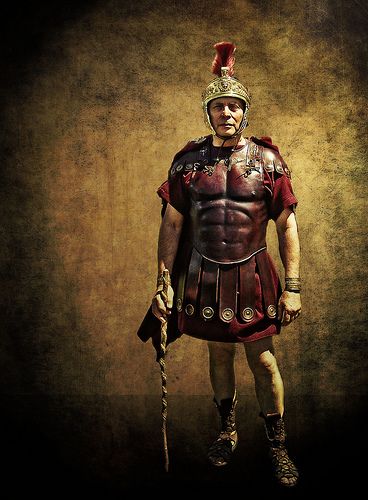
The Stele of Vultures is a stone slab erected by King Eannatum of Lagash to commemorate his defeat of the king of Umma in one of the many wars fought by states in ancient Mesopotamia--what is now southern Iraq.  It is called the Stele of Vultures because it depicted vultures tearing at the corpses of the defeated soldiers.  In the picture sketched above, it depicts armored and helmeted soldiers in a phalanx formation, armed with spears, trampling their opponents.  Since fighting in a phalanx requires special training and discipline, these are probably professional soldiers; and so this could be the first evidence in history of a standing professional army.  Prior to this, Neolithic armies were composed of men brought together to fight in some temporary crisis, and then they disbanded once the fighting was over.  We also know from other cuneiform tablets that some of the kings of the Mesopotamian city-states paid to maintain 600-700 full-time soldiers.  This state-supported military maintenance included expensive helmets, armor, weapons, and chariots.  The helmets were made of copper with a leather liner underneath.  The chariot was a Sumerian invention that became a major part of the military technology of Eurasian archaic states.  (See Richard A. Gabriel and Karen S. Metz, A Short History of War: The Evolution of Warfare and Weapons [Carlisle Barracks, PA: Strategic Studies Institute, Army War College, 1992], which is available online.)

Prior to this, for hundreds of thousands of years of human evolution, human beings lived in stateless societies that were roughly egalitarian and democratic, in that most of the adult males had equal access to coercive power, because throwing stones, spear-throwers, and bows and arrows were easily available; and so the great majority of individuals could use their coercive threat to prevent exploitative rule by an elite few.  In the Neolithic Chiefdoms, there was some status ranking, and prominent men might lead a society in war, but leaders who sought tyrannical dominance could be checked by the coercive power of the multitude of individuals resisting exploitation.

Beginning around 5,200 BC, there is evidence in Mesopotamia for villages and small towns of sedentary foragers, farmers, and pastoralists who managed their collective affairs and trade with the outside world.  So even after the development of agriculture, with the farming of domesticated plants and the herding of domesticated animals, human beings still lived in societies without bureaucratic states.

The first state in Mesopotamia--showing a state apparatus with walls, tax collectors, bureaucratic officials, and a priestly establishments--was probably Uruk.  A city wall was first built at Uruk around 3,200 BC.  By then Uruk was probably the largest city in the world, with a population between 25,000 and 50,000.

Following the model of Uruk, roughly twenty other city-states arose in the Mesopotamian alluvium.  Now it seemed that the liberty and equality of the state of nature had been lost as many people found themselves in organized state societies oppressed by slavery, forced labor, military conscription, and exploitative taxes.

According to Paul Bingham, the one primary cause for this move from egalitarian and democratic stateless societies to elite ruled archaic states is the new military technology of elite body armor.  Unlike stones, spear-throwers, and bows, specialized body armor is expensive and thus controlled by small groups of elite individuals.  Bingham's evidence for this is that in every archaic state--ancient Mesopotamian states, ancient Rome, ancient Inca state, ancient Mayans, ancient Aztecs, Imperial Japan, the Hawaiian states--coercive power is concentrated in elite armored warriors who are less than 10% of the male population.  Some evidence does not seem to conform to this pattern, however. Ancient Egypt was one of the earliest archaic states, and yet there is little evidence that Egyptian soldiers were heavily armored.  (See John Coleman Darnell and Colleen Manassa, Tutankhamun's Armies: Battle and Conquest During Ancient Egypt's Late Eighteenth Dynasty [Hoboken, NJ: John Wiley, 2007], pp. 81-83.)

Archaic states have hierarchical societies in which a small elite at the top rule for their self-interest in exploiting the majority of the people through enslavement, forced labor, conscription, and oppressive taxation.  Nevertheless, when these archaic states became too tyrannical, the state subjects could flee or rebel and thus bring the disintegration of the state, which confirms Locke's account of how people through resistance and rebellion against governmental tyranny reclaim their natural freedom.

I have written about the evidence for this in ancient Mesopotamia here and here.  This explains why Pierre Goodrich chose the Sumerian word amagi--the first word in the oldest written language for "liberty"--as the logo for the Liberty Fund.  The greatest threat to human liberty--the emergence of the archaic state in Mesopotamia--elicits the natural human resistance to tyranny that manifests the natural human longing for liberty that was shaped in the evolutionary state of nature.

Sunday, November 14, 2021

The Evolution of Vigilantism and the Right to Self-Defense--Returning to Locke's State of Nature

Closing arguments in the trial of Kyle Rittenhouse are scheduled for Monday.  Rittenhouse, 18 years old, is charged with murdering two men and wounding a third in Kenosha, Wisconsin.  In the summer of 2020, he traveled from his home in Illinois to Kenosha with an AR-style semi-automatic rifle, claiming that he was going to protect property from the violent protests that had been provoked by the shooting of Jacob Blake, a Black man, by a white Kenosha police officer.  He shot three men.  Two died.  The third was badly wounded.

Rittenhouse's lawyers are arguing that he shot these men in self-defense.  They contend that the first man killed--Joseph Rosenbaum--had threatened to kill Rittenhouse, and he was shot after chasing Rittenhouse and lunging for his rifle.  Rittenhouse then killed Anthony Huber after Huber had hit him with a skateboard.  Finally, Gaige Grosskreutz was wounded after he had chased Rittenhouse while pointing a pistol at him.  The defense lawyers argue that this was legal under the Wisconsin self-defense law that allows the use of deadly force only if "necessary to prevent imminent death or great bodily harm." 

It can be argued, however, that Rittenhouse was the "initial aggressor"--he provoked the encounters that led to his use of force.  He went to Kenosha with a rifle that he had illegally, and he pointed that rifle in a threatening way at all three of his victims.  All three of them could have said that they were the ones acting in self-defense.  In fact, Huber and Grosskreutz were responding to Rittenhouse's killing of Rosenbaum; and so they thought they were trying to stop an active shooter.

Although there is disagreement over whether Rittenhouse was truly acting in self-defense, most people (with the exception of some Anabaptists) agree that we all have a right--perhaps even a natural right--to use lethal force in defense of our lives.  What I find most interesting about this is how it seems to confirm John Locke's claim that we all have the right to act as vigilantes in enforcing the law of nature, which includes the law against taking innocent life, whenever we cannot rely on the state to enforce the law; and thus we are thrown back into a state of nature, where we all have "the executive power of the law of nature," which includes the power to execute wrongdoers.

If we accept Max Weber's definition of the state as a public government of officials that successfully claims the monopoly of the legitimate use of physical force within a given territory, then the state has never existed, because no state has ever had a complete monopoly of the use of force in enforcing the law and punishing violators.  

Every state must rely to some extent on the self-help of private individuals in enforcing vigilante justice.  That the state must accept killing in self-defense as justifiable homicide is the clearest and most dramatic manifestation of this.


THE GRADUAL (AND ALWAYS INCOMPLETE) EVOLUTION OF THE STATE'S PUBLIC GOVERNANCE

In the evolution of the state's enforcement of law, we can distinguish three eras: the stateless societies of the foraging era (beginning hundreds of thousands of years ago), the presumptive states of the agrarian era (beginning about 5,000 years ago), and the expansive states of the modern era (beginning about 200 years ago).  A good account of this history is the new book by Peter Baldwin--Command and Persuade: Crime, Law, and the State across History (MIT Press, 2021)--although he says almost nothing about the prehistoric foraging era of stateless societies.

Throughout most of human evolutionary history as hunter-gatherers, the only law was vigilante law, which was what Locke called the law of nature.  There was no state to make and enforce law and punish wrongdoers.  But each band of foragers was an ordered society that was governed by customary laws made and enforced by all the adults in the band making decisions by collective deliberation leading to consensus, in which some individuals were recognized as leaders, but no individual adult could command the obedience of any other individual without that individual's consent.  In this way, all adults were equal in their freedom from domination by others and in their freedom to live as they pleased so long as they did not harm others.  Those who did harm others were punished by the group.  The punishment ranged from gossip and ridicule to expulsion from the group or the ultimate punishment--execution.

We could call this vigilante law.  The English word "vigilante" originated in nineteenth-century America as the term for those who formed "vigilance committees" to make and enforce customary laws where enforcement by the state was either absent or unreliable.  For example, in the mining camps of the American West in the first half of the nineteenth century, law and order was provided by vigilance committees.

The latest archaeological evidence as surveyed by James Scott and others confirms that indeed through most of human evolutionary history, for hundreds of thousands of years, our ancestors lived in stateless societies in bands of hunter-gatherers.  For them, all justice was vigilante justice.

About 7,000 years ago, some people in Mesopotamia formed settled villages with farming and herding, but they still organized their social life without a state apparatus.   It was only about 5,000 years ago that the first states began to appear first in Mesopotamia.  Moreover, even after the emergence of states, most human beings continued to live outside the state as "barbarians."  At the time of Locke's birth in the seventeenth century, a majority of the human population around the world was probably living in stateless societies.

The evidence from those first states in ancient Mesopotamia shows a odd contradiction between their claims of absolute sovereignty and the reality of their severely limited powers.  For example, in their written legal codes, one can see what Seth Richardson has identified as "the curious absence of the state in the text." In the prologue and epilogue to Hammurabi's Code, Hammurabi claims absolute divinely granted authority over Babylonia.  But in the hundreds of laws in his code, there is almost no reference to himself or to the central state as providing judgment or enforcement of the law.  Most of the laws seem to assume private enforcement: when something goes wrong, the wronged party must act on his own with the help of local people to investigate, try, convict, and punish the guilty parties. 

What we see here is what Richardson has called the "presumptive state": the early states in Mesopotamia were presumptive in claiming a sovereignty that they did not in fact possess. Their rhetorical claims for absolute sovereignty have been mistakenly interpreted as evidence for the reality of Oriental Despotism.

Over the past 5,000 years, some states have expanded their power to rule through autocratic bureaucracies--for instance, China under the Song dynasty (960-1279).  But even the most powerful states have had to rely to some degree on law enforcement by private individuals acting through customary laws of vengeance and compensation.

Moreover, we should remember that over most of this period most of the human population around the world lived in "stateless" conditions.  They were, as James Scott has said (Against the Grain, pp. 219-20): "hunters and gatherers, marine collectors, horticulturalists, swiddeners, pastoralists, and a good many farmers who were not effectively governed or taxed by any state."  Most historians have denigrated and dismissed these people as "barbarians" who lived outside "civilization."

Beginning in the nineteenth century, some states began to extend their law enforcement power by inventing modern professional policing.  Previously, people had policed themselves.  Robert Peel founded the London police in 1829.  The English Reform Act of 1835 extended this system of policing to all municipal boroughs.  Boston established the first American police force in 1838.

Even today with modern state policing, most policing is by private individuals.  In the United States, there are three times as many private police as public police.  Even in statist China today, half of the police are privately employed.  That we must still rely so much on private governance shows that absolute statism--the state holding a complete monopoly of power--is impossible.

Peter Baldwin shows that throughout the history of law, for thousands of years, "justifiable homicide" has been a way for weak states to permit vigilante justice:

"Even as the authorities promulgated laws, much remained left to self-help. . . . In medieval common law, victims' widows and children personally dragged killers to the gallows, and a violated woman herself castrated and blinded the rapist.  Justifiable homicide is the polite fiction whereby a weak state agrees that certain killings are legitimate.  Ancient Greek and Roman law defined justified homicide expansively, as did most Western legal codes for the next two millennia.  A highwayman in the act, a robber using force, anyone stealing at night, someone robbing clothes at the public baths, a man having sex with another's wife, mother, sister, daughter, or concubine, a rapist of free-born women or boys: according to various codes, all could be justifiably killed on the spot.  The killer of a manifest felon would likely not be prosecuted in medieval England, or he would be protected against retaliation from the criminal's kin.  Someone burning down a house in medieval Iceland could be instantly killed in the act, as could trespassers.  Absent reliable intervention by the authorities, self-help remained the victim's most likely source of satisfaction" (48-49).


SELF-DEFENSE

Allowing homicide to be justified as self-defense shows that even the formidable power of executing wrongdoers cannot be monopolized by the state.  Locke explained the reasoning for this.  In the state of nature, hunter-gatherers adopted the customary law of nature that it was wrong to harm anyone by threatening their life, liberty, or property.  They also knew, however, that harming others was justified as punishment of those who violated the law of nature.  Consequently, any individual could rightly harm others--or even kill them--if this was necessary as self-defense against aggressive attacks (Second Treatise, secs. 6-11, 16-21).

And yet even if this was true in the state of nature, when people lived in stateless societies, we might think that once the state was established to make and enforce the law, private individuals could no longer claim a right to take the law into their own hands--to act as vigilantes.  But Locke argued that even when people are living under the rule of a state, there are circumstances that throw people back into a state of nature, so that, if only momentarily, they have the natural right to exercise the executive power of the law of nature in punishing those who threaten their life, liberty, or property, which includes the right to kill in self-defense.

Locke observed: "Want of a common judge with authority puts all men in a state of nature: force without right, upon a man's person, makes a state of war, both where there is, and is not, a common judge" (ST, sec. 19).  When a man aggressively attacks me, and there is no time to appeal to our common judge, then I have the liberty to kill that aggressor, because the law offers me no remedy for the irreparable harm that the aggressor might do to me.  By attacking me in circumstances where I cannot appeal for protection from the legal authorities, the aggressor has thrown us into a state of nature where I have a natural right to defend myself with lethal force.

To justly claim that natural right, however, I must satisfy some standards for the justifiable use of force in self-defense.  Brandon Oto has summarized the four main ideas as Ability, Opportunity, Jeopardy, and Preclusion (AOJP).

To rightly invoke your right to use deadly force in self-defense, you must show that you believed that your attacker had the ability to cause you serious harm.  If you thought he had a gun or other deadly weapon, that would have given him the ability.  Or if he was a very strong man, or even a trained fighter, that would have given him the ability to harm you.  But if your attacker was an unarmed woman, and you were a strong man, it would not be clear that she had the ability to inflict great harm on you.

You must also show that the attacker had the opportunity to harm you.  If he had a knife, but he was far away from you, you probably would not be justified in shooting him with a gun.  You have to show that he was right in front of you, and that he could have inflicted harm on you in a few seconds.

You must also show that you were in imminent jeopardy of being harmed.  Even if your attacker has threatened you, he might turn to walk away, and then you are no longer in imminent jeopardy.  Or even if he attacks you, but then he walks away, you cannot shoot him in the back.

Perhaps the most complex standard for justifying the use of force in self-defense is preclusion.  The idea is that you should use force only when the circumstances preclude you from choosing any alternatives to force, so that there are no other safe options.

One feature of the preclusion rule is the principle of proportionality: the kind and the the degree of force that you use against an aggressor must be in due proportion to the threat.  If a man punches you, you are not justified in shooting him, unless you believe that he is capable of killing you with his fists--perhaps he's a trained boxer--and shooting him is the only way to remove his threat.  Or if you're a battered wife, in fear of being killed by your husband, you might justify shooting him as your only safe option.

One form of the preclusion principle is the "duty to retreat."  You cannot rightly use force against an aggressor if you can easily run away and safely avoid a fight.  In the United States, 12 states impose a duty to retreat when one can do so with complete safety.  But in all of those states, the duty to retreat does not apply when someone is in his home and defending it against an intruder.  This is called the "castle doctrine," based on the maxim that "one's home is one's castle."  In some states, this castle doctrine is extended to apply to when a defender is in the defender's vehicle or place of work.  This is a partial exception to the preclusion rule.

Another kind of exception to the preclusion rule is the "stand-your-ground law."  In the U.S., 38 states have laws providing "that there is no duty to retreat from an attacker in any place in which one is lawfully present."  There has been intense debate about the wisdom of such laws.  One famous example is the killing of Trayvon Martin by George Zimmerman in Florida in 2012.  Martin was a 17-year-old African American.  Zimmerman was a 28-year-old Hispanic American.  Zimmerman was a volunteer for a community watch group patrolling a gated community in Sanford, Florida.  He thought Martin looked suspicious, and he reported him to the Sanford police.  Before the police arrived, Martin and Zimmerman had an altercation; and Zimmerman shot him dead.  Zimmerman convinced the police that he had killed in self-defense, and that this was justified by Florida's stand-your-ground law.  A year later, Zimmerman was acquitted of second degree murder and manslaughter.  Many people saw this as showing how a stand-your-ground law could encourage a "shoot-first" attitude in the minds of racist people acting under the pretense of self-defense.

Even though this illustrates the disagreement over the exact standards of self-defense, there does seem to be a universal--or nearly universal--acceptance of the natural right to self-defense in all legal systems, because this right is rooted in our natural human psychology shaped in our evolutionary history in the foraging state of nature.

There are, however, some possible exceptions to this.  Joyce Lee Malcolm has suggested (here and here) that while the natural right to self-defense was once generally recognized as one of the basic rights of Englishmen, England in recent decades has moved towards denying that right.  In England, the state has really insisted that the government has a complete monopoly on the justified use of force, so the the citizens of England are prohibited from using deadly force in self-defense.  Citizens are told that when they are attacked on the street, they are prohibited from using force against their attackers.  They should shout "Call the Police" rather than "Help."  And bystanders must not help them.  A few years ago, an English householder called the police when burglars broke into his home.  He held them with a toy gun that looked real.  When the police arrived, they arrested him for a firearms offence.

In 1999, Tony Martin, a 55-year-old man, was living alone in his farmhouse in rural England.  His house had been burgled many times, and he had complained that the police had refused to protect him.  One night, two burglars--29-year-old Brendon Fearon and 16-year-old Fred Barras--broke into his house.  They had many prior convictions for various crimes.  Martin shot at them with a shotgun.  Barras was killed.  Fearon was wounded.

Martin claimed that he shot in defense of himself and his home.  But amazingly, he was charged and convicted of murder.  Later, this was reduced to manslaughter.  He served three years in prison.  He had been denied parole, because he refused to express remorse for what he did.

Cases like this suggest that the English no longer have a right to self-defense.  But there also has been an intense public outcry in England against the injustice of these cases, which might indicate that they run contrary to our natural moral sense, which includes the moral intuition that all human beings have the natural right to use force in defense of their lives, their liberty, and their property: vigilante justice is natural justice.


THE TWO FACES OF VIGILANTISM

Vigilante justice is morally ambiguous, because it can serve either good or bad causes.  We can feel moral sympathy when we see the good face of vigilantism:  citizens in the nineteenth-century American West who enforced order in an otherwise lawless territory; Guardian Angels with red berets volunteering for safety patrols in high-crime neighborhoods; or people organizing to drive drug dealers out of their communities.  Many fictional vigilantes evoke the same sympathy--such as Robin Hood, Batman, or the Virginian.

But vigilantism also has an ugly face--as in the hate-filled mob justice of lynching in the American South, or in the long history of killing Jews in pogroms.

The jury in Kenosha will have to decide whether Rittenhouse was showing the good face or the ugly face of vigilante justice.