Showing posts sorted by relevance for query gene-culture group selection. Sort by date Show all posts

Thursday, January 17, 2019

Evolutionary Psychology or Cultural Group Selection? Or Both? And Biographical History?

At his Internet salon for the discussion of ideas--Edge--John Brockman asks one question at the beginning of each year and then over a 150 smart people answer the question in short essays.  In 2014, his question was "What scientific idea is ready for retirement?"  The answer of Peter Richerson (a Professor of Environmental Studies and Policy at the University of California-Davis) was "Human Nature."  The answer of John Tooby (a Professor of Anthropology at the University of California-Santa Barbara) was "Learning and Culture."

While Richerson and Tooby are both leaders in evolutionary science, they disagree in their view of the primary subject of human evolution.  As a leading proponent of Cultural Group Selection, Richerson thinks human evolution is fundamentally about the evolution of human culture.  As a leading proponent of Evolutionary Psychology, Tooby thinks human evolution is fundamentally about the evolution of human nature.

For Richerson, the concept of human nature clouds our understanding of human evolution by assuming a mistaken dichotomy of nature and nurture or nature and culture, in which nature is wrongly seen as prior to culture in both evolutionary and developmental time.  In fact, Richerson argues, the evolutionary evidence for stone tool technology going back millions of years and the developmental evidence for social learning beginning early in infancy indicate  that human culture is prior to human nature, and that cultural evolution has driven genetic evolution.

For Tooby, the concepts of human culture and human learning explain nothing, because the phenomena of culture and learning themselves require explanation.  The idea of culture in the social sciences is like the idea of protoplasm in cell biology.  Protoplasm was once identified as the substance that worked through unknown mechanisms to carry out the vital processes of the cell.  But this was only a confession of ignorance.  "Now we recognize that protoplasm was magician's misdirection--a black box placeholder for ignorance, eclipsing the bilipid layers, ribosomes, Golgi bodies, proteasome, mitochondria, centrosomes, cilia, vesicles, sliceosomes, vacuoles, microtubules, lamellipodia, cisternae, etc. that were actually carrying out cellular processes."  Similarly, Tooby argues, the idea of culture needs to be replaced with a map of the evolved cognitive and motivational programs in the brain (the "organelles") that actually carry out our mental functions.

Despite the apparent opposition between these two positions, a careful study of the debate here reveals the underlying compatibility of cultural group selection and evolutionary psychology.  We need a science of human evolution that explains the complex coevolutionary interaction of human nature and human culture, which was originally proposed by Charles Darwin himself.

The proponents of gene-culture coevolution--the idea that human genes and culture are equally important in the human coevolutionary system--see support for this in Darwin's writings.  They even see Darwin as using his understanding of cultural evolution as the model for organic evolution (Mesoudi, Whiten, and Laland 2004; Richerson and Boyd 2010).  Friedrich Hayek made the same point--that Darwin's theory of biological evolution was the application to biology of the idea among the Scottish philosophers that social order arose by the cultural evolution of spontaneous order.

The logic of Darwin's argument for evolution depends on three principles--variation, competition, and inheritance.  Evolution requires variation of characters.  It also requires that those variable characters compete in such a way that some characters are more advantageous than others in the struggle for life.  Finally, if those characters are inherited, then the more advantageous characters will tend to spread in subsequent generations; and the accumulation of those favorable variations will produce adaptive designs for survival and reproduction.  This same logic applies to both biological and cultural evolution.

Darwin saw this evolutionary logic in the cultural evolution of language.  In The Descent of Man, he observed:
"The formation of different languages and of distinct species, and the proofs that both have been developed through a gradual process, are curiously the same. . . . Dominant languages and dialects spread widely and lead to the gradual extinction of other tongues. . . . We see variability in every tongue, and new worlds are continually cropping up; but as there is a limit in the powers of the memory, single words, like whole languages, gradually become extinct.  As Max Muller has well remarked: 'A struggle for life is constantly going on amongst the words and grammatical forms in each language.  The better, the shorter, the easier forms are constantly gaining the upper hand, and they owe their success to their own inherent virtue.' . . . The survival or preservation of certain favoured words in the struggle for existence is natural selection" (1871, 1:60-61; 2004, 112-13).
The evolution of language shows the coevolution of biological instinct and social learning.  The human brain has evolved adaptations for learning language, so that once they reach the critical learning period for language, all normal human children learn whatever language they hear spoken around them.  As Darwin said, "every language has to be learnt," but "man has an instinctive tendency to speak" (1871, 1:55; 2004, 108).  Rather than separating instinct from learning, we need to see that language shows an instinct for learning.

Darwin saw a similar evolutionary logic in the cultural evolution of morality.  He thought that human morality could have evolved through four overlapping stages of instinctive and cultural evolution.  First, social instincts led early human ancestors to feel sympathy for others in their group, which promoted a tendency to mutual aid.  Then with the development of their intellectual faculties and their capacities for language and habit, they were able to formulate and obey social norms of good conduct that could be transmitted as social traditions and inherited habits.  Darwin also stressed the importance of tribal warfare in the development of morality: such contests spurred the development of the moral and intellectual capacities that allow individuals to cooperate within groups so as to compete successfully against other groups.  Thus, Darwin proposed what today would be called evolution by group selection.  "Ultimately," he concluded, "our moral sense or conscience becomes a highly complex sentiment--originating in the social instincts, largely guided by the approbation of our fellow-men, ruled by reason, self-interest, and in later times by deep religious feelings, and confirmed by instruction and habit" (2004, 121-22, 130, 155-58).

Darwin had no knowledge of genetics, and so he could not understand the genetic evolution of instincts.  Nor did he clearly formulate the modern concept of culture.  Nevertheless, evolutionary scientists today can see in Darwin's writings at least a rudimentary conception of what today is called gene-culture coevolutionary theory based on the complex interaction of genetic evolution and cultural evolution.

And yet, as indicated by the debate between Richerson and Tooby, evolutionary scientists seem to be split between those who stress the evolution of human culture and those who stress the evolution of human nature.  One can see that split in the journal Behavioral and Brain Sciences in the debate over an article by Richerson et al. (2016).  But if one studies that debate carefully, one can also see that despite the apparent split, cultural group selection and evolutionary psychology are fundamentally compatible and complementary.  I also see here the need for a third level of analysis--the level of human individuals added to the levels of human nature and human culture.  We need to understand the evolution of human social order through the complex interaction of human natural history, cultural history, and biographical history.

The initial question raised by Richerson and other proponents of cultural group selection is how can we explain the evolution of cooperation in modern mass societies with huge populations of millions of people and in global social networks of exchange that encompass the entire Earth.  Throughout 99% of human evolutionary history, for millions of years, our ancestors lived in small bands of nomadic hunter-gatherers that might sometimes have met in tribes of no more than a few hundred people.  It was less than 10,000 years ago that some human beings moved into larger sedentary settlements and then with the development of agriculture there arose large cities with expanding populations.  We can explain cooperation in small foraging bands as based on the genetically evolved instincts for kin selection and reciprocal exchange among people in face-to-face relationships. But it's hard to see how these genetically evolved social instincts for cooperation in small groups of relatives and known individuals can sustain cooperation extended to millions or even billions of human beings who are not kin and not personally known to one another.  We still have the genetically evolved social psychology of our ancient foraging ancestors, because there hasn't been enough time for human beings to become genetically adapted to modern mass societies.

This has led Richerson and others (like Robert Boyd, Joseph Henrich, and Kevin Laland) to propose that we have become adapted for social cooperation in modern societies not by genetic evolution but by cultural group selection. So, for example, the cultural evolution of "Axial Age" universalistic religions beginning around 500 B.C.E. created ethical systems enforced by belief in eternal rewards and punishments by moralistic "Big Gods," which fostered cooperation among co-religionists living in expanded social orders (Richerson et al. 2016, 13).  Those living in religious groups that were successful in surviving,  in recruiting converts, and in promoting high birth rates among their members prevailed over other religious groups that were less successful.  The rapid expansion of Christianity in competition with pagan religions illustrates this cultural group selection of religions.

Proponents of cultural group selection argue that we can see the three principles of "Darwin's syllogism"--variation, inheritance, and competition--in cultural evolution through group selection.  1.  Human groups often vary culturally.  2. This cultural variation is transmitted vertically from generation to generation and horizontally within a group.  3. Success in intergroup competition is frequently determined by cultural differences, so that some cultural groups are more successful in survival and reproduction than competing groups.  The evidence for these three claims--as surveyed by Richerson et al. (2016)--is evidence for cultural group selection.

There is some evidence that the first two claims are true for some other animals, but not the third claim.  Chimpanzee communities, for example, show cultural variation that is transmitted by social learning.  To that extent, chimpanzees are cultural animals.  But while chimpanzee communities compete, there is no clear evidence that success in group competition is influenced by cultural differences, and therefore there is no cultural group selection among chimpanzees.  There is some evidence, however, that whale and dolphin species could satisfy all three principles of the Darwinian syllogism; and if so, they could show cultural group selection (Richerson et al. 2016, 57).

Against Richerson and his colleagues, John Tooby and Leda Cosmides have responded by arguing that human cooperation in modern mass societies can be explained through the instinctive adaptations to small-scale social life without any need for cultural group selection.  They write:
"The properties of individual carbon atoms allow them to chain into complex molecules of immense length.  They are not limited to structures involving only a few atoms.  The design features of our evolved neural adaptations appear similarly extensible.  Individuals with forager brains can link themselves together into unprecedentedly large cooperative structures without the need for large group-beneficial modifications to evolved human design.  Roles need only be intelligible to our social program logic and judged better than alternatives" (Tooby and Cosmides 2016, 42).
In particular, they argue that the ancient evolved instinct for exchange or trade in foraging bands can be extended to encompass modern networks of exchange in mass societies:
"The dazzlingly extended forms of modern cooperation we see today (Adam Smith's division of labor supporting globe-spanning trade) appear differentially built out of adaptations for small-scale sociality that modularly scale, such as exchange--rather than the marginal benevolence of Smith's butcher, brewer, and baker.  Evidence indicates that political attitudes toward welfare and redistribution reflect a specialized forager psychology of sharing for variance reduction (Peterson et al. 2012) and resource-conflict (Peterson et al. 2013).  Societies that attempted to harness general benevolence to organize institutions and production--the USSR, East Germany, China, Cambodia, North Korea, Cuba--were spectacular cooperative failures.  That they functioned at all depended on other scalable small-scale specializations--aggressive threats (conditional punishment), hierarchy, dominance, coalitions, and so forth" (Tooby and Cosmides 2016, 42).
Notice that Tooby and Cosmides reject the claim of Marxist anthropologists that ancient human foraging bands were societies of primitive communism, and so modern communism could be a revival of this original natural state of humanity.  Notice also that in rejecting this Marxist claim, they also reject Friedrich Hayek's claim that socialism's popularity comes from its atavistic appeal to the socialist instincts shaped in ancient foraging bands, and therefore that a modern extended order of liberal capitalism requires a cultural suppression of evolved tribal instincts.  In contrast to Hayek, Tooby and Cosmides agree with Adam Smith that "the propensity to truck, barter, and exchange" is natural for human beings, who engaged in exchange or trade even in their ancient foraging bands.

Tooby and Cosmides agree with Alan Page Fiske that "market pricing" is one of the four psychological models of social organization found universally in human societies, including prehistoric foraging bands.  Consequently, socialist societies that attempt to abolish or suppress "market pricing" must fail because this runs contrary to evolved human nature (Tooby and Cosmides 1992, 211-218).  Contrary to Hayek's argument, modern liberal capitalism satisfies some instinctive desires of human beings.  (I have written about this in some previous posts here, here, here, here, and here.)

"Market pricing" and trade among foragers are well illustrated by the Aboriginal Australians.  The whole continent of Australia was crisscrossed with trading paths, usually along waterhole routes.  Goods such as pearl shells, spears, stone axes, shields, boomerangs, and bamboo necklaces travelled by trade across Australia (Berndt and Berndt 1988).  For example, the Yir Yoront group on the west coast of the Cape York Peninsula (in the far north of Queensland) traded sting ray spears for stone axes.  The flat alluvial country of the Yir Yoront provided no suitable stone for axes.  The best stone for stone axes came from quarries 400 miles to the south, which came to them through long lines of trading partners.  The Yir Yoront had a surplus supply of sting ray spears, which are good fighting spears because the sting ray barbs break into fragments when they penetrate human flesh.  At the coast, where sting ray spears were plentiful, a man might have to trade a dozen spears for one stone axe head.  But 150 miles south of Yir Yoront, closer to the stone quarries, one spear might be traded for one stone axe head.  People near the middle of this trading chain, who made neither spears nor axes, acted as middlemen who took a certain number of both as their middleman's profit.  The Yir Yoront men understood the laws of supply and demand and the gains from trade (Cosmides and Tooby 1992, 216-17; Sharp 1952).

It is true that foraging bands show communal sharing of resources--particularly, in the sharing of meat--which Marxist anthropologists have interpreted as a primitive form of communism.  But as Cosmides and Tooby indicate, this sharing is not general or indiscriminate.  Foragers share meat brought back to camp by hunters for "variance reduction."  Success in hunting wild game depends not just on skill and effort but also on luck.  Even good hunters often come back from a day of hunting without any meat.  To protect themselves against the risk of having no meat, successful hunters share their meat, with the understanding that when they are unsuccessful, they will be the beneficiaries of sharing.  But those who try to cheat--those who take the shared meat but never reciprocate by sharing the meat they have procured--are punished by expulsion from the meat sharing system.  As some anthropologists have noted, this is like a system of commercial insurance where losses are shared among many individuals to reduce the risk to each.  By contrast, the gathering of wild plants does not show such variance.  Those who make any effort to gather plants usually return to camp with some food.  Consequently, foragers share their plant food within their families but not with others outside the family (Cashdan 1989; Cosmides and Tooby 1992, 212-17).

Tooby and Cosmides think this evolved psychology for sharing to reduce variance in resources due to luck explains political attitudes about social welfare programs.  Modern social welfare institutions involving millions of people who are non-kin and personally unknown to one another are modern cultural inventions that did not exist in ancient foraging societies.  But the evolved human psychology for systems of exchange shaped in foraging societies is still manifest in the political opinions about welfare programs.  Around the world, people support welfare for needy individuals suffering from bad luck who are willing to find jobs; but people are less inclined to help individuals who are identified as cheaters or free-riders who do not deserve public aid (Peterson et al. 2012; Peterson 2015, 2016).

Sometimes Cosmides and Tooby imply that if they can explain the extended forms of modern cooperation (such as social welfare programs) through a specialized forager psychology (such as sharing for variance reduction), this shows there is no need for an explanation through cultural group selection.  But the proponents of cultural group selection have argued that evolutionary psychology and cultural group selection are not alternatives but rather complements.  The very possibility of cultural group selection depends on human beings having genetically evolved instincts for learning culture.  And intergroup competition will favor those group-beneficial cultural traits--social norms, beliefs, and practices--that conform most closely to our evolved psychology (Henrich and Boyd 2016; Richerson et al. 2016, 49-50).  So, for instance, one could predict that social welfare programs that satisfy the evolved psychological propensity to punish cheaters will fare better than social welfare programs that frustrate this propensity.

Actually, even Cosmides and Tooby have admitted that evolutionary biology requires multi-level explanations that are complementary rather than contradictory.  They have observed: "In evolutionary biology, there are several different levels of explanation that are complementary and mutually compatible.  Explanation at one level (e.g., adaptive function) does not preclude or invalidate explanations at another (e.g., neural, cognitive, social, cultural, economic)" (Cosmides and Tooby 1997, 14).

Tooby's argument in 2014 that the concept of "culture" has no proper place in evolutionary science contradicts what he and Cosmides have written about cultural evolution.  They have said that "we are not abandoning the classic concept of culture" (Tooby and Cosmides 1992, 118).  They do propose, however, decomposing the traditional concept of culture into three kinds of culture (Tooby and Cosmides 1992, 121).  First, "metaculture" is their term for the cross-cultural regularities in human life that correspond to universal human nature, which make it possible for human beings to understand cultures beyond their own, without which cultural anthropology would be impossible.

Second, "evoked culture" arises when local circumstances trigger specific mechanisms of evolved human psychology in individual minds that create cultural representations without any transmission of cultural contents from other individuals.  They explain this through the metaphor of evolved humans as being like juke boxes identically designed with thousands of songs, and with devices designed to select songs on the basis of the juke box's location, time, and date.  (OK, I know that you young folks out there have no understanding of juke boxes, unless you've watched the cable TV reruns of Happy Days.)  This would create a global pattern of song cultures with cultural similarity within each group and cultural diversity between the groups.  This could generate the patterns of culture that we see without any social learning or transmission of culture from one generation to the next.  But they admit that "the juke box thought experiment is an unrealistically extreme case in which a complex, functionally organized, content-sensitive architecture internalizes no transmitted informational input other than an environmental trigger" (Tooby and Cosmides 1992, 117). Proponents of cultural group selection recognize evoked cultural responses to the environment as psychological switches that cultural group selection could harness (Henrich and Boyd 2016).

As I have indicated in a previous post, Tooby and Cosmides explain both socialism and capitalism as "evoked culture": socialism appeals to us today by evoking the evolved rules of sharing for risk pooling, while capitalism evokes the evolved system of cooperation through social exchange or trade.  Socialism fails because the rules evolved for sharing among small bands of hunters for which the rules were adaptive, but these rules are maladaptive for large modern societies in which people are interacting anonymously with thousands or millions of people.  Capitalism succeeds because the rules of the evolved cognitive system for social exchange can reach far beyond individual perception through the globally extended order of markets, and thus the evolved rules for social exchange can be adaptive both for small foraging bands and for modern mass societies.

The third form of culture recognized by Tooby and Cosmides is the "epidemiological culture" that is transmitted by social learning both within each generation of individuals and across the generations, which is a fundamental part of cultural group selection.

So Tooby, Cosmides, and the other evolutionary psychologists don't reject the idea of culture as such.  But they do reject the idea of culture if it is grounded on a "blank slate" view of the human mind that denies human nature--the idea that the human mind has no (or very little) content of its own except for whatever content has been imposed on it by the external cultural environment.  Richerson seemed to confirm that this fear of the "blank slate" version of cultural theory is warranted when he argued in 2014 that the concept of human nature should be discarded.

But then Richerson contradicts himself when he says that cultural group selection does not defend a "blank slate hypothesis," because cultural evolution is enabled and constrained by the universal human nature of evolved social instincts for learning (Richerson et al. 2016, 6, 49-51).

My conclusion from all of this is that an evolutionary science of social order requires a multi-leveled analysis of the interaction of natural history (evolutionary psychology) and cultural history (cultural group selection).

Even that is not enough, however, because we need a third level--biographical history (the evolved personality and life history of self-interested individuals who are agents of cultural change acting through coercion or persuasion).  In many animal groups, we can see how dominant individuals shape the social norms for the group.  For example, dominant macaques police conflicts in ways that protect their dominance while reducing conflict within the group (Flack et al. 2005, 2006).  This is surely true for human beings as well.  Consider, for instance, how the cultural history of the United States was altered by the dominant individuals in the American Continental Congress that drafted and signed the Declaration of Independence, or those in the Constitutional Convention who drafted and promoted the Constitution of 1787.  What we need here is an agent-based theory of how "self-interested agents create, maintain, and modify group functional culture" (Singh, Glowacki, and Wrangham 2016; Singh, Wrangham, and Glowacki 2017).

Part of this evolutionary biographical history would include the biological study of animal personalities and the individual psychology of cultural leaders--including moral, religious, political, and intellectual leaders.  Some of my posts on this can be found here and here.

In future posts, I will have more to say about applying cultural group selection and evolutionary psychology to Hayek's evolutionary science of capitalism and the liberal order.


REFERENCES

Berndt, Ronald M., and Catherine H. Berndt. 1988. The World of the First Australians: Aboriginal Traditional Life, Past and Present. 5th ed. Canberra, Australia: Aboriginal Studies Press.

Cashdan, Elizabeth. 1989. "Hunters and Gatherers: Economic Behavior in Bands." In Stuart Plattner, ed., Economic Anthropology, 21-48. Stanford, CA: Stanford University Press.

Cosmides, Leda, and John Tooby. 1992. "Cognitive Adaptations for Social Exchange." In Jerome H. Barkow, Leda Cosmides, and John Tooby, eds., The Adapted Mind: Evolutionary Psychology and the Generation of Culture, 163-228.

Cosmides, Leda, and John Tooby. 1997. "Evolutionary Psychology: A Primer." Center for Evolutionary Psychology, University of California, Santa Barbara.

Darwin, Charles. 1859. The Descent of Man. 2 vols. London: John Murray.

Darwin, Charles. 2004. The Descent of Man. 2nd ed. London: Penguin Books.

Flack, J. C., et al. 2005. "Social Structure, Robustness, and Policing Cost in a Cognitively Sophisticated Species." The American Naturalist 165: E126-39.

Flack, J.C., et al. 2006. "Policing Stabilizes Construction of Social Niches in Primates." Nature 439: 426-29.

Henrich, Joseph, and Robert Boyd. 2016. "How Evolved Psychological Mechanisms Empower Cultural Group Selection." Behavioral and Brain Sciences (2016): e40.

Mesoudi, Alex, Andrew Whiten, and Kevin Laland.  2004. "Is Human Cultural Evolution Darwinian? Evidence Reviewed from the Perspective of The Origin of Species." Evolution 58: 1-11.

Peterson, Michael B. et al. 2012. "Who Deserves Help? Evolutionary Psychology, Social Emotions, and Public Opinion About Welfare."  Political Psychology 33: 395-318.

Peterson, Michael B. 2015. "Evolutionary Political Psychology: On the Origin and Structure of Heuristics and Biases in Politics." Political Psychology 36: 45-78.

Peterson, Michael B. "Evolutionary Political Psychology." In David M. Buss, ed., The Handbook of Evolutionary Psychology, 1084-1101.  2 vols. 2nd ed. Hoboken, NJ: Wiley.

Richerson, Peter, et al. 2016. "Cultural Group Selection Plays an Essential Role in Explaining Human Cooperation: A Sketch of the Evidence." Behavioral and Brain Sciences (2016): e30.

Richerson, Peter, and Robert Boyd. 2010. "The Darwinian Theory of Human Cultural Evolution and Gene-Culture Coevolution." In Michael Bell, Douglas Futuyma, Walter Eanes, and Jeffrey Levinton, eds., Evolution Since Darwin: The First 150 Years, 561-88.  Sunderland, MA: Sinauer Associates.

Sharp, Lauriston. 1952. "Steel Axes for Stone-Age Australians." Human Organization 11 (2): 17-22.

Singh, Manvir, Luke Glowacki, and Richard W. Wrangham. 2016. "Self-Interested Agents Create, Maintain, and Modify Group-Functional Culture." Behavioral and Brain Sciences (2016): e52.

Singh, Manvir, Richard Wrangham, and Luke Glowacki. 2017. "Self-Interest and the Design of Rules." Human Nature 28:457-480.

Tooby, John, and Leda Cosmides. 2016. "Human Cooperation Shows the Distinctive Signatures of Adaptations to Small-Scale Social Life." Behavioral and Brain Sciences (2016): e54.

Tooby, John, and Leda Cosmides. 1992. "The Psychological Foundations of Culture." In Jerome H. Barkow, Leda Cosmides, and John Tooby, eds., The Adapted Mind: Evolutionary Psychology and the Creation of Culture, 19-136.  Oxford: Oxford University Press.

Friday, May 16, 2014

Human Biodiversity (5): Cultural Group Selection Through Migration and Assimilation

In A Troublesome Inheritance, Nicholas Wade writes: "Behavioral traits are particularly likely to be retained, but the universal instinct to conform to social rules seems to ensure that the political behaviors of the host country supplant those of the immigrants.  Chinese Americans do not organize themselves into authoritarian structures, nor Arab and African Americans into tribal ones" (188).  He also observes that "the forces of differentiation [of the races] seem now to have reversed course due to increased migration, travel, and intermarriage" (71).

Here and elsewhere in his book, Wade points to the power of cultural group selection and gene-culture coevolution, which has been studied by Darwinian theorists of cultural evolution.  Some of these theorists--such as Robert Boyd and Peter Richerson--have suggested that the historical turn towards liberal capitalism could be explained as a process of cultural group selection driven by immigration and assimilation.  And that seems to be what Wade is pointing to in the above passages.

In some papers--found here and here--Boyd and Richerson have argued that one important mechanism of social evolution is cultural group competition for immigration in which people "vote with their feet."  Although it is true, that groups have often competed through violent conflict and conquest, they argue (as did Darwin) that a more powerful form of group competition is cultural competition for immigration.  People tend to move from poorer, violent, and exploitative societies into richer, peaceful, more just societies.  And thus immigration tends to promote the spread of ideas and institutions that favor prosperity, peace, and justice. 

A dramatic example of this was the Berlin Wall during the Cold War, which showed how an oppressive regime might have to use barbed wire and armed border guards to keep its people from leaving in the pursuit of a better life elsewhere.

Boyd and Richerson also cite the example of two neighboring village societies in New Guinea.  The Gebusi were driving themselves into extinction through disruptive witchcraft trials and executions.  Some of the Gebusi were able to migrate to the society of the Bedamini, who had a better social order.

Similarly, some of the ancient empires--such as Rome and China--flourished because their institutions (such as Roman law and Confucian bureaucracy) attracted immigrants from other societies that were disordered and oppressive.

Beginning in the 18th century, classical liberal regimes based on Lockean political thought--like Great Britain and the United States--have attracted immigrants because of the prosperity, peace, and justice that liberal regimes promote.

Wade captures this same idea when he speaks of the historical move from "extractive" institutions that provoke people to leave to "inclusive" institutions that attract immigrants looking for a better life.

There are genetic propensities at work here.  The natural propensity to "better one's condition" (as Adam Smith called it) motivates people to migrate to societies that offer opportunities for improvement.  And "the universal instinct to conform to social rules" (in Wade's words) ensures that the immigrants will assimilate into their new societies.  This latter corresponds to what Boyd and Richerson identify as the genetically evolved disposition for social learning by conforming one's behavior to the social norms of the majority in the population, which explains why the children of immigrants can pick up the norms of their surrounding culture.  In this way, the process of cultural group selection through migration and assimilation is part of a gene-culture coevolution.

And thus one can explain the power of classical liberal ideas and institutions as cultural traditions that appeal to natural human desires and thus tend to win the competition with illiberal regimes.

Some of these points have come up in previous posts here, here, and here.

Gillian Brown and Peter Richerson have written an excellent paper comparing "cultural evolution," "human behavioral ecology," and "evolutionary psychology" as three schools of evolutionary social science.

Friday, December 14, 2018

Flies Are Cultural Conformists in Their Sexual Preferences: The Biology of Cultural and Biographical History

                                     Fruitflies Show Social Learning of Mating Preferences


In his biological writings, Aristotle identified human beings as by nature political animals, and he compared them with other political animals such as ants, bees, wasps, and cranes.  Thomas Hobbes denied this by insisting that Aristotle failed to see the radical separation between animal societies as founded on natural instinct and human societies as founded on social learning.  Human beings cannot be political animals by nature, Hobbes explained, because "man is made fit for society not by nature but by education" (De Cive, ch. 1).  Hobbes thus supported the modern notion of culture as the uniquely human realm of social learning through which human beings express their rational humanity by transcending their natural animality.

Unlike Hobbes, Aristotle  saw no unbridgeable gulf between animal instinct and human learning.  In his biological research, he observed that almost all animals have some natural instincts for social learning, and some are intelligent enough to live as social and political animals.  What distinguishes human beings is that they are more political than other political animals because of the human capacities for language, conceptual abstraction, and shared intentionality that allow human beings to organize their collective life around shared symbolic norms of authority and justice.

Over the past two hundred years, it has been common for scholars to assume that Hobbes was right in claiming that human beings are unique in being the only cultural animals, and therefore that the "human sciences" (Geisteswissenschaften) as the study of cultural history must be separated from the "natural sciences" (Naturwissenschaften) as the study of natural phenomena.  If this is so, then the evolutionary biology of human nature has no application to human social and political life.

But over the past fifty years, evolutionary scientists have gathered ever increasing evidence--from both observational and experimental studies of animal behavior--that many animal species show social learning and cultural traditions, and therefore Aristotle was right.


CULTURAL FLIES

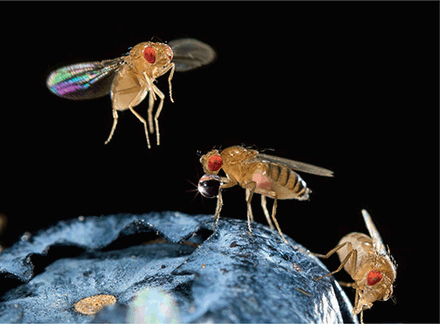
Recently, for example, researchers have shown that even fruitflies are cultural animals (Danchin et al. 2018; Whiten 2018).  Female fruitflies tend to conform to the mating preferences they observe in other females, which generates cultural traditions that are passed on to others through social learning.  The researchers placed virgin female fruitflies in a hexagonal chamber, surrounded by six compartments in each of which they could see a female fly mating with a male dusted by either pink or green coloring, with another male of the alternative color standing nearby.  Some females saw that all six of the mating males were pink.  Others saw that all were green.  Others saw different proportions of pink versus green males mating.

Two Females Watch a Copulating Green Male, While a Pink Male Is Rejected


It was observed that the virgin females who had seen a majority of females mating with pink males preferred to mate with pink males; and similarly those who had seen most females mating with green males preferred to mate with green males.  Moreover, this mating preference was passed on to later generations of females as a culturally inherited tradition.

So now fruitflies are added to a long and growing list of animals identified by scientists today as showing cultural behavior.  The list includes many mammalian, avian, fish, and insect species (Galef and Whiten 2017; Whiten et al. 2017).  Actually, however, this is only a rediscovery of what Aristotle reported long ago in his biological writings.


GENE-CULTURE COEVOLUTION

The advance beyond Aristotle has been in developing an evolutionary science of animal culture based on Charles Darwin's theory.  Darwin understood that his principles of organic evolution--variation, selection, and inheritance--could be applied to cultural evolution, such as the cultural evolution of languages (Mesoudi, Whiten, and Laland 2004).  Darwin did not understand, however, the genetic mechanisms of organic evolution.  With their modern understanding of genetics, evolutionary scientists today see genes and culture as two distinct forms of evolutionary inheritance.  Some evolutionary theorists argue that there are really four dimensions of evolution: genetic inheritance, epigenetic inheritance, behavioral inheritance, and symbolic inheritance (Jablonka and Lamb 2014).

Evolutionary science needs to explain the complex interaction of these systems of inheritance.  This is hard to do, as indicated by the recent work on gene-culture coevolution.  It's hard to define and identity the units of culture.  Richard Dawkins suggested that we might speak of cultural "memes" as analogous to organic "genes," but there is little agreement as to what should count as memes.

It's also hard to discern the connections between genes and memes, because little is known about how exactly genes influence behavior, or how exactly behavior might influence gene expression and transmission.

There are only a few examples of well-understood gene-culture coevolution.  One of the most famous cases is the evolution of lactase persistence.  The production of the enzyme lactase in the gut is necessary for the digestion of the milk sugar lactose.  This enzyme is produced in human infants so that they can digest the lactose in their mother's milk.  But in most human adults, the production of lactase is shut down, and so they suffer severe indigestion from the consumption of milk.  And yet lactase persistence--the production of lactase in adulthood--is common among those human beings with a northern and western European ancestry and those from some pastoralist groups in Africa, the Middle East, and southern Asia.  The likely explanation for this is that lactase persistence evolved among dairying farmers around 7,500 years ago as a genetic adaptation to dairying culture (Itan et al. 2009).  Geneticists have identified a particular genetic variation that supports lactase persistence, and they can see that this genetic variation correlates with the cultural evolution of dairying.  So here is a clear case of where a cultural tradition created an environment that favored genetic change that would be adaptive.

It's unfortunate that Darwin did not understand this, because the mysterious intestinal illness from which he suffered throughout his life was probably a result of his being lactose intolerant.  Medical researchers studying Darwin's records of his illness have noticed that it always arose a few hours after eating dairy foods (Campbell and Matthews 2005).  All of his symptoms--vomiting, gut pain, headaches, tiredness, and depression--match the effects of lactose intolerance.

There are very few studies of nonhuman animal culture that can show this same clarity in the mechanism of gene-culture evolution.  One case that comes close is the study of animal culture among the killer whales or orcas.  Orcas stretch from the Arctic to the Antarctic, and they diets range over birds, fish, mammals, and reptiles.  But as individuals, they belong to groups with different specialized diets and hunting traditions that are passed down over generations.  These groups also show variations in their cultural traditions for vocal displays, habitat use, play, and migration routes.  Some of the scientists studying them have seen stable genetic variation in each group that correlates with their cultural traditions, which suggests gene-culture coevolution (Foote et al. 2016; Whitehead 2017).


BIOLOGY INCLUDES CULTURAL HISTORY AND BIOGRAPHICAL HISTORY

Notice how this recognition of animal culture expands the range of biology to include cultural history and biographical history.  The biological study of animal behavior must go beyond the natural history of a species--the universal species-specific patterns of behavior--to include the distinctive cultural history of each group of animals.

Moreover, the study of animal culture shows that cultural traditions originate from innovations initiated by particular individuals that have been so successful that they have been passed on by social learning to other individuals and to subsequent generations.  Consequently, the study of animal behavior must include the study of the individual personalities of the animals responsible for cultural innovations.  For example, scientists have observed that among wild capuchin monkeys some individuals are better than others at social invention and innovation (Perry et al. 2017).  In fact, most of the detailed histories of particular animal groups--such as Jane Goodall's The Chimpanzees of Gombe--include biographical histories of the individual animals that have shaped the history of the group.

This supports my argument that a biopolitical science would have to move through three levels of political history--the natural history of the species, the cultural history of the group, and the biographical history of prominent individuals in the group.

Some of these points are elaborated in other posts here, here, here, here, here, here, and here,


REFERENCES

Campbell, Anthony, and Stephanie B. Matthews. 2005. "Darwin's Illness Revealed." Postgraduate Medical Journal 81: 248-51.

Danchin, Etienne, et al. 2018. "Cultural Flies: Conformist Social Leaning in Fruitflies Predicts Long-Lasting Mate-Choice Traditions." Science 362: 1025-1030.

Foote, Andrew D. et al. 2016. "Genome-Culture Coevolution Promotes Rapid Divergence of Killer Whale Ecotypes." Nature Communications 7:11693.

Galef, Bennett G., and Andrew Whiten. 2017. "The Comparative Psychology of Social Learning." In Joseph Call, et al., eds., APA Handbook of Comparative Psychology, 411-439.  Washington, DC: American Psychological Association.

Itan, Yuval, et al. 2009. "The Origins of Lactase Persistence in Europe." PLoS Computational Biology 5 (8): e1000491.

Jablonka, Eva, and Marion Lamb. 2014. Evolution in Four Dimensions: Genetic, Epigenetic, Behavioral, and Symbolic Variation in the History of Life. Revised ed. Cambridge: MIT Press.

Mesoudi, Alex, Andrew Whiten, and Kevin N. Laland. 2004. "Is Human Cultural Evolution Darwinian?  Evidence Reviewed From the Perspective of The Origin of Species."  Evolution 58 (1): 1-11.

Perry, Susan E., Brendan J. Barrett, and Irene Godoy. 2017. "Older, Sociable Capuchins (Cebus caucinus) Invent More Social Behaviors, But Younger Monkeys Innovate More in Other Contexts." Proceedings of the National Academy of Sciences 114 (30): 7806-7813.

Whitehead, Hal. 2017. "Gene-Culture Coevolution in Whales and Dolphins." Proceedings of the National Academy of Sciences 114 (30): 7814-7821.

Whiten, Andrew. 2018. "Culture and Conformity Shape Fruitfly Mating." Science 362: 998-1000.

Whiten, Andrew. et al. 2017. "The Extension of Biology Through Culture." Proceedings of the National Academy of Sciences 114 (30): 7775-7781.


Saturday, November 23, 2013

Natural Right and Natural History


This essay has appeared in the fall 2013 issue of the Claremont Review of Books.

 
NATURAL RIGHT AND NATURAL HISTORY

 
The Social Conquest of Earth, by Edward O. Wilson. 

Liveright Publishing, 331 pages, $27.95


Paul Gauguin's most famous painting shows some human figures set in a Tahitian landscape.  They display the human life cycle from infancy to adulthood to old age.  One corner of the painting has three questions: Where do we come from?  What are we?  Where are we going? 

To answer these fundamental questions about our human place in the cosmos, Edward O. Wilson suggests in his new book, we need to unify all our knowledge of nature by combining the natural sciences, the social sciences, and the humanities.  Traditionally, we have looked to religion, philosophy, or the creative arts to answer these great questions.  Wilson argues that these three ways to understand the human condition have failed.  This leaves science--in its quest for a complete knowledge of nature--as the only way to understand the human story. 

Wilson separates philosophy from science, because he assumes that philosophy must rely purely on introspection and logic without any of the empirical research that is done by scientists.  He thus turns away from what he said in an earlier book—Consilience: The Unity of Knowledge--where he recognized that the search for consilience, understood as the unification of all knowledge of nature,  began in Greek antiquity with Thales of Miletus and Aristotle.  Until recently, there was no separation between philosophy and science, and what we call "natural science" today was previously called "natural philosophy."  Aristotle was particularly important as a biologist who saw moral and political philosophy as a biological science.  Wilson acknowledged this in Consilience, when he identified his biological science of ethics and politics as continuing the empiricist tradition of Aristotle, David Hume, and Charles Darwin, as opposed to the transcendentalist tradition of Plato, Immanuel Kant, and John Rawls.

If Wilson's project for a Darwinian unification of knowledge is to succeed, it must revive that Aristotelian tradition of natural philosophy that includes Thomas Aquinas, Hume, and Adam Smith.  Darwin understood himself as part of that intellectual tradition, particularly in adopting ideas from Hume and Smith about the natural moral sentiments.  Even Darwin’s fundamental idea of the evolutionary emergence of life as an unintended order was derived from Smith and other Scottish philosophers. 

Recently, evolutionary moral psychologists like Jonathan Haidt have recognized that they are reviving the empiricist moral philosophy of Aristotle and Hume.  Some contemporary philosophers have embraced "experimental philosophy" as a way of putting their ideas to the test of empirical scientific research.  A few political scientists have begun to argue that their science needs to become a biopolitical science of political animals.  All of this contributes to a modern renewal of the ancient quest for a philosophical science of nature through a Darwinian natural philosophy.

We must wonder, however, whether such a Darwinian natural philosophy can be defended against the many criticisms that it faces.  Two of the most prominent criticisms are the charges of reductionism and nihilism.

Wilson’s reductionism is suggested by his statement in Consilience about reducing all knowledge to physics: "all tangible phenomena, from the birth of stars to the working of social institutions, are based on material processes that are ultimately reducible, however long and tortuous the sequences, to the laws of physics.”  This strong reductionism is so implausible that even Wilson cannot consistently embrace it.  In most of Consilience, he actually rejected "physics envy," and he insisted that biologists must "invariably encounter emergence, the appearance of complex phenomena not predictable from the basic elements and processes alone.”  He identified human beings as “emergent animals” who have capacities that are constrained, but not specifically determined by the laws of physics.  In The Social Conquest of Earth, Wilson never argues for reducing everything to the laws of physics, and he implicitly endorses the idea of the irreducibly emergent traits of life.

Biologists recognize emergent phenomena as those complex wholes with properties that we could not explain or predict from our knowledge of the parts.  The emergence of novelty occurs throughout the evolution of the universe.  Passing through levels of complexity, new properties emerge at higher levels that are not fully reducible to the lower levels.  When chemicals in the early universe formed the first living cells, that was emergence.  When the first multicellar organism arose, that was emergence.  When the human mind arose from the evolution of the primate brain passing over a critical threshold of size and complexity (particularly, in the prefrontal cortex), that was emergence.  Although the human mind is constrained by the laws of physics and chemistry, we cannot fully explain or precisely predict the workings of that mind through the laws of physics and chemistry.

One ground for emergent complexity in Wilson's science is genetic plasticity.  Wilson is often accused of genetic determinism, even though he has repeatedly affirmed genetic plasticity as allowing for individual and cultural variation.  He repeats that idea in Social Conquest in explaining gene-culture coevolution: there can be plasticity in the expression of genes that allows for a wide but still constrained flexibility in response to the cultural and individual contingencies of life.  Our human genetic nature constrains but does not determine our cultural traditions and individual judgments.

How does the coevolution of genes, culture, and judgment explain human morality and politics?  Some critics of Wilson’s project worry that any evolutionary account of morality and politics must deny that there can be any objective or fixed standards of right and wrong, which is nihilism.

Is Darwinism nihilism?  If you are a Platonist, yes.  If you are not a Platonist, no.

Most Platonists today are disappointed Platonists—people with Platonic expectations that are unfulfilled, because they accept Darwinian evolution as true, and therefore since all living forms have evolved, they cannot be eternal in conforming to Plato’s intelligible realm of eternal Ideas.  If everything has evolved, this must include moral and political order, and thus there is no eternally unchanging Idea of the Good by which we can see absolute standards of right and wrong.  Consequently, there are no moral absolutes, and we must accept moral relativism or nihilism.  Darwinism is “true but deadly” (as Friedrich Nietzsche said).  And thus these disappointed Platonists become nihilists.

But if you do not have Platonic expectations, you will not be disappointed by the Darwinian conclusion that everything has evolved, and therefore human beings have evolved.  Without the Platonic assumption that morality must be grounded in a moral cosmology, you will be satisfied with a Darwinian explanation of morality as grounded in a moral anthropology.  Even if morality has no eternal grounding in a cosmic God, a cosmic Nature, or a cosmic Reason, human morality  still has an evolutionary grounding in human nature, human culture, and human judgment.  You can say, with Leo Strauss, that “however indifferent to moral distinctions the cosmic order may be thought to be, human nature, as distinguished from nature in general, may very well be the basis of such distinctions.”  And thus in contrast to the disappointed Platonists, the satisfied Darwinians are not nihilists.

Satisfied Darwinians like Wilson see at least four mechanisms for the evolution of social cooperation and human morality: kin selection (cooperating with relatives), direct reciprocity (tit-for-tat exchanges), indirect reciprocity (having a good or bad reputation), and multilevel selection (individual selection and group selection).

The most controversial part of Wilson’s new book is that while he had previously embraced kin selection theory, he now argues against it.  Kin selection is the idea that animals have evolved to serve not only their personal fitness (the number of their surviving offspring) but also their inclusive fitness (including the fitness of their collateral relatives), and consequently animals tend to be altruistic towards closely related kin with whom they share genes.  Wilson argues that as long as multilevel natural selection (individual or group selection, or both) works generally to explain social evolution, there is no need for a theory of kin selection. 

But multilevel selection theory is not an alternative to kin selection theory; rather, they are complimentary to one another.  Kin selection cannot be the whole story, because we need to explain how unrelated individuals can cooperate.  But kin selection must be part of the story, because we need to explain the tendency for individuals to be more cooperative with close relatives than with distant relatives or strangers.  This idea was developed by Aristotle:  the natural sociality of animals originates as an extension of parental care and affiliation to ever wider groups.  Aristotle also saw that this natural sociality reached its peak among the social insects and human beings, and thus again Aristotle anticipated Wilson.

In Sociobiology, Wilson identified four pinnacles of social evolution:  the colonial invertebrates (such as the corals, the Portuguese man-of-war, and sponges), the eusocial insects (ants, bees, wasps, and termites), nonhuman mammals, and humans.  Although this sequence seems to move from more primitive to more complex forms of life, it also moves from more cohesive or cooperative societies to more discordant or competitive societies.  Colonial invertebrates can be seen as "perfect societies," because colonies consist of genetically identical individuals, and consequently they show absolutely altruistic cooperation.  But with sexually reproducing organisms, no two individuals are genetically identical, which creates conflicts of interest even among related individuals.

In Social Conquest, Wilson moves from four pinnacles of social evolution to two.  He identifies two paths to the social conquest of the earth--the insect path and the human path.  The social insects rule the invertebrate land environment.  Humans rule the vertebrate land environment.  Like the social insects, humans are "eusocial" in the technical sense that multiple generations of individuals live together, caring for dependent offspring and cooperating in a social division of labor.  While the social insects organize their colonies largely through pure instinct, with the insect queen producing robotic offspring guided by instinct, humans must organize the cooperation of individuals through personal relationships based on social intelligence, which requires navigating through a tense social network balanced between the selfish interests of individuals and the social interests of groups.  Wilson explains this tense balance in human social life between selfishness and sociality as showing the countervailing evolutionary forces of individual selection and group selection.

The unsteady balance between the individual and the group in human societies constitutes what Wilson identifies as the "iron rule" of social and moral evolution: "Selfish individuals beat altruistic individuals, while groups of altruists beat groups of selfish individuals.  The victory can never be complete; the balance of selection pressures cannot move to either extreme.  If individual selection were to dominate, societies would dissolve.  If group selection were to dominate, human groups would come to resemble ant colonies.”  So if we ask whether human beings are innately good or innately evil, we should answer that they are both.  And for that reason, "human beings and their social orders are intrinsically imperfectible.”  Here is the scientific basis for the tragic realism of evolutionary ethics. 

The ultimate mechanisms of moral evolution are enforced through the proximate mechanisms of moral emotions.  For example, Wilson identifies the human sense of honor as crucial for moral experience.  This sense of honor includes the moral emotions of indignation and resentment in response to injustice.  This sense of injustice might express what Leo Strauss called "those simple experiences regarding right and wrong which are at the bottom of the philosophic contention that there is a natural right."   It is this that allows us to derive rights from wrongs: our moral history is a history of resistance to injustice from which we derive standards of fair treatment.  But if those “simple experiences regarding right and wrong” are the purely human experiences of an animal species shaped by evolutionary history, and if that evolved human species is enduring but not eternal, do those experiences support the philosophic claim that there is a natural right?  The Darwinian natural philosopher says yes.


Sunday, May 13, 2012

Darwinian Natural Right in E. O. Wilson's New Book


Sometime in 1998, I was working in my home basement office, and I heard a telephone ringing.  After my son answered the phone, he yelled into the basement:  "Some guy wants to talk to you.  He says he's Ed Wilson at Harvard."  I picked up the phone, and we talked for about thirty minutes.  He was calling from his home in Lexington, Massachusetts.  We talked until his wife pulled him away from the phone. 

He had read my review of his new book--Consilience: The Unity of Knowledge--and he wanted to talk about it.  Although I generally agreed with most of the arguments in his book, I suggested that there was a conflict between his pursuit of a strong reductionism and his recognition of emergent phenomena that cannot be explained in a reductionistic way.  He tried to persuade me that strong reductionism was the ultimate goal of science, while I argued that emergent complexity could never be fully explained in reductionistic terms. 

I was reminded of that telephone conversation as I read Wilson's new book--The Social Conquest of the Earth.  In 1998, my Darwinian Natural Right: The Biological Ethics of Human Nature had just been published, and much of my reasoning for Darwinian natural right in that book was shaped by Wilson's writing.  Now, as I read his new book, I see again how much of my thinking has been influenced by his work, although I also see a few points of disagreement.

In this new book, I see seven major themes related to Darwinian natural right: (1) consilience, (2) emergence, (3) genetic plasticity, (4) the two peaks of social evolution, (5) the iron rule of moral evolution, (6) religion and science, and (7) the rejection of kin selection theory.

(1) Consilience
Wilson organizes his book around the questions asked in Paul Gauguin's most famous painting of human figures set in a Tahitian landscape, which apparently depicts the stages of the human life cycle from birth to death, and which includes in one corner three questions: Where do we come from?  What are we?  Where are we going? 

To answer these fundamental questions about our human place in the natural history of the universe, Wilson suggests, we need what he has called "consilience"--the unification of all knowledge, which would draw from the natural sciences, the social sciences, and the humanities.  Traditionally, we have looked to religion, philosophy, or the creative arts to answer these great questions.  But Wilson argues that these three ways to understand the human condition have failed.  This leaves science--in its quest for unified knowledge--as the only way to understand the human story (1, 7-10). 

I think Wilson is mistaken here in his claim that philosophy and science must be separated, because of his assumption that philosophy relies purely on introspection and logic without any of the empirical research that is done by scientists.  His mistake here is in turning away from what he said in Consilience, where he recognized that the search for consilience--based on the assumption that "the world is orderly and can be explained by a small number of natural laws"--began in Greek antiquity with Thales of Miletus and Aristotle (4-5).  Until recently, there was no separation between philosophy and science, and what we call "natural science" today was previously called "natural philosophy."  Aristotle was particularly important as a biologist who saw moral and political philosophy as a biological science.  Moreover, Wilson acknowledged this in Consilience, when he identified his biological science of ethics and politics as belonging in the empiricist tradition of Aristotle, Hume, and Darwin, as opposed to the transcendentalist tradition of Plato, Kant, and Rawls (248-49, 315).  (At this point, Wilson seemed to have been influenced by an article of mine published in 1995 in the American Political Science Review: "The New Darwinian Naturalism in Political Theory.")

If Wilson's project for a Darwinian unification of knowledge is to succeed, it must revive that Aristotelian tradition of natural philosophy that includes Thomas Aquinas, David Hume, and Adam Smith.  Darwin understood himself as part of that intellectual tradition, particularly in adopting ideas from Hume and Smith about the natural moral sentiments.  Recently, evolutionary moral psychologists like Jonathan Haidt have recognized that they are reviving the empiricist moral philosophy of Aristotle and Hume, and some contemporary philosophers like Shaun Nichols have embraced "experimental philosophy" as a way of putting their ideas to the test of empirical scientific research.  Political scientists like Peter Hatemi, James Fowler, Christopher Dawes, and Rebecca Hannagan who are developing biological theories of political behavior fit into this Aristotelian and Darwinian tradition.  My argument for Darwinian natural right belongs to this same intellectual project.

(2) Emergence
In our telephone conversation in 1998, I disagreed with Wilson's statement in Consilience about reducing all knowledge to physics: "all tangible phenomena, from the birth of stars to the working of social institutions, are based on material processes that are ultimately reducible, however long and tortuous the sequences, to the laws of physics" (266).  I pointed out that in most of his book, he actually rejected "physics envy" and insisted that biologists must "invariably encounter emergence, the appearance of complex phenomena not predictable from the basic elements and processes alone" (86).  Later, in my chapter on emergence in Darwinian Conservatism,  I defended the idea of emergent complexity--including the emergence of the mind in the brain--as superior to strong reductionism.

I am pleased to see, therefore, that in The Social Conquest of Earth, Wilson never argues for reducing everything to the laws of physics, and he implicitly endorses the idea of irreducibly emergent traits of life (see, e.g., 185, 287).

(3) Genetic plasticity
One ground for emergent complexity in Wilson's science is genetic plasticity.  One odd feature of the debate that Wilson has provoked ever since the publication of his Sociobiology in 1975 is that his most fervent critics accuse him of genetic determinism, even though he has repeatedly affirmed the idea of genetic plasticity as allowing for individual and cultural variation.  He repeats that idea in Social Conquest in explaining his understanding of gene-culture coevolution: the observable human variation in both individual and cultural traits does not show that such traits are free from genetic influence, because there can be great plasticity in the expression of genes that allows for a wide but still constrained flexibility in response to the cultural and individual contingencies of life (236-40).

This fits with my conception of Darwinian natural right, in which the twenty natural desires can be understood as genetic inclinations that constrain but do not determine cultural traditions and individual judgments.

One of those twenty natural desires is the desire for speech.  Wilson's emphasis on genetic plasticity is manifest in his decision in Social Conquest to reverse his previous acceptance of Noam Chomsky's argument for a universal grammar as innate in human nature (231-35).  In a famous debate between B. F. Skinner and Chomsky, Skinner argued that language is all learned and not at all innate, while Chomsky argued that language was too complex for children to learn as quickly and easily as they do.  According to Chomsky, children must have an innately constituted deep grammar that is universal to all human beings and thus universally expressed in every human language.

In Wilson's earlier writings, he supported Chomsky's position.  But now he thinks the truth is somewhere between Chomsky and Skinner:  there is some uniquely human instinctive propensity to learn language--some epigenetic rules for "prepared learning" of language--but these instinctive rules are so broad that both syntax and semantics are determined by cultural learning.  Following Michael Tomasello, Wilson concludes now that language is not basic, but derived, in that it arises from uniquely human abilities to read and share intentions with other people.  Our natural social instincts and our cognitive capacities for social interaction and communication prepare us to learn language as a cultural tool.

Daniel Everett has made a similar argument in Language: The Cultural Tool (2012). And he sees this argument as taking the side of Aristotle against Plato.  While Plato thought that meaning was ultimately derived from some transcendent realm that had to be instilled in the mind at birth, Aristotle saw meaning as learned from cultural experience of the world by social animals naturally inclined to social life.  We are naturally inclined to learn language, Aristotle saw, but the meaning of words and sentences is by convention (On Interpretation, 16a1-17a17).

(4) The Two Peaks of Social Evolution
In Sociobiology (1975), Wilson identified "Four Pinnacles of Social Evolution" (Chapter 18).  These four pinnacles were the colonial invertebrates (such as the corals, the Portuguese man-of-war, and sponges), the eusocial insects (ants, bees, wasps, and termites), nonhuman mammals, and humans.  Although this sequence seems to move from more primitive to more complex forms of life, it also moves from more cohesive or cooperative societies to more discordant or competitive societies.  Colonial invertebrates can be seen as "perfect societies," because colonies consist of genetically identical individuals, and consequently they show absolutely altruistic cooperation.  But with sexually reproducing organisms, no two individuals are genetically identical, which creates conflicts of interest even among related individuals (314, 379).

In Social Conquest, Wilson moves from four pinnacles of social evolution to two.  He identifies two paths to the social conquest of the earth--the insect path and the human path.  The social insects rule the invertebrate land environment.  Humans rule the vertebrate land environment.  Like the social insects, humans are "eusocial" in the technical sense that multiple generations of individuals live together, caring for dependent offspring and cooperating in a social division of labor.  While the social insects organize their colonies largely through pure instinct, with the insect queen producing robotic offspring guided by instinct, humans must organize the cooperation of individuals through personal relationships based on social intelligence, which requires navigating through a tense social network balanced between the selfish interests of individuals and the social interests of groups.  Wilson explains this tense balance in human social life between selfishness and sociality as a product of the countervailing evolutionary forces of individual selection and group selection.

Although Aristotle did not have an evolutionary theory of social cooperation, he did explain human politics by comparison with the social life of other political animals.  He recognized the social insects--particularly, ants, bees, and wasps--as political animals.  He also recognized that human beings were the most political animals, because their cooperation was based on language and intelligence in negotiating the complex conflicts and confluences of interests in human societies.  He also saw that Plato's perfect city in the Republic was more suitable for social insects than for human beings, because human beings were moved by a love of their own that drove them into factional conflict.

(5) The Iron Rule of Moral Evolution
The tense balance between the individual and the group in human societies constitutes what Wilson identifies as the "iron rule" of social and moral evolution: "Selfish individuals beat altruistic individuals, while groups of altruists beat groups of selfish individuals.  The victory can never be complete; the balance of selection pressures cannot move to either extreme.  If individual selection were to dominate, societies would dissolve.  If group selection were to dominate, human groups would come to resemble ant colonies" (243).  So if we ask whether human beings are innately good or innately evil, we should answer that they are both.  And for that reason, "human beings and their social orders are intrinsically imperfectible" (241).  Here is the scientific basis for the tragic realism of evolutionary ethics. 

This evolved imperfectibility of human nature has been a major theme of my argument for Darwinian natural right, and for traditionalist conservatism and classical liberalism as conforming best to our imperfectible nature as both selfish and social animals.

The theory of multilevel natural selection--with individual selection at one level and group selection at another--explains the ultimate causes of those complex conflicts in human moral and political life that are expressed proximately in our moral emotions.  Those moral emotions are well-studied in Adam Smith's Theory of Moral Sentiments, which begins by observing:
How selfish soever man may be supposed, there are evidently some principles in his nature, which interest him in the fortune of others, and render their happiness necessary to him, though he derives nothing from it except the pleasure of seeing it.  Of this kind is pity or compassion, the emotion we feel for the misery of others, when we either see it, or are made to conceive it in a very lively manner.  That we often derive sorrow from the sorrow of others, is a matter of fact too obvious to require any instances to prove it; for this sentiment, like all the other original passions of human nature, is by no means confined to the virtuous and humane, though they perhaps may feel it with the most exquisite sensibility.  The greatest ruffian, the most hardened violator of the laws of society, is not altogether without it.
In The Descent of Man, Darwin cited this opening chapter of Smith's book in developing his evolutionary theory of the moral sense as rooted in social instincts, reason, language, sympathy, and group selection.

And yet even Darwin's friend Thomas Huxley eventually rejected Darwin's evolutionary account of morality, because Huxley insisted that morality transcends nature as being a purely cultural product constituting "an artificial world within the cosmos." 

More recently, some of the leading proponents of evolutionary psychology have followed Huxley in assuming that human morality belongs to a transcendent realm of cultural artifice and free will that is beyond the natural realm of causal forces open to scientific study.  So when Wilson spoke about his evolutionary theory of morality in his keynote address in 1996 at the annual meeting of the Human Behavior and Evolution Society, many of the people at the convention were shocked, and they criticized Wilson for committing the "naturalistic fallacy."

In recent years, however, the rapidly accumulating research on the biological bases of morality has become so impressive that some evolutionary psychologists have begun to concede that Darwin was right, and Huxley was wrong.  They have thus joined Wilson in reviving the tradition of the empirical study of morality that includes Aristotle, Hume, and Smith.  My conception of Darwinian natural right falls into that tradition.

Darwinian natural right also includes that sense of honor that Wilson identifies as crucial for moral evolution, citing Kwame Anthony Appiah's The Honor Code: How Moral Revolutions Happen (2010).  This sense of honor includes the moral emotions of indignation and resentment in response to injustice.  This sense of injustice expresses what Leo Strauss calls "those simple experiences regarding right and wrong which are at the bottom of the philosophic contention that there is a natural right" (NRH, x, 31-32, 105); and it is this that allows us to derive "rights from wrongs" (in Alan Dershowitz's phrase): our moral history is a history of resistance to injustice from which we derive standards of fair treatment.  My  chapter on slavery in Darwinian Natural Right is an extended case study of this natural moral sense expressed as honorable resistance to injustice.


(6) Religion and Science
In my understanding of Darwinian natural right, religion satisfies the natural desire for religious understanding, and science satisfies the natural desire for intellectual understanding.  In answering questions of ultimate explanation, we must appeal to some unexplained ground of all explanation.  Science might appeal to nature.  Religion might appeal to nature's God.  In the debate between these two alternatives, neither side can refute the other.

In some of his earlier writings, Wilson has been ambiguous as to whether science and religion can coexist, or whether science must prevail over religion.  In Social Conquest, he explains religion as a product of evolutionary group selection in which religion expresses tribalism, because religion reinforces the demands of the group for the loyal obedience of individuals.  But then we must ask, to whom is that obedience directed?  Wilson answers: "Yes, perhaps it really is to God.  But perhaps it is to no more than a tribe united by a creation myth" (267).  That "perhaps" suggests that there might be no final resolution of the reason/revelation debate, as I argue.  But Wilson makes it clear that he foresees a future of complete secularization in which science replaces religion.  He concludes his book with a profession of "blind faith" in scientific enlightenment (297), which has been a theme of his writing going back to On Human Nature (1979).

(7) The Rejection of Kin Selection Theory
For his colleagues in evolutionary biology, the most controversial part of Wilson's new book is his rejection of kin selection theory.  On this point, he draws from an article published in Nature in 2010, which he coauthored with Martin Nowak and Corina Tarnita.  Their attack on kin-selection theory in that article was so controversial that it provoked criticisms from hundreds of scientists in a series of articles published in Nature in 2011.

William Hamilton developed the theory of kin selection in 1964.  The idea is that animals have evolved to serve not only their personal fitness (the number of surviving offspring) but also their inclusive fitness (which includes the fitness of their collateral relatives).  Hamilton put his theory into a formula: rb>c.  A gene for altruism will increase in frequency in a population when the benefit (b) to the individual receiving the benefit times the degree of relatedness (r) to the altruistic individual is greater than the cost (c) to the altruist. 

Part of the appeal of this theory is that it seemed to solve what Darwin recognized as a big problem for his theory of evolution:  if animals have evolved for reproductive fitness, then why so some social insects have non-reproductive workers who care for the queen's offspring while producing none of their own?  Hamilton's answer was that because of the reproductive system of haplodiploidy among these insects (ants, bees, and wasps), sisters are more closely related to one another than to their own offspring, and thus it serves the inclusive fitness of the sisters to rear the queen's daughters rather than reproduce their own offspring.  (This explanation does not apply to termites, whose reproduction is diploid, and thus the relatedness of parents to offspring is the same as that between siblings.)

In The Insect Societies (1971) and Sociobiology (1975), Wilson defended Hamilton's kin-selection theory, which subsequently became a generally accepted theory in evolutionary biology for explaining social evolution.  But now, in Social Conquest, Wilson restates the argument against kin-selection made in his article coauthored with Nowak and Tarnita:  as long as multilevel natural selection (individual or group selection, or both) works generally to explain social evolution, there is no need for a theory of kin selection. (See Nowak, Tarnita, Wilson, in Nature, 466: 1057-62, 2010.)

I am not persuaded by this.  But I must admit that this debate is so hard to follow that I am never sure that I understand exactly what's at issue here.  The hundreds of scientists who have come to the defense of kin selection theory have surveyed the evidence that this theory has been remarkably fruitful.  In responding to these critics, Nowak, Tarnita, and Wilson wrote a brief article (one and a half pages) that does not answer all the points made by the critics.  (See Nature, March 24, 2011, vol. 471, pp. E1-E10.)  I agree with those critics (like Samir Okasha, in Nature, October 7, 2010) who argue that multilevel selection theory is not an alternative to kin selection theory; rather, they are complementary to one another.

Indeed, Martin Nowak seems to concede this point in his recent book SuperCooperators.  "Despite its limitations," Nowak writes, "Hamilton's rule has been a valuable heuristic."  "Kin selection is still a mechanism for the evolution of cooperation, as long as it is properly defined" (110).   Moreover, Nowak indicates that there are at least five mechanisms for the evolution of cooperation: direct reciprocity (tit for tat), indirect reciprocity (reputation), spatial selection (the structure of a population so that some individuals interact with each other more often than others), multilevel selection (individual selection and group selection), and kin selection.  He thinks that indirect reciprocity is most important.

It is clear that kin selection cannot be the whole story, because we need to explain how unrelated individuals can cooperate.  But it is also clear that kin selection must be part of the story, because we need to explain the tendency for individuals to be more cooperative with close relatives than with distant relatives or strangers.

To explain this, we might also consider J. Philippe Rushton's "genetic similarity theory," which extends Hamilton's inclusive fitness beyond kin to non-kin that are genetically similar.  We favor those who are like us, who look like us, which could explain the solidarity of ethnic groups.  Individuals from the same ethnic group share more genes with their own group than with other groups.  Ethnic groups could then be understood as extended families.  While this might explain altruism, it also explains the dark side of altruism--ethnocentrism and xenophobia.

The fundamental idea here was developed by Aristotle:  the natural sociality of animals originates as an extension of parental care and affiliation to ever wider groups.  A similar point is made by Wilson in stressing the importance for social evolution of having a nest or campsite that is defended from enemies. 

All of these mechanisms for social cooperation are manifest in my list of twenty natural desires, which includes the desires for sexual mating, parental care, familial bonding, friendship, social status, justice as reciprocity, political rule, and war.

My points here have been elaborated in many other posts, some of which can be found here, here, here, here, here, here, here, here, here, here, here, here., here, here, and here.